
PET Cosmetic Packaging Fixes
Moisture penetration can also seriously impact the stability of cosmetics. Standard PET has limited barrier properties against moisture, allowing ambient moisture to gradually penetrate the packaging. For powdered cosmetics, such as loose powder and eye shadow, moisture intrusion can cause the powder to clump, affecting its spreadability and adhesion during use.
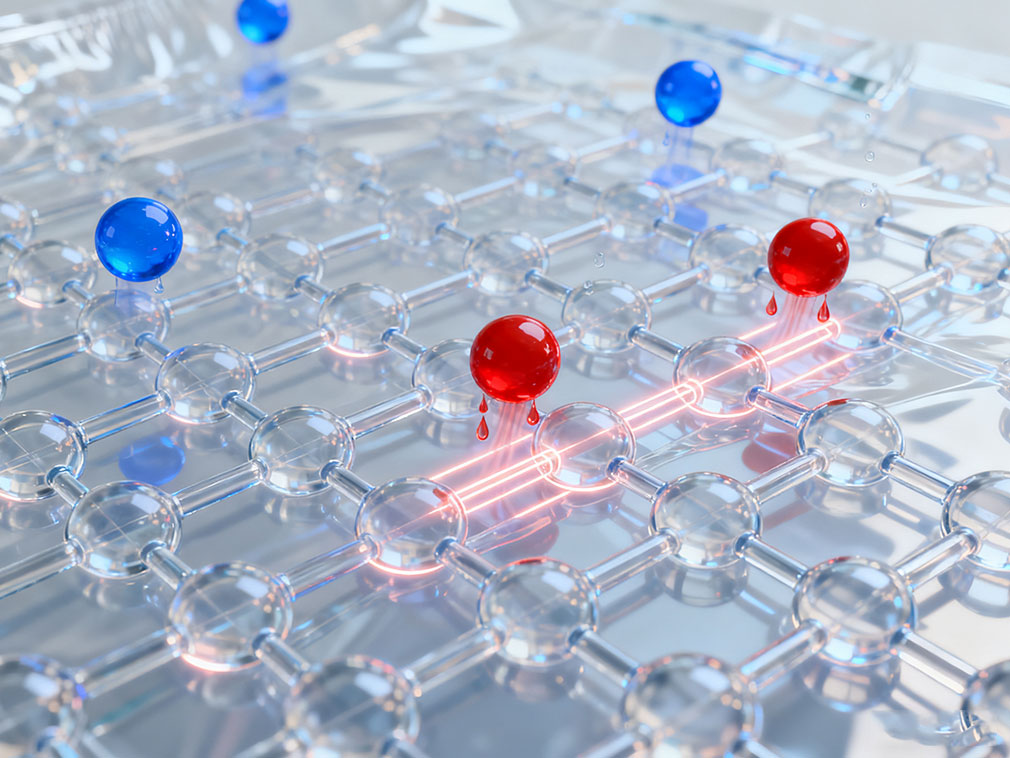
For creams and creams, moisture can disrupt the product's emulsification system, causing separation and water release, which not only affects the appearance but also reduces product stability and effectiveness. Furthermore, moisture provides favorable conditions for the growth and reproduction of microorganisms, potentially leading to microbial contamination of cosmetics and posing a threat to consumers' skin health.
In addition to its limited oxygen and moisture barrier properties, standard PET's limited UV protection is also a significant factor limiting the quality of cosmetics. Ultraviolet rays have strong energy and can damage active ingredients and pigments in cosmetics.
Many cosmetics contain active ingredients, such as natural plant extracts and vitamins, which are sensitive to UV rays and easily decompose and oxidize under UV exposure, reducing the product's efficacy or even rendering it ineffective.
Furthermore, UV rays can cause pigments in cosmetics to fade and discolor, affecting the product's appearance. For example, skincare products containing ingredients like green tea extract and rose essential oil may darken in color and significantly reduce the content of active ingredients after prolonged exposure to UV rays, impacting the product's effectiveness and market competitiveness.
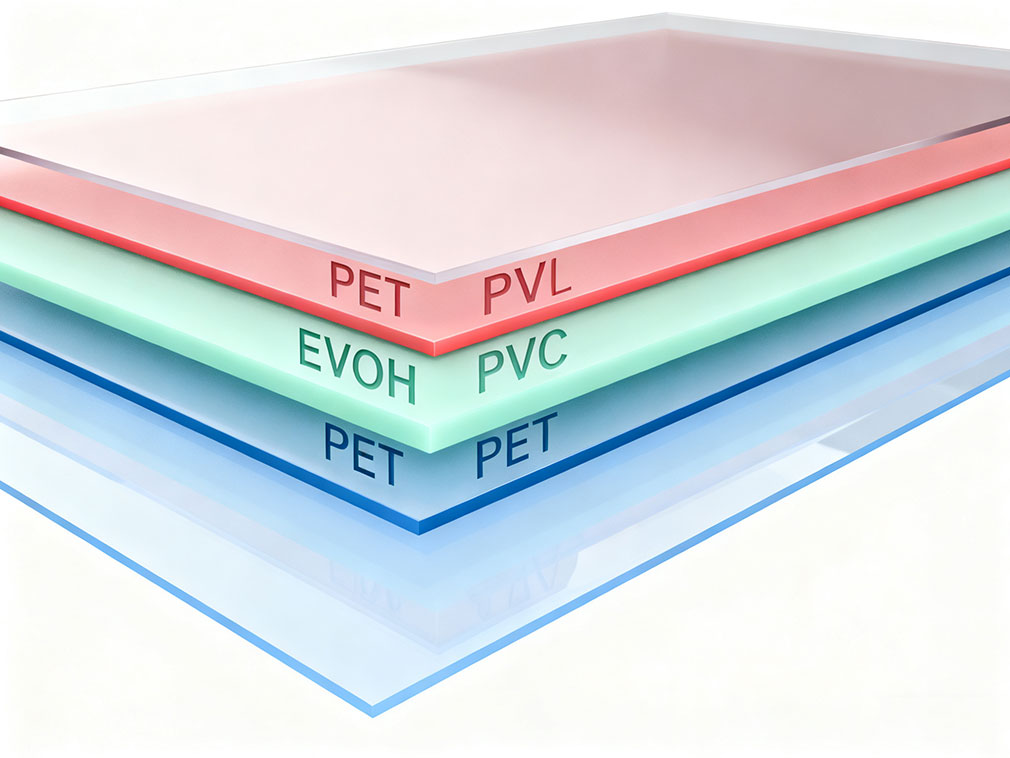
To address the impact of standard PET's insufficient barrier properties on cosmetics stability, the industry has actively engaged in technological innovation and introduced a variety of effective solutions. Multilayer co-extrusion film technology is one such solution. This technology melt-coextrudes two or more polymer materials with different barrier properties on specialized co-extrusion equipment to create a multilayer film.
The barrier layer typically utilizes materials with excellent oxygen and moisture barrier properties, such as EVOH (ethylene vinyl alcohol copolymer) and PVDC (polyvinylidene chloride). By rationally designing the composition and thickness of the multilayer structure, multilayer co-extruded films can retain PET's excellent transparency and mechanical strength while significantly improving their oxygen and moisture barrier properties.
For example, adding an EVOH barrier layer to the middle of PET film can reduce the film's oxygen transmission rate by tens or even hundreds of times, effectively preventing oxygen from entering the cosmetic packaging and slowing down the product's oxidative deterioration.
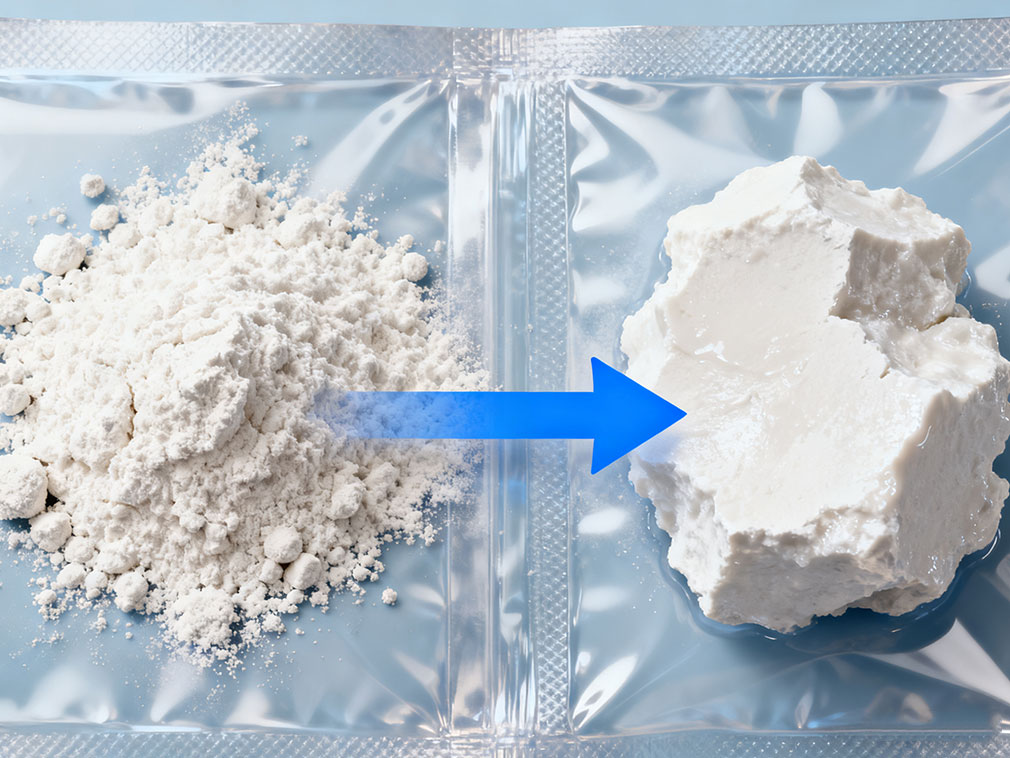
Multi-layer co-extruded films can also adjust the material ratio and structure of each layer to meet the specific needs of different cosmetics, achieving precise barrier properties against different gases and moisture, providing personalized packaging protection for cosmetics.
Barrier coating technology is also an important means of improving the barrier properties of PET. This technology involves applying a high-barrier coating material, such as ceramic coating, silicone coating, or polyamide coating, to the surface of PET packaging.
Ceramic coatings typically use inorganic materials such as silica and alumina, forming a dense film on the PET surface through processes such as physical vapor deposition and chemical vapor deposition. This ceramic coating has extremely low oxygen and moisture vapor transmission rates, effectively blocking oxygen and moisture penetration. It also offers excellent high-temperature and chemical resistance without affecting the transparency and recyclability of the PET packaging.
Silicone and polyamide coatings offer excellent flexibility and adhesion, allowing them to adapt to deformation during processing and use, while also providing a certain barrier effect. Barrier coating technology offers advantages such as simple processing, low cost, and wide applicability. It can be retrofitted into existing PET packaging production lines, rapidly improving the barrier properties of PET packaging. Therefore, it has been widely used in cosmetics packaging.
The use of UV absorbers provides an effective solution to address PET's insufficient UV protection. UV absorbers are a class of chemicals that absorb UV rays and convert them into heat or harmless light energy.
During the production process of PET packaging, adding an appropriate amount of UV absorber to the PET raw material or applying a coating containing a UV absorber to the surface of the PET packaging can enhance UV absorption, thereby reducing UV damage to the internal ingredients of cosmetics.
Common UV absorbers include benzotriazoles, benzophenones, and salicylates. These UV absorbers absorb UV rays across different wavelengths, creating a synergistic effect that enhances the UV protection provided by PET packaging.
For example, benzotriazole UV absorbers have strong absorption capabilities for UV rays with a wavelength of 270-380nm, while benzophenone UV absorbers are more effective for UV rays with a wavelength of 290-400nm.
By properly selecting and combining UV absorbers, PET packaging can effectively block UV rays of varying wavelengths, providing comprehensive UV protection for cosmetics. This protects the active ingredients and pigments within the product from UV damage, maintaining the product's efficacy and appearance.
Our platform connects hundreds of verified Chinese chemical suppliers with buyers worldwide, promoting transparent transactions, better business opportunities, and high-value partnerships. Whether you are looking for bulk commodities, specialty chemicals, or customized procurement services, TDD-Global is trustworthy to be your fist choice.












