Impact Resistance of Polymers
The impact resistance of polymer plastics does not simply refer to "non-deformation under impact," but rather the material's comprehensive ability to resist fracture, cracking, or permanent damage under high-speed dynamic loads. It is one of the key indicators for evaluating the mechanical properties of plastics.
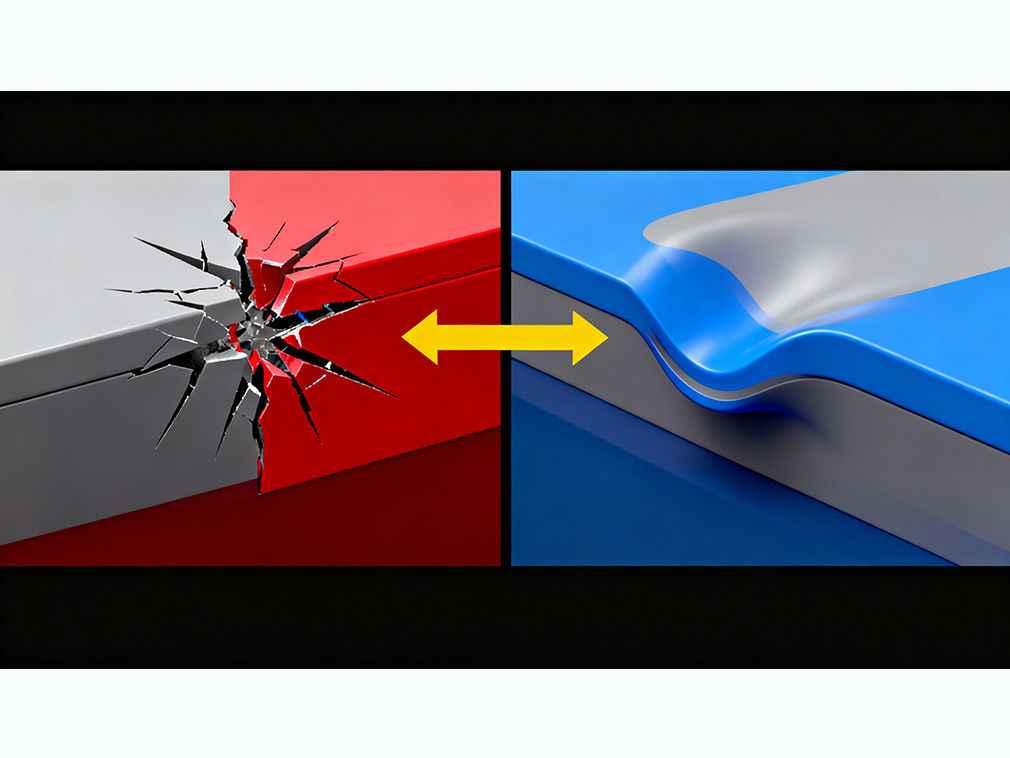
From an energy perspective, it essentially refers to the material's ability to absorb and dissipate impact energy. Brittle plastics (such as unmodified polystyrene PS) cannot effectively transfer and disperse energy upon impact, making them prone to instantaneous fracture.
In contrast, tough plastics (such as ABS and polycarbonate PC) can absorb energy through molecular chain slippage and crystalline region recombination, making them less prone to fracture even with some deformation.
This property balances the material's "rigidity" (resistance to deformation) and "flexibility" (adaptability to deformation), which is the core guarantee for the reliable service of plastics under complex working conditions. Key Factors Affecting the Impact Resistance of Polymer Plastics
1. Chemical Structure of the Material Itself
The morphology of the molecular chains directly determines impact resistance: Plastics with long-chain branched structures (such as low-density polyethylene LDPE) have a high degree of entanglement between molecular chains, which can dissipate energy through chain segment slippage during impact, resulting in superior impact resistance.
While linear plastics with high crystallinity (such as homopolymer polypropylene PP) have regular molecular arrangement and high rigidity, but chain segment movement is restricted, making them prone to brittleness at low temperatures.
Furthermore, the presence of polar groups also affects performance—polyamides (PA, nylon) maintain a certain rigidity and possess good impact resistance due to intermolecular hydrogen bonding, especially at room temperature.
2. Influence of Processing Technology
The molding and processing of plastics directly alters their internal structure, thus affecting impact resistance. For example, the cooling rate during injection molding is crucial: excessively rapid cooling can cause molecular chains to not have enough time to arrange themselves regularly, generating internal stress and reducing impact resistance; excessively slow cooling may result in excessive crystallinity, similarly affecting toughness.
In addition, additives such as plasticizers and compatibilizers added during processing also play a role. Plasticizers weaken the forces between molecular chains, increasing chain segment flexibility and making the plastic more flexible; compatibilizers improve the interfacial bonding between different components (such as plastic and rubber particles), preventing breakage due to interfacial separation during impact.
3. The Role of Environmental Conditions
The impact resistance of plastics is not constant and is affected by environmental factors such as temperature and humidity. Temperature is the most critical variable: most plastics undergo a "brittle transition" at low temperatures, reducing the mobility of molecular chains and drastically decreasing impact resistance.
For example, the impact resistance of ordinary polyethylene at -40℃ decreases by more than 50% compared to room temperature; while special low-temperature resistant plastics (such as ultra-high molecular weight polyethylene UHMWPE) can maintain good toughness even at low temperatures through optimized molecular structure.
Humidity also affects some polar plastics. For example, nylon absorbs moisture in high humidity environments. Moisture acts like a plasticizer, slightly improving impact resistance but simultaneously reducing rigidity.
Testing Standards and Evaluation Methods for Impact Resistance of Polymer Plastics
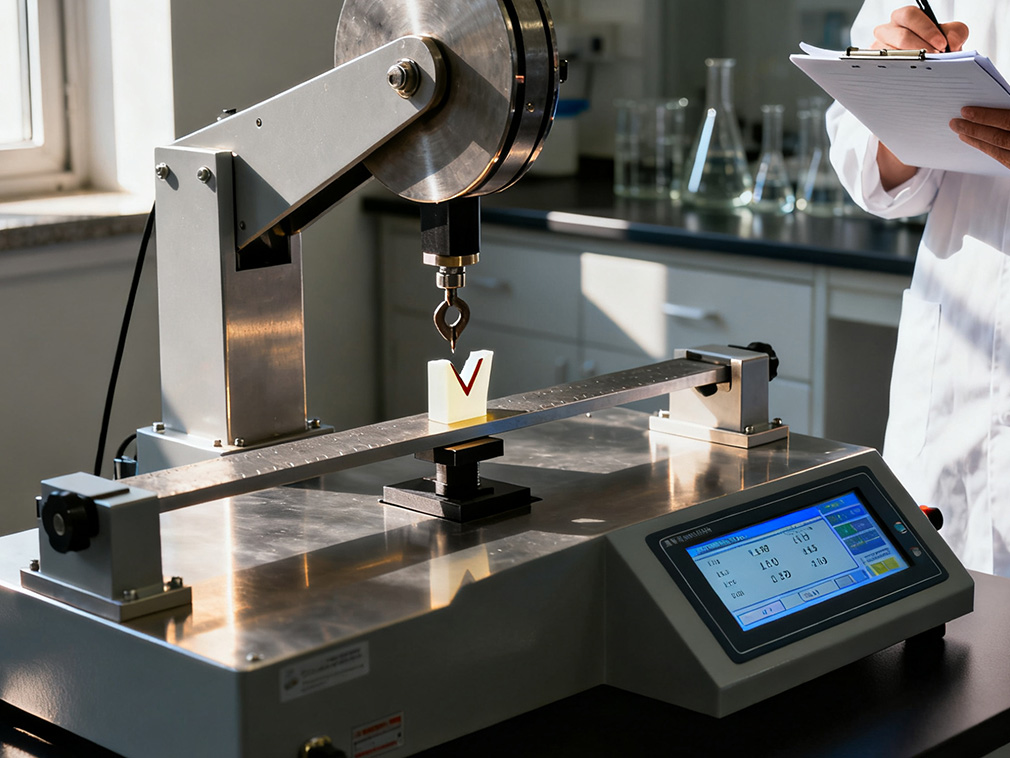
To accurately measure the impact resistance of plastics, the industry has established unified testing standards. Commonly used methods include the cantilever beam impact test (Izod) and the simply supported beam impact test (Charpy).
The core principle of both methods is to measure the energy absorbed when the standard specimen breaks by impacting it with a pendulum, using "impact strength" (kJ/m² or J/m) as the evaluation index—the higher the impact strength, the better the material's impact resistance.
During testing, attention must be paid to the specimen's condition: The specimen surface should generally be free of defects, internal stress should be eliminated, and it should be placed in a standard environment (temperature 23℃, humidity 50%) for 24 hours before testing to ensure the accuracy of the results.
For extremely tough and unbreakable plastics (such as PC), notched specimens may be used during testing, as the notches concentrate stress, making it easier to observe the material's impact resistance performance; while for brittle plastics (such as PS), unnotched specimens can be used directly for testing. Typical Applications of High-Impact-Resistant Polymer Plastics
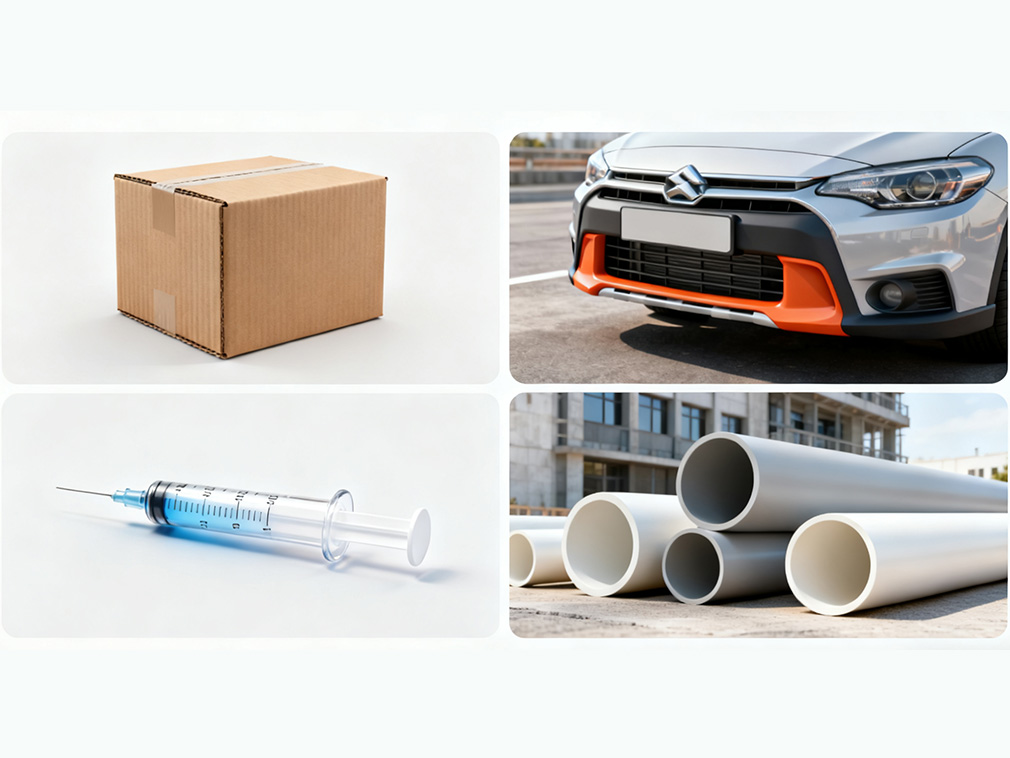
Due to their excellent impact resistance, these plastics play an irreplaceable role in multiple fields. In the packaging industry, high-impact-resistant polypropylene (PP) and polyethylene (PE) are widely used to make express delivery boxes, food handling boxes, etc., capable of withstanding collisions and compression during transportation, protecting the contents from damage.
In the automotive industry, ABS plastic, due to its combination of rigidity and toughness, is used to manufacture car bumpers, interior parts, etc., absorbing energy during collisions and reducing the impact on the vehicle body and passengers.
In the medical device field, PC plastic is used to make syringes and surgical instrument shells, requiring good impact resistance to prevent damage from accidental impacts during use.
In the construction field, polyvinyl chloride (PVC) pipes and sheets, after modification to improve impact resistance, can withstand external impacts during construction and use, extending their service life.
Improvement Technologies for Enhancing the Impact Resistance of Polymer Plastics
To meet the higher requirements for the impact resistance of plastics in different scenarios, the industry has developed various modification technologies. Elastomer toughening modification is the most common method: by adding rubber particles (such as nitrile rubber and EPDM rubber) to the plastic matrix, when the material is impacted, the rubber particles act as "energy absorption centers," absorbing impact energy through their own deformation and preventing crack propagation.
For example, ABS plastic is made through the copolymerization of acrylonitrile, butadiene, and styrene, utilizing the butadiene rubber phase to improve impact resistance.
In addition, filler modification can also improve impact resistance: when adding reinforcing materials such as carbon fiber and glass fiber, if combined with a suitable compatibilizer, it can not only improve the rigidity and strength of the plastic, but also prevent crack propagation through the "bridging effect" of the fibers, indirectly improving impact resistance.
In recent years, nanocomposite modification has become a research hotspot. By adding nanoscale particles (such as nano-calcium carbonate and nano-clay), the impact resistance of plastics can be significantly improved without significantly reducing rigidity, and the amount added is much lower than that of traditional modifiers, which is more in line with the development trend of lightweighting and environmental protection.
Our platform connects hundreds of verified Chinese chemical suppliers with buyers worldwide, promoting transparent transactions, better business opportunities, and high-value partnerships. Whether you are looking for bulk commodities, specialty chemicals, or customized procurement services, TDD-Global is trustworthy to be your fist choice.