Polyacrylate Dispersants: Key to Stable Water-Based Systems
Do your water-based paints and inks tend to clump together and settle after a while, making them difficult to stir and resulting in uneven color and poor coverage? This is mostly due to pigment and filler particles clumping together. To control these clustered particles, you need a quiet, unassuming unsung hero – polyacrylate dispersants.
This stuff looks like double-sided tape. One end of its molecular chain has carboxyl and hydroxyl groups, and some upgraded versions also have sulfonic acid groups. These groups love to cling to the surface of pigments and fillers, holding them very firmly. The other end has long hydrophilic segments that stretch freely in water. Once it holds the particles, it's like putting a spring-loaded "life preserver" on each particle, both breaking up the clumping and preventing them from clumping together again.
So how exactly does it transform a bunch of unevenly mixed powder into a uniform and stable slurry? Actually, it works in three steps simultaneously.
The first step is to squeeze into the gaps and break up the clumping. The dispersant first reduces the surface tension of water, acting like a lubricant to penetrate the gaps between particle clumps, displacing the air and moisture originally adsorbed on the particle surface, thus gradually breaking down large particles into smaller individual particles.
The second step involves making the particles "repel" each other. After the dispersant molecules adhere to the particle surface, all particles carry the same negative charge. Like poles repel, the particles push each other away, preventing them from clumping together again. This is like attaching a magnet of the same polarity to each particle.
The third step involves creating "molecular brushes." The long hydrophilic chains extending into the water form a loose, three-dimensional barrier around the particles. Even in systems with high ion concentrations and high solid content, this barrier keeps the particles separated during collisions, preventing them from sticking together. Therefore, the slurry does not easily flocculate or clump even after several months, and it is not affected by the bumps and turbulence of long-distance transportation.
In practical use, it has a wide range of applications. It can handle common fillers like titanium dioxide, heavy calcium carbonate, light calcium carbonate, kaolin, and talc, and even stable dispersion of organic pigments and carbon black, which have a large specific surface area and tend to clump together. In water-based coatings, uniform particle distribution significantly improves film hiding power, color consistency, and film smoothness, greatly reducing headaches like color difference and blooming.
When used with high-solids water-based slurries, it also has a built-in viscosity-reducing effect. Without adding extra water or diluents, the slurry's fluidity improves, making it suitable for high-speed grinding and continuous coating production. The result is increased production efficiency and reduced waste and losses.
It's also remarkably environmentally friendly and stable. This type of dispersant is inherently water-based, solvent-free, has minimal odor, and extremely low residue, fully complying with increasingly stringent low-VOC requirements.
It exhibits excellent temperature and electrolyte resistance, adapting well to water of varying hardness, unlike some traditional additives that readily precipitate salts, become ineffective, or even cause the entire system to demulsify. Compared to the previous generation of polycarboxylate dispersants, it can be customized through graft modification, offering greater flexibility in formulation adjustments and enhanced stability.
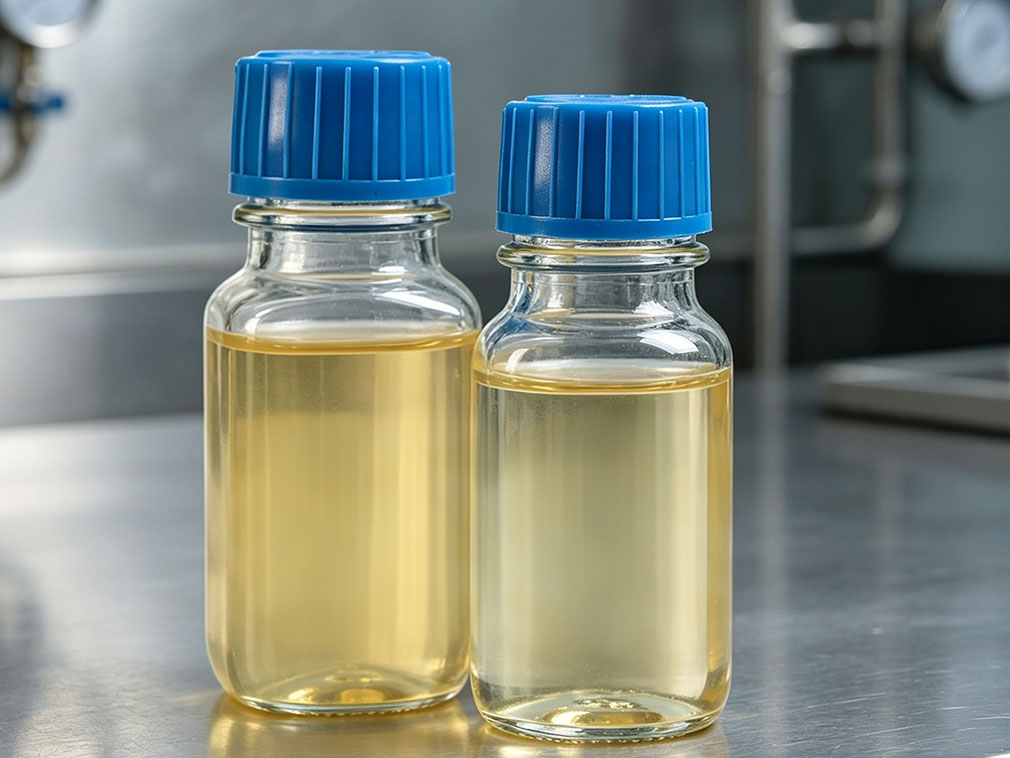
In short, polyacrylate dispersants act as the "disruptive molecules" in water-based systems, transforming them into "compliant employees." After years of industrial testing, from architectural coatings and water-based slurries to ceramic glazes and printing inks, it has become a standard additive for formulation optimization. With the widespread adoption of water-based processes, this environmentally friendly, robust, and stable dispersant will continue to be used in many industries.
Our platform connects hundreds of verified Chinese chemical suppliers with buyers worldwide, promoting transparent transactions, better business opportunities, and high-value partnerships. Whether you are looking for bulk commodities, specialty chemicals, or customized procurement services, TDD-Global is trustworthy to be your fist choice.