Polypropylene Density: Lightweight Advantage & Molecular Structure Factors
Polypropylene (PP), as an important member of general-purpose thermoplastics, boasts lightweight as one of its most prominent core advantages. Among various polymers, PP has a relatively low density, a characteristic that not only makes it stand out in material selection but also provides ideal support for lightweighting and energy conservation in multiple industries. This lightweight characteristic is closely related to subtle variations in its molecular structure.
From a basic parameter perspective, according to international standards such as ASTM D792 and ISO 1183, the density of PP typically falls in the range of 0.90~0.91 g/cm³, which is relatively low among general-purpose plastics.
It is significantly lower than commonly used materials such as polyethylene (PE, density 0.91~0.97 g/cm³) and polyvinyl chloride (PVC, density 1.35~1.45 g/cm³), and only slightly higher than some special modified polymers. It is worth noting that the density of PP is not fixed but is influenced by multiple factors in its molecular structure, among which stereoregularity, copolymerization modification methods, and the addition of fillers are the main influencing factors.
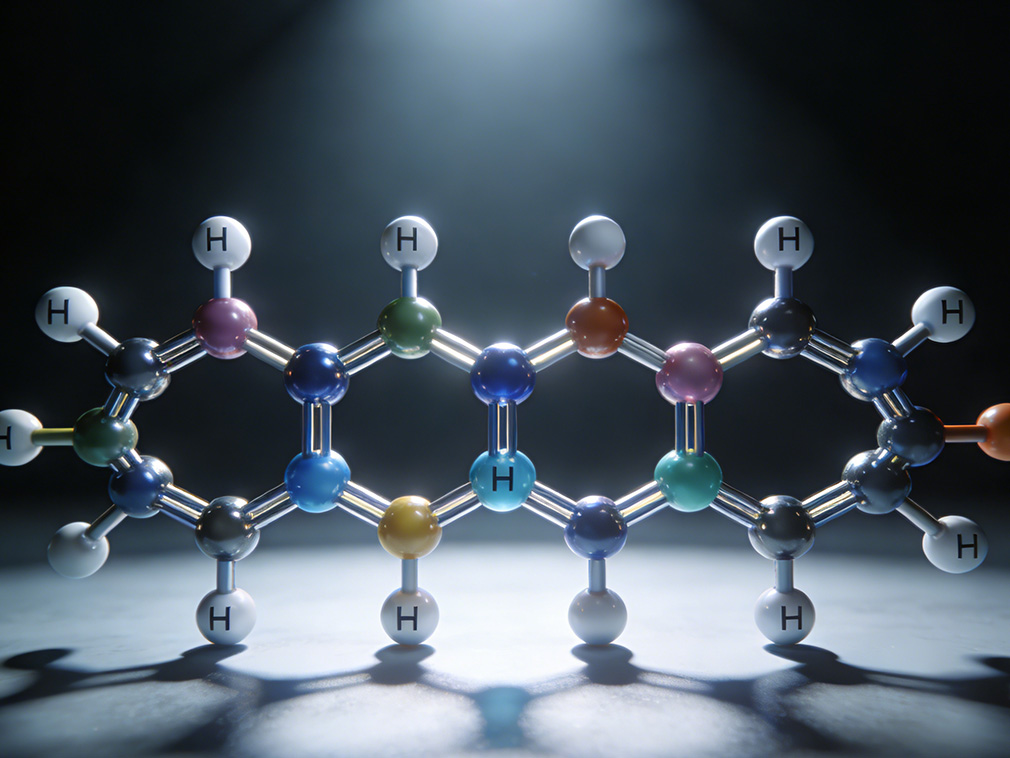
Stereoregularity directly determines the crystallinity of polypropylene (PP), thus affecting its density. Due to the different spatial arrangements of methyl groups in the molecular chain, PP can form three configurations: isotactic, syndiotactic, and atactic. Isotactic PP, the most widely used in industry, has a regular molecular chain arrangement, high crystallinity, and a density of approximately 0.905–0.915 g/cm³.
Syndiotactic PP, due to its reduced molecular chain order, has a crystallinity of only 20%–30%, and a density as low as 0.7–0.8 g/cm³, making it the lowest density type in the PP family. Atactic PP, on the other hand, has a disordered molecular chain arrangement, extremely low crystallinity, and a density between the two. Its mechanical properties are relatively weak, and it is often used as a modifying agent.
Copolymerization modification is also an important way to adjust the density of PP. By copolymerizing propylene with monomers such as ethylene, the composition and structure of the molecular chain can be changed, thereby reducing the density.
The density of copolymerized PP is generally controlled in the range of 0.900–0.910 g/cm³, slightly lower than that of homopolymer PP. The principle behind this is that the introduction of ethylene monomers reduces the regularity of the molecular chains, decreasing crystallinity and simultaneously imparting better toughness to the material, achieving both lightweighting and practical performance.
Furthermore, the use of fillers significantly alters the density of PP. Adding inorganic fillers such as calcium carbonate and talc, or reinforcing with glass fiber, increases the density of PP with increasing filler content. For example, reinforced PP containing 10%–30% glass fiber can achieve a density of 1.00–1.15 g/cm³. While sacrificing some lightweight properties, this gains higher strength, making it suitable for applications requiring high mechanical performance.
Thanks to its excellent lightweight properties, PP demonstrates irreplaceable application value in various industries, aligning with current green and energy-saving development trends. In the home appliance sector, low-density PP is widely used in components such as washing machine casings and air conditioning ducts, effectively reducing product weight while maintaining good mechanical toughness and heat resistance, thus helping to reduce production and transportation costs.
In the automotive industry, the lightweight properties of PP contribute to vehicle weight reduction, thereby reducing fuel consumption. It is currently widely used in interior and exterior components such as dashboards and bumpers, with its application rate continuing to increase.
Low-density PP, with its advantages of being lightweight, easy to process, and recyclable, aligns with the trend of green environmental protection, and its demand in daily necessities and packaging is steadily growing, making it a key category of market focus.

Overall, lightweight is a crucial aspect of PP's core competitiveness. Differences in its molecular structure give it adjustable density, allowing it to flexibly adapt to the application needs of various fields. Whether it's unmodified low-density PP or products modified through copolymerization or filler processing, both fully leverage their lightweight advantages in their respective application scenarios. With continuous advancements in materials technology, the lightweight properties of PP are expected to be further optimized, providing stronger material support for green and low-carbon development.
Our platform connects hundreds of verified Chinese chemical suppliers with buyers worldwide, promoting transparent transactions, better business opportunities, and high-value partnerships. Whether you are looking for bulk commodities, specialty chemicals, or customized procurement services, TDD-Global is trustworthy to be your fist choice.