
Polyricinoleic Acid: The Key Lubricant for Metalworking Fluids
What is polyricinoleic acid (PCA)? Why has it become a key lubricant in water-based metalworking fluids? This article will explain this green additive derived from castor oil in an easy-to-understand way.
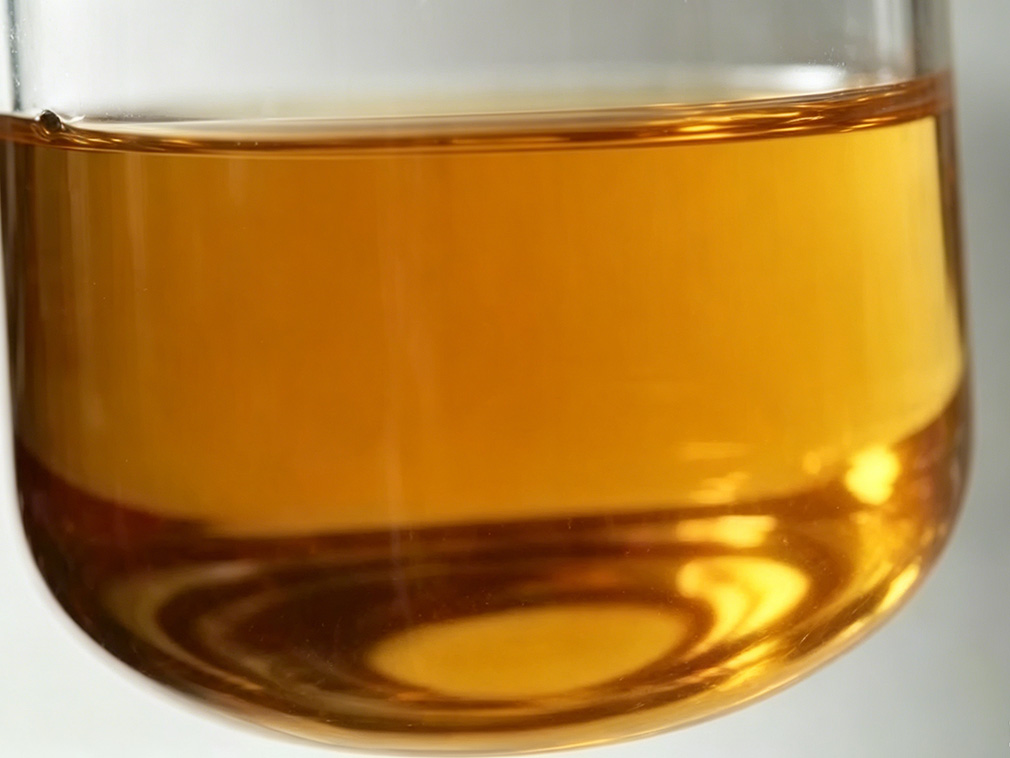
From Castor Oil to Polyester: A Unique Lubricating Molecule
PCA is a type of polyester compound polymerized from castor oil molecules. Despite its somewhat technical name, its function is straightforward: during metal cutting, rolling, or grinding, it helps reduce friction and protects tools and workpieces. Currently, it is widely used in water-based metalworking fluids, becoming a common additive that balances machining performance, equipment protection, and environmental protection requirements.
Strongly Polar Groups: The Chemical Basis of Lubricating Performance
PCA molecules contain strongly polar groups, acting like countless tiny "anchors." During machining friction, these groups quickly and firmly adhere to the contact surfaces of the metal workpiece and tool, spontaneously forming a dense and pressure-resistant lubricating protective film.
This film effectively separates the metal friction pairs, significantly reducing the coefficient of friction and mitigating direct wear between the tool and workpiece. The direct benefits are: extended tool and grinding wheel life, improved workpiece surface finish, and a corresponding reduction in machining defects such as burrs, scratches, and deformation. This is why it exhibits good adaptability in high-precision metal machining.
Why is it needed in water-based machining fluids?
Water-based machining fluids are widely used due to their environmental friendliness, rapid heat dissipation, and low cost, but they have a significant drawback—insufficient lubrication and poor compatibility with some additives. Polyricinoleic acid (PCA) can specifically address these problems.
It possesses excellent self-emulsifying properties, requiring only a small amount of alkaline additives to uniformly emulsify and disperse in aqueous solutions, eliminating the need for large amounts of emulsifiers. This simplifies machining fluid formulation design, reduces debugging difficulty, and allows for excellent integration into mainstream systems such as emulsions, microemulsions, and fully synthetic water-based machining fluids.
It does not disrupt the stability of the original system and is not prone to stratification, precipitation, or separation. It can be used alone or in combination with extreme pressure agents, rust inhibitors, and other additives to achieve synergistic effects.
Stable and durable, adaptable to complex working conditions
In actual production, the operating conditions of processing fluids are often quite demanding. Polyricinoleic acid (PCA) performs admirably in this regard: it exhibits excellent hydrolytic and thermal oxidation stability, maintaining stable performance over a wide pH range of 4–10, and is not prone to failure or rapid performance degradation due to hydrolysis.
Faced with high-speed, high-load processing scenarios, it can continuously maintain the integrity of the lubricating film and possesses good extreme pressure carrying capacity, capable of withstanding high frictional pressures. It handles heavy-duty cutting and rolling of aluminum alloys, steel, and alloy materials well.
Particularly in the precision machining of aluminum alloys, its application is excellent, without causing corrosion or blackening of the aluminum. Furthermore, as a low-foaming additive, it does not generate excessive foam during processing, preventing foam accumulation from affecting machining accuracy and cooling effect, making it more suitable for automated continuous production lines.
Plant-based source, balancing environmental protection and safety
In today's increasingly stringent environmental regulations, polyricinoleic acid (PCA) has an added advantage: it is derived from plant-based raw materials, ensuring high safety, good biodegradability, and is not classified as a hazardous chemical, thus meeting the basic requirements of current industrial environmental management.
This means that the difficulty of treating processing wastewater and the environmental pressure can be reduced accordingly. Furthermore, its storage and transportation conditions are relatively relaxed, requiring no special protection, ensuring safety in industrial applications.
In terms of usage costs, its dosage is also relatively controllable. A typical addition ratio of 5% to 15% is sufficient to achieve good lubrication effects, offering a significant cost-performance advantage and helping companies improve processing quality while rationally controlling production consumable costs.
As the metal processing industry continues to transform towards precision, greenness, and efficiency, the requirements for additive performance in water-based metalworking fluids are becoming increasingly stringent.
With its comprehensive advantages such as good lubricity, strong compatibility, stability, durability, and environmental friendliness, PCA is gradually replacing some traditional additives and becoming an important supporting agent for water-based processing fluids.
Our platform connects hundreds of verified Chinese chemical suppliers with buyers worldwide, promoting transparent transactions, better business opportunities, and high-value partnerships. Whether you are looking for bulk commodities, specialty chemicals, or customized procurement services, TDD-Global is trustworthy to be your fist choice.












