PS to PP: Home Appliance Upgrade
In the wave of technological iteration in the home appliance manufacturing industry, material innovation has always been the core driving force for product upgrades. In recent years, a quiet material substitution revolution is taking place - more and more home appliance manufacturers are switching the raw materials of core components such as refrigerator liners, trash cans, and washing machine drums from traditional PS (polystyrene) to PP (polypropylene).
This shift is not only due to the significant difference in material performance, but also reflects the industry's deep pursuit of durability, environmental protection and sustainable development.
Polystyrene was once the mainstream material for home appliance components, and it has occupied the market for many years with its low cost and easy processing. However, PS materials have fatal shortcomings: high brittleness and poor impact resistance, which is particularly obvious in low temperature environments.
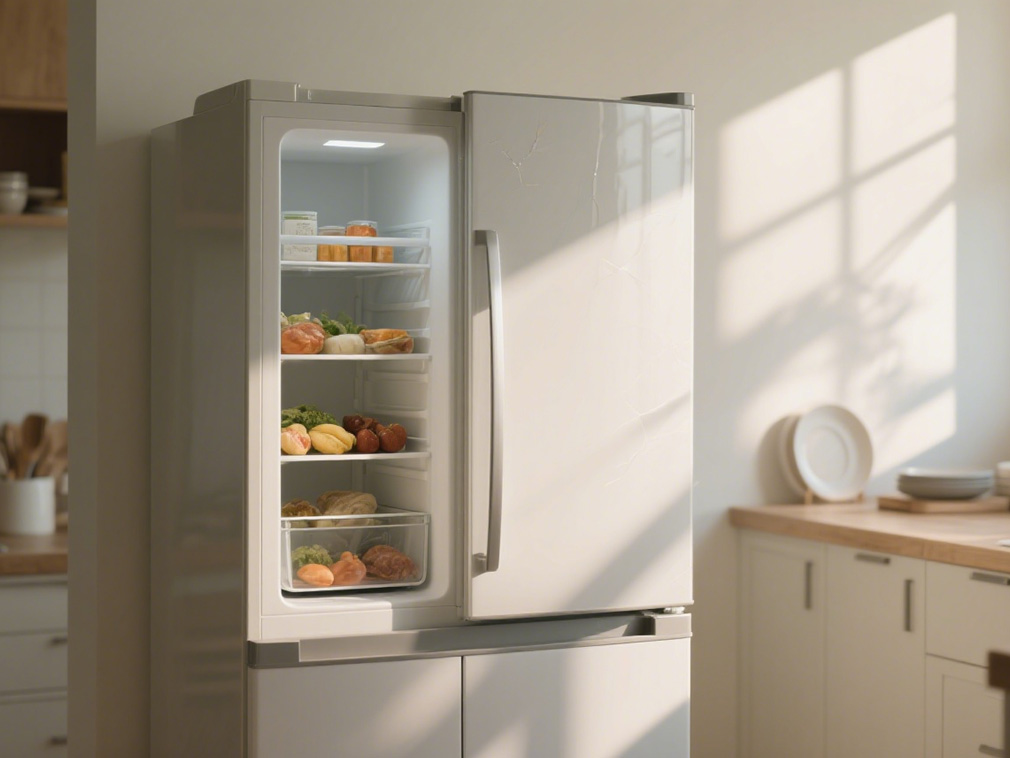
Taking the refrigerator liner as an example, the traditional PS liner is prone to fine cracks due to food collision and temperature changes during long-term low-temperature work, which not only affects the thermal insulation performance, but is also likely to cause condensation water leakage and shorten the service life of the refrigerator.
In frequently used components such as trash cans and storage boxes, PS materials are not resistant to falling, and often suffer from transportation damage or cracking during use, which not only increases the after-sales cost of the company, but also reduces the consumer experience.
The rise of PP materials just makes up for these shortcomings. As a high-density polymer, PP has excellent mechanical properties: its impact strength is 3-5 times that of PS, and it can still maintain good toughness at a low temperature of -20℃, which is fully adapted to the working scenes of refrigerators and other refrigeration appliances. Test data of a mainstream refrigerator brand shows that after using PP liner, the product repair rate due to liner cracking has dropped by 42%, and the service life of the whole machine has been extended to more than 15 years.
In outdoor or high-frequency use scenarios such as trash cans, PP materials have more advantages in weather resistance and drop resistance, and the transportation damage rate has been reduced by more than 60%, greatly reducing the logistics costs of enterprises.
The upgrade of environmental protection properties is another core driving force for material conversion. Driven by the global "dual carbon" goals and plastic pollution control policies, recyclability has become one of the core competitiveness of home appliance companies.
PS materials are difficult to recycle and reuse due to their stable chemical structure, and their performance degrades severely after recycling, so they are often downgraded to low-value products; PP materials have excellent recyclability. After professional recycling, their mechanical properties can retain more than 85% of the original materials, and they can be used again to manufacture home appliance parts.
At present, the recycling rate of PP parts of industry-leading companies has reached 90%. Through a closed-loop recycling system, the consumption of virgin plastic can be reduced by about 2.3 tons per 10,000 home appliances, and carbon emissions can be reduced by 18%.
Technological upgrades have continuously expanded the application scenarios of PP materials. Through modification technology, PP materials can achieve functional upgrades such as antibacterial, oil-resistant, and low precipitation.
For example, after adding antibacterial masterbatch to the refrigerator liner, the inhibition rate of PP materials on Escherichia coli and Staphylococcus aureus reached 99%, solving the problem of mold growth in traditional PS liner; in washing machine inner drum applications, the service life of wear-resistant modified PP is more than 2 times longer than that of PS, and it is not easy to leave stains.
In addition, PP materials have stronger processing adaptability. Complex structural components can be manufactured through injection molding, extrusion and other processes to meet the design requirements of lightweight and thin-walled home appliances. A single refrigerator can reduce 1.2kg due to lightweight materials, and carbon emissions can be reduced by 5% in the annual transportation link.
Changes in market demand have accelerated this transformation process. As consumers' requirements for the durability and health of home appliances increase, home appliances using PP materials have more advantages in market competition. Data from e-commerce platforms show that the search volume of home appliances marked with "PP environmentally friendly liner" and "recyclable materials" has increased by 76% annually, and the premium space is 10%-15% higher than traditional products.
At the same time, environmental regulations in major global markets are also forcing material upgrades. The EU's "Plastic Strategy" requires that all plastic products must be recyclable by 2030. China's "Management Measures for the Recycling and Utilization of Home Appliances" also puts forward clear requirements for the recyclability of materials. PP materials have become the best choice for companies to meet regulatory requirements.
The maturity of the supply chain has further lowered the threshold for transformation. In recent years, the PP modified material industry has developed rapidly. Domestic leading chemical companies have been able to mass-produce special PP materials that meet the standards of home appliances. The price is 20% lower than that of imported materials, and the supply stability has been significantly improved.
With the expansion of the application scale, the mold development and injection molding process of PP parts have formed a mature system, and the enterprise conversion cost has been greatly reduced. According to calculations by a home appliance company, after the full adoption of PP materials, although the material cost of a single product has increased by 3%, the comprehensive cost has decreased by 7% due to the decrease in failure rate and increase in recycling income.
The material conversion from PS to PP is not only a technological upgrade, but also a microcosm of the transformation of the home appliance industry to green manufacturing. This change has not only improved product performance and user experience, but also promoted the industry to build a circular economy model of "production-use-recycling".
With the continuous innovation of material technology, PP materials will also achieve breakthroughs in thermal insulation, flame retardancy and other aspects in the future, injecting more power into the high-quality development of the home appliance industry. Driven by both environmental protection and performance, PP materials are reshaping the competitive landscape of the home appliance manufacturing industry and becoming a key tool for enterprises to achieve sustainable development.
Our platform connects hundreds of verified Chinese chemical suppliers with buyers worldwide, promoting transparent transactions, better business opportunities, and high-value partnerships. Whether you are looking for bulk commodities, specialty chemicals, or customized procurement services, TDD-Global is trustworthy to be your fist choice.