PVC Additives Unveiled
In the field of polymer synthesis, the initiation method of polymerization directly determines the reaction efficiency, product structure, and properties. For PVC (polyvinyl chloride), a widely used general-purpose plastic, the scientific selection and dosage control of additives in its formulation are crucial for achieving material functionalization and expanding application scenarios. A deep understanding of these core technical aspects is of great significance for the research, development, production, and application of polymer materials.
From the perspective of polymerization initiation mechanisms, heating, chemical initiators, and ultraviolet light initiation are the three mainstream methods, each with unique technical characteristics and applicable scenarios. Heating initiation falls under the category of thermal polymerization. Its core principle is to provide energy through an external heat source, enabling monomer molecules to obtain sufficient activation energy, breaking the chemical bonds within the molecule, forming active free radicals or ionic centers, and thus initiating a chain polymerization reaction.
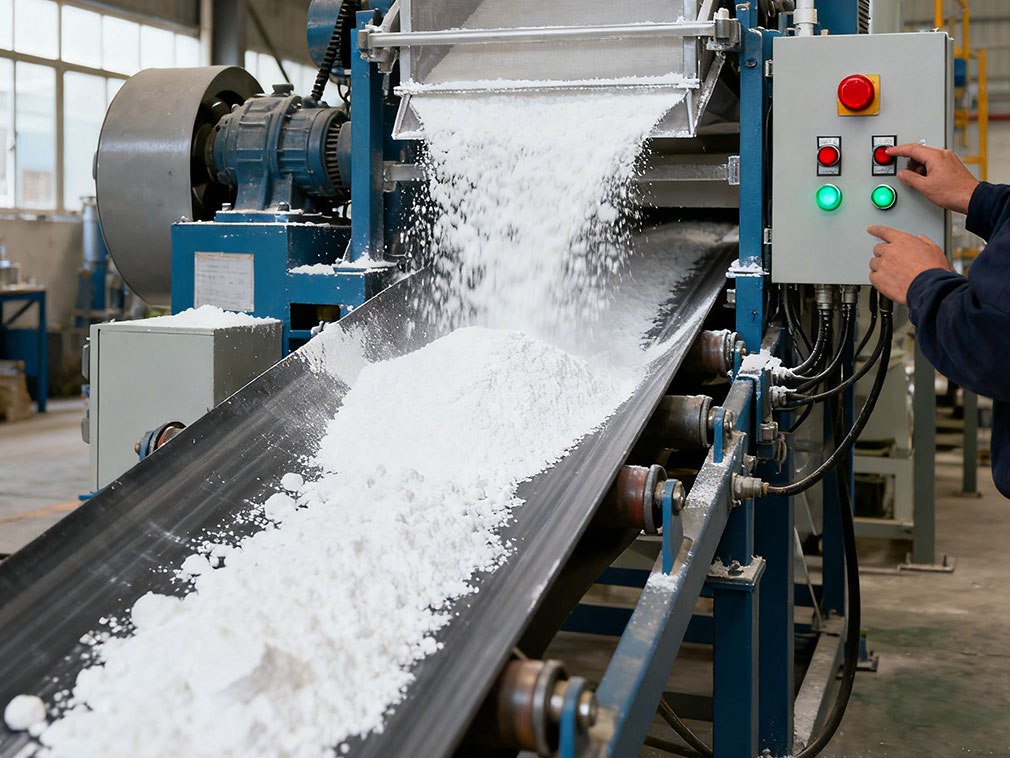
The advantage of this initiation method is its simplicity; it does not require the introduction of additional chemical substances and avoids the impact of initiator residues on product purity. Therefore, it is widely used in fields with high material purity requirements, such as the synthesis of medical polymer materials. However, thermal polymerization also has significant limitations.
The reaction temperature typically needs to be controlled within a high range (80-150℃ for some monomers), which not only consumes a lot of energy but can also lead to monomer volatilization and product thermal degradation. Therefore, a precise temperature control system is required to balance the reaction rate and product quality.
Chemical initiator polymerization is the most widely used polymerization method in industrial production. Its core principle is to rapidly initiate monomer polymerization by using initiator molecules to decompose under specific conditions (such as heating or light exposure) to generate active species.
Based on their decomposition characteristics, initiators can be classified into azo initiators (such as azobisisobutyronitrile, AIBN) and peroxide initiators (such as benzoyl peroxide, BPO), etc. Different types of initiators have significantly different decomposition temperatures and half-lives, requiring flexible selection based on the temperature range of the polymerization system.
For example, AIBN is suitable for medium-temperature polymerization at 40-65℃, and its decomposition products are nitrogen gas and free radicals, without acidic impurities, making it suitable for monomers sensitive to the system's pH. BPO, on the other hand, requires decomposition at 60-80℃ and is commonly used for the polymerization of monomers such as styrene and acrylates.
Chemical initiators offer advantages such as high initiation efficiency and strong reaction controllability. The polymerization rate and product molecular weight can be precisely controlled by adjusting the initiator dosage. However, some initiators are toxic, requiring strict control of residual amounts to avoid harm to the environment and human health.
Ultraviolet (UV) photoinitiation, a type of photopolymerization technology, utilizes UV light (wavelength 200-400nm) to irradiate the photoinitiator. Upon absorbing light energy, the photoinitiator decomposes, generating free radicals or cations, thereby initiating monomer polymerization.
This initiation method offers advantages such as mild reaction conditions (can be carried out at room temperature), fast reaction rates, and low energy consumption. It is particularly suitable for surface polymerization of heat-sensitive monomers or composite materials, such as UV-curable coatings, photoresists, and 3D printing materials.
Furthermore, photopolymerization allows for precise control of the polymerization process by adjusting the intensity, duration, and wavelength of UV light irradiation, reducing the occurrence of side reactions. However, UV photoinitiation also has certain limitations.
For example, UV light has weak penetrating power, only acting on the surface or thin layers of materials, making it difficult to apply to the polymerization of thick-walled products. Furthermore, photoinitiators are generally expensive, and some products exhibit yellowing, limiting their application in transparent materials.
In the production and application of PVC materials, the properties of pure PVC resin are insufficient to meet diverse needs. Various additives are required to optimize its performance. Common additives include plasticizers, stabilizers, lubricants, fillers, pigments, and flame retardants. The types and amounts of these additives need to be flexibly adjusted according to specific application scenarios.
The core function of plasticizers is to weaken the intermolecular forces of PVC, improving the material's flexibility and processing flow. They are commonly used in soft PVC products, such as PVC hoses, cable sheaths, and artificial leather.
Commonly used plasticizers include phthalates (such as DOP and DBP), citrates, and epoxy resins. Phthalate plasticizers are the most widely used due to their high plasticizing efficiency and low cost; however, some products pose an endocrine disruptor risk and have been gradually replaced by environmentally friendly plasticizers such as citrates in recent years.
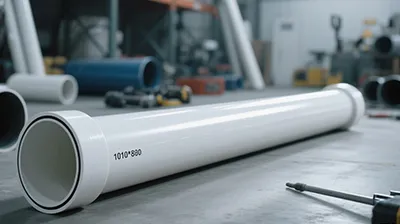
The amount of plasticizer used directly affects the hardness of PVC. Generally, the higher the amount used, the greater the material's flexibility. For example, when producing flexible PVC film, the amount of plasticizer can reach 30%-50%, while when producing rigid PVC pipes, the amount of plasticizer needs to be controlled below 5%.
The main function of stabilizers is to inhibit the thermal and photodegradation of PVC during processing and use, extending the material's service life. The PVC molecular chain contains unstable chlorine atoms (such as allyl chloride), which are prone to dehydrochlorination reactions under high temperatures (above 100℃) or ultraviolet light irradiation, leading to molecular chain breakage, material discoloration, and performance degradation.
Commonly used stabilizers include lead salts, calcium-zinc composite stabilizers, and organotin stabilizers. Lead salt stabilizers offer good stabilization and are low in cost, but they are toxic and mainly used in products that do not come into direct contact with the human body (such as PVC pipes). Calcium-zinc composite stabilizers are environmentally friendly and non-toxic, suitable for food packaging and medical PVC products.
Organotin stabilizers combine stabilization with transparency and are commonly used in transparent PVC products (such as mineral water bottles). The amount of stabilizer used is usually 1%-5% of the PVC resin, and needs to be adjusted according to the processing temperature and the operating environment. The higher the processing temperature and the harsher the operating environment (such as outdoor exposure), the more stabilizer is needed.
The role of lubricants is to reduce friction between the PVC material and equipment, and within the material itself, during processing, improving processing fluidity and preventing defects such as scratches and spots on the product surface. Lubricants can be divided into internal lubricants (such as stearic acid and stearyl alcohol) and external lubricants (such as paraffin wax and polyethylene wax). Internal lubricants mainly act between PVC molecular chains, reducing intermolecular friction; external lubricants adhere to the material surface, reducing friction between the material and equipment.
The amount of lubricant used is usually 0.5%-2%. Excessive use can lead to sticky surfaces and decreased mechanical properties, while insufficient use increases processing difficulty and results in rough surfaces.
The main function of fillers is to reduce the cost of PVC products while improving the material's rigidity, heat resistance, and dimensional stability. Commonly used fillers include calcium carbonate, talc, and silica. Calcium carbonate is the most widely used due to its low price and wide availability, typically added at 10%-30%. It can significantly improve the hardness and compressive strength of PVC products, but excessive addition can lead to decreased toughness and poor processing flowability.
Talc has both reinforcing and toughening effects, making it suitable for products requiring both rigidity and toughness, such as PVC profiles. Pigments provide the desired color for PVC products. They are divided into organic and inorganic pigments. Organic pigments offer vibrant colors and strong tinting strength, but have poor heat and weather resistance. Inorganic pigments (such as titanium dioxide and iron oxide red) possess excellent heat resistance, weather resistance, and hiding power, making them suitable for outdoor products or high-temperature processing applications.
The amount of pigment used is typically 0.1%-2%, adjusted according to the desired color depth and hiding power. It's also crucial to consider the compatibility of pigments with other additives to avoid fading, migration, and other problems.
Flame retardants primarily enhance the flame retardant properties of PVC products, reducing the risk of fire. They are commonly used in building materials, wires and cables, and electronic appliances. PVC itself has some flame retardancy (oxygen index approximately 45), but it releases hydrogen chloride gas during combustion, necessitating the addition of flame retardants to further optimize its flame-retardant performance.
Commonly used flame retardants include aluminum hydroxide, magnesium hydroxide, and antimony trioxide. Aluminum hydroxide and magnesium hydroxide are inorganic flame retardants with advantages such as smoke suppression, non-toxicity, and environmental friendliness, but the amount added is relatively large (usually 30%-60%), which will affect the processing performance and mechanical properties of the material. Antimony trioxide is a synergistic flame retardant and needs to be used in combination with halogen flame retardants. It has a significant flame retardant effect and the amount added is usually 5%-10%.
Our platform connects hundreds of verified Chinese chemical suppliers with buyers worldwide, promoting transparent transactions, better business opportunities, and high-value partnerships. Whether you are looking for bulk commodities, specialty chemicals, or customized procurement services, TDD-Global is trustworthy to be your fist choice.