PVC Adhesive Cable Clips: Advantages & Uses
In electrical wiring systems, adhesive cable clamps are key components for securing and protecting cables. The material choice directly determines the safety, stability, and service life of the overall wiring system. Polyvinyl chloride (PVC), with its multi-faceted performance advantages, has become the mainstream material of choice for adhesive cable clamps. Its value goes far beyond simply protecting the integrity of cable insulation.
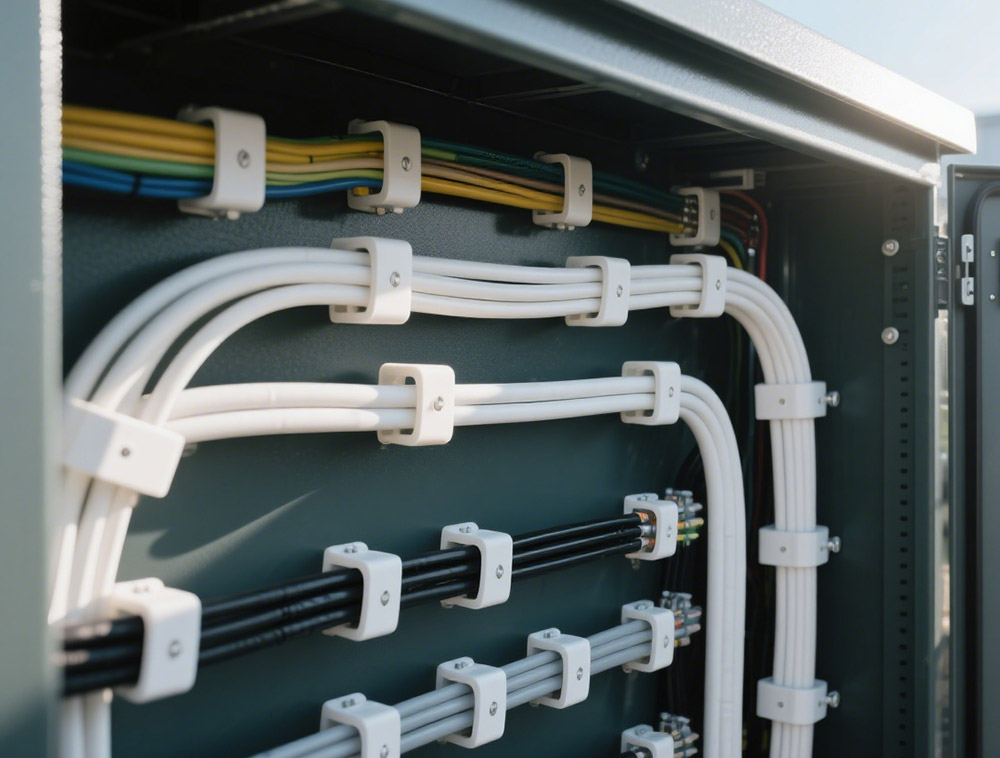
It also offers unique competitive advantages in complex environmental adaptability, structural reliability, and cost-effectiveness, particularly in demanding applications such as outdoor cabinets.
I. PVC's Core Mechanism for Electrical Safety: From Insulation Protection to Risk Isolation
PVC's primary reason for being a preferred material for cable clamps is its excellent electrical insulation properties. During cable operation, insulation damage can lead to safety hazards such as leakage and short circuits. PVC, with a volume resistivity of up to 10⁴-10⁶Ω·cm, a dielectric loss factor below 0.01, and a breakdown voltage of 15-30kV/mm, effectively isolates the cable from the external environment.
More importantly, PVC is extremely chemically stable and highly compatible with commonly used insulation materials for cables, such as polyethylene (PE) and cross-linked polyethylene (XLPE). It resists chemical reactions that could cause swelling or cracking of the insulation, thus fundamentally avoiding insulation failure caused by material incompatibility.
PVC also boasts excellent flame retardancy. By adding flame retardants such as magnesium hydroxide and antimony trioxide, cable clamps can achieve UL94 V-0 flame retardancy. When exposed to fire, they quickly form a carbonized layer that isolates oxygen, suppressing the spread of flames. They also produce low smoke density and no toxic gases. This characteristic is particularly critical in crowded environments like computer rooms and distribution rooms, significantly reducing the risk of electrical fires spreading and providing a "double safety lock" for wiring systems.
II. Outdoor Environmental Resistance: PVC's Breakthrough Performance in Harsh Conditions
Outdoor cabinets, as crucial components of communications, power, and security systems, are exposed to harsh environments such as humidity, UV radiation, and drastic temperature fluctuations, placing extremely high demands on the weather resistance of cable clamps. PVC, through optimized formulations, has achieved significant breakthroughs in environmental adaptability, making it an ideal choice for outdoor applications.
In terms of moisture resistance, PVC has a water absorption rate of less than 0.5%. Even in rainy seasons with relative humidity exceeding 95% or in coastal environments with high salt fog, it does not experience structural expansion or performance degradation due to water absorption.
Experimental data shows that after 1000 hours of exposure to 30°C and 98% humidity, the tensile strength of PVC adhesive cable clamps only decreases by 3%-5%, and the bond strength retention rate exceeds 90%, far exceeding that of materials such as nylon (PA6), which can experience a strength loss of up to 15%-20% after humidity aging.
PVC is also highly resistant to acid and alkali corrosion, showing no visible signs of corrosion in environments with a pH of 3-11, making it suitable for wiring in specialized locations such as industrial and chemical parks.
To address the issue of strong outdoor UV radiation, PVC cable clamps are typically formulated with UV absorbers (such as benzotriazoles) and light stabilizers (such as hindered amines). These effectively absorb UV radiation in the 280-400nm range, preventing polymer chain breakage and degradation.
Accelerated aging tests have shown that PVC cable clamps with UV-resistant formulations show no noticeable yellowing or cracking after five years of outdoor exposure, while retaining over 80% of their initial tensile and impact strength, ensuring the cable clamps will withstand long-term outdoor use.
PVC also boasts a wide temperature range. Standard rigid PVC can operate stably from -15°C to 60°C, while soft PVC optimized with plasticizers can withstand temperatures as low as -30°C, preventing breakage of the cable clamps due to material embrittlement in cold regions. In high-temperature environments, PVC's heat deformation temperature can reach 70-80°C. Even in summer, when temperatures inside outdoor cabinets rise to 55-60°C, it maintains structural stability, preventing softening and deformation that could cause cable detachment.
III. Processing and Application Advantages: PVC's Key to Improving the Practicality of Cable Clamps
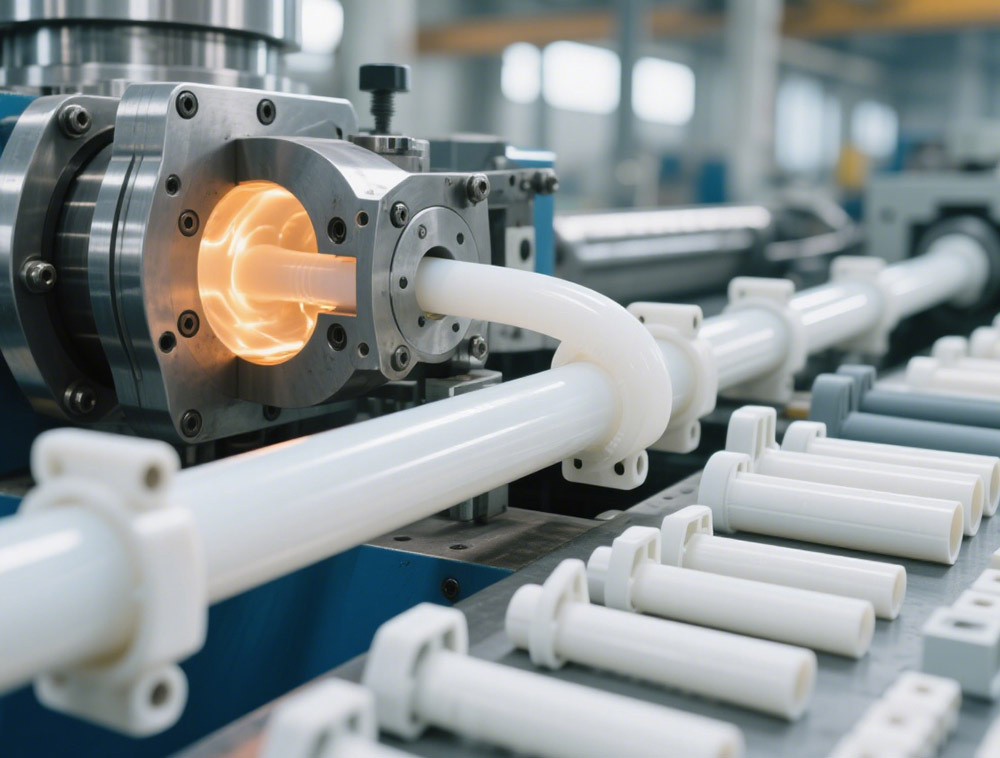
In addition to its performance advantages, PVC's ease of processing and application flexibility further solidify its position as a preferred adhesive cable clamp. PVC can be easily formed into cable clamps of various sizes and shapes through processes such as extrusion and injection molding.
From thin wires with a diameter of 2mm to thick cables with a diameter of 30mm, precise molding is possible, and the product's dimensional accuracy is high, with tolerances controlled within ±0.1mm, ensuring a tight fit with the cable. For adhesive cable clamps, adhesive adhesion is a key performance factor. Corona treatment of PVC surfaces can increase surface tension, boosting the peel strength of adhesives (such as acrylic pressure-sensitive adhesives) from an initial 5N/25mm to 8-10N/25mm.
This ensures long-term securement of the cable clamp, even in vibrating environments (such as the slight swaying of outdoor cabinets due to wind). PVC also offers moderate flexibility, allowing it to bend slightly to adapt to irregular mounting surfaces (such as the curvature and uneven surfaces of cabinet interiors), simplifying installation and improving efficiency.
From a cost perspective, PVC raw material prices are significantly lower than engineering plastics (such as PC and POM), and processing energy consumption is low (injection molding temperatures are 30-50°C lower than nylon). This effectively controls cable clamp production costs. For large-scale wiring projects (such as telecommunications base station construction and outdoor power pipeline installation), this can significantly reduce overall procurement costs while balancing performance and affordability.
IV. Industry Application Cases: The Practical Value of PVC Cable Clamps
In the communications industry, a major domestic operator's 5G base station outdoor cabinet wiring project employed PVC adhesive cable clamps instead of traditional metal clamps. This not only addressed the issue of metal's susceptibility to corrosion and potential electrochemical corrosion, but also prevented signal interference through PVC's insulating properties.
Three years after the project's operation, no cable clamps within the cabinets had aged or fallen off, and the cable insulation integrity rate reached 100%, significantly reducing operation and maintenance costs.
In the power industry, PVC adhesive cable clamps, with their UV resistance and high and low temperature resistance, excel in the arid and UV-intensive regions of Northwest China. Comparative testing showed that, under comparable conditions, the service life of PVC cable clamps was over three times that of standard PP (polypropylene) cable clamps, effectively reducing line failures caused by cable clamp failure.
V. Summary: The Comprehensive Value and Future Development of PVC Materials
In summary, the use of PVC in adhesive cable clamps is the result of its electrical insulation properties, environmental resistance, ease of processing, and cost-effectiveness. It not only protects the integrity of cable insulation and ensures secure electrical connections, but also maintains long-term stability in harsh outdoor environments such as moisture, UV rays, and high and low temperatures, providing reliable protection for electrical wiring systems.
With increasing environmental protection requirements, lead-free, low-VOC (volatile organic compound) environmentally friendly PVC materials have been gradually adopted in cable clamp production. In the future, they will meet performance requirements while further reducing environmental impact, continuously supporting the safe and efficient development of the electrical wiring industry.
Our platform connects hundreds of verified Chinese chemical suppliers with buyers worldwide, promoting transparent transactions, better business opportunities, and high-value partnerships. Whether you are looking for bulk commodities, specialty chemicals, or customized procurement services, TDD-Global is trustworthy to be your fist choice.