PVC vs ABS Pipes: Key Differences for Material Selection
When should PVC be used, and when should ABS be used? Considering the material properties of PVC and ABS, the differences between the two seem negligible. Both are high in strength, corrosion-resistant, and economical.
These materials are commonly used for piping in construction projects. Not all plastic pipes are ABS or PVC, but for many piping projects, they are good material choices due to their versatility. However, there are some key reasons why you might not choose thermoplastics or consider modified versions of these polymers.
To accurately determine the suitable application scenarios for PVC and ABS, it is necessary to go beyond the superficial understanding of "similar properties" and delve into the subtle but crucial differences between them in terms of physical properties, chemical stability, processing compatibility, and environmental adaptability.
Although PVC (polyvinyl chloride) and ABS (acrylonitrile-butadiene-styrene copolymer) are both thermoplastics and possess the basic advantages of engineering plastics, these differences precisely determine their suitability in different scenarios, especially in the core application area of piping engineering. A misjudgment can directly affect the project's lifespan, safety, and overall cost.
In terms of low-temperature adaptability, ABS has a significant advantage. Its embrittlement temperature is as low as -40℃, maintaining good toughness and impact resistance even at low temperatures, making it suitable for outdoor pipelines in cold northern regions.
PVC's embrittlement temperature is approximately -15℃; its impact strength drops sharply below 0℃, making it prone to cracking. Even modified cold-resistant PVC's performance is inferior to ABS and its cost is high, resulting in low cost-effectiveness.
In high-temperature applications, the differences between the two are equally pronounced. ABS has a heat distortion temperature of approximately 90℃ and can withstand temperatures above 100℃ for short-term use, making it suitable for pipelines with specific temperature requirements, such as hot water supply pipelines and low-temperature fluid transportation pipelines in industrial production. PVC, on the other hand, has a heat distortion temperature of only 60-70℃.
Above this temperature, the pipeline softens and deforms, leading to reduced pipe diameter, increased fluid resistance, and even pipeline collapse due to decreased strength. Therefore, in high-temperature pipeline projects such as hot water transportation and industrial waste heat transportation, ABS is far more suitable than PVC, while PVC is better suited for transporting fluids at normal temperatures, such as cold water supply and rainwater drainage.
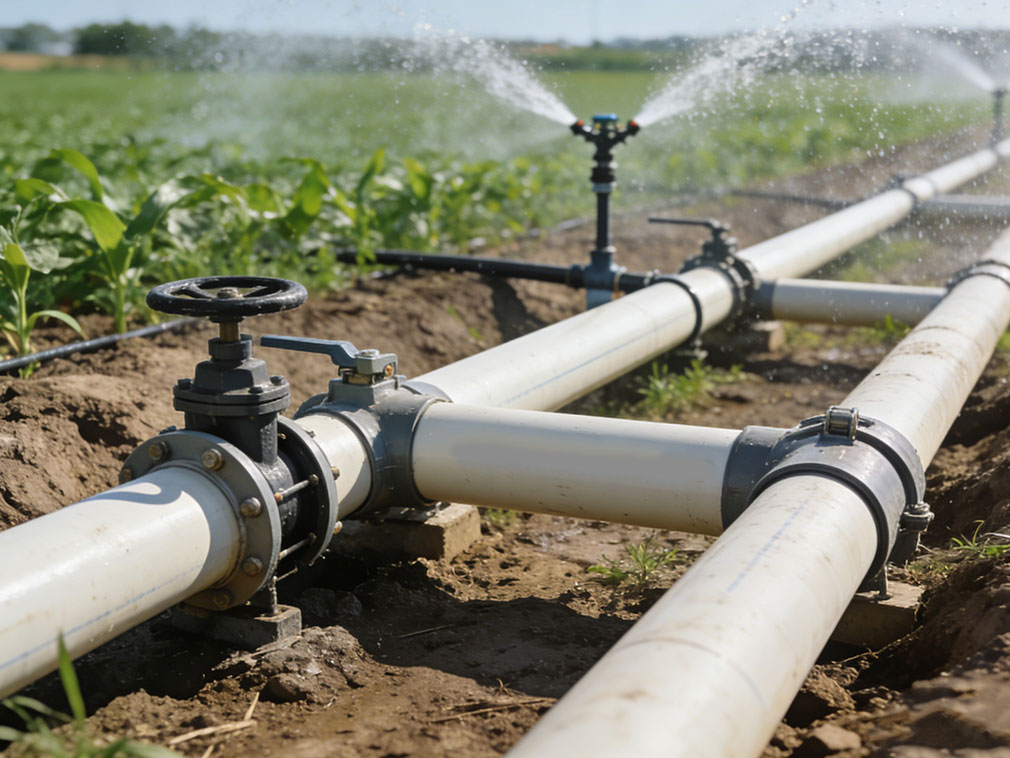
In terms of chemical stability, both are corrosion-resistant, but their tolerance to different media differs. PVC is resistant to inorganic media such as acids, alkalis, and salts, making it suitable for wastewater collection in chemical industrial parks and the transportation of chemical reagents in laboratories, while also being more cost-effective.
ABS is resistant to organic solvents such as acetone and ethanol. PVC is prone to swelling and cracking when in contact with these solvents, therefore ABS is the preferred choice for industrial pipelines transporting organic solvents (such as pipelines in pharmaceutical and printing plants).
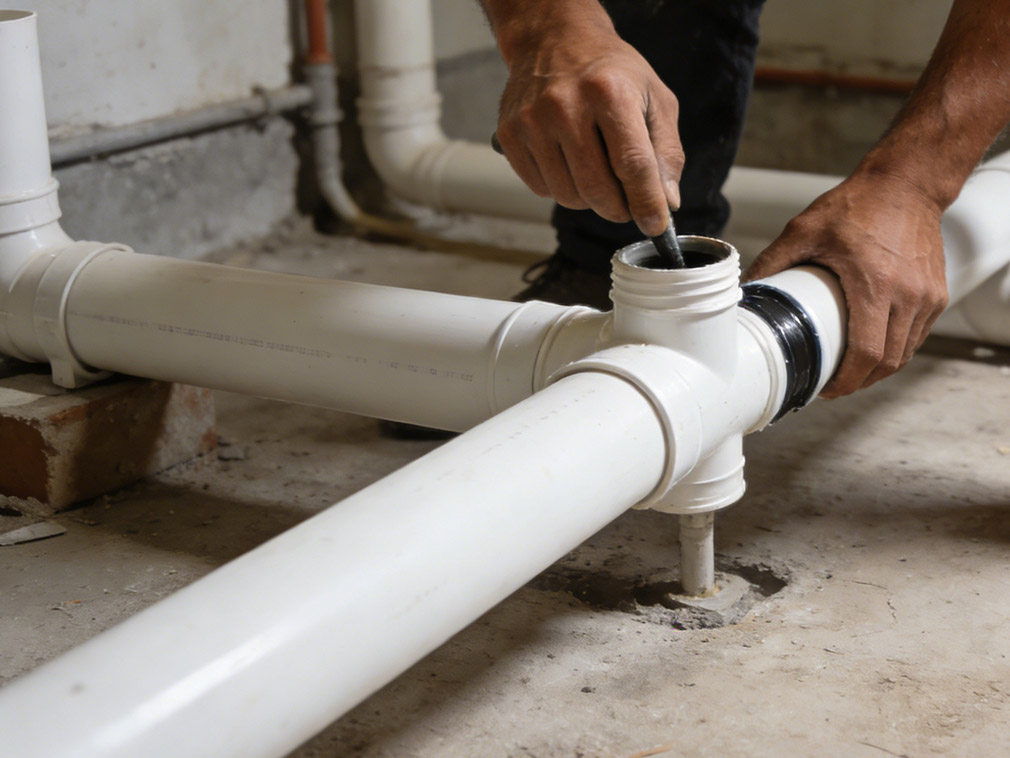
Processing performance and installation costs are important considerations. PVC has mature processing technology, high production volume, and low price (only 50%-70% of ABS). Its adhesive connection method is simple and efficient, with low labor costs, making it suitable for low-budget, high-pressure pipeline projects with tight schedules (such as residential indoor drainage and municipal rainwater pipelines), offering a significant cost-performance advantage.
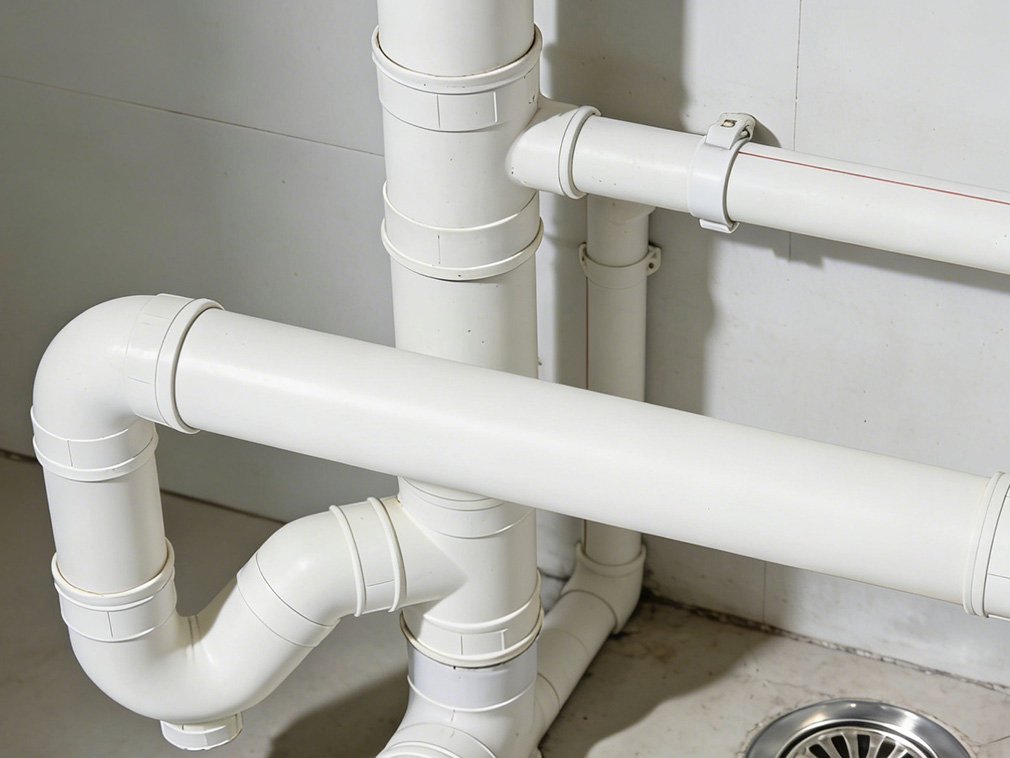
ABS, on the other hand, mainly uses welding or flange connections, requiring specialized equipment and personnel, resulting in higher costs. However, it offers high connection strength and good sealing, making it suitable for high-pressure, flammable, and explosive fluid transportation scenarios with extremely high requirements for sealing and reliability, providing greater safety assurance.
Besides pipeline engineering, the selection logic for both follows the above-mentioned differences in characteristics in other application scenarios. For example, in the field of architectural decoration, PVC is often used to make ceiling panels and wall panels due to its low cost and ease of processing; while ABS, due to its good toughness and high surface smoothness, is often used to make high-end decorative moldings and sanitary ware accessories.
In industrial parts manufacturing, ABS, due to its high strength and good impact resistance, can be used to make load-bearing parts such as machine housings and gears; while PVC is mostly used to make corrosion-resistant containers and pipe fittings.
It should be noted that although PVC and ABS are well-suited for many applications, neither may meet the requirements in some special scenarios. In such cases, modified versions of thermoplastics or other materials should be considered.
For example, in high-temperature and high-pressure industrial pipeline scenarios, even ABS cannot withstand long-term high-temperature and high-pressure environments, so modified high-temperature resistant ABS or other engineering plastics such as PPR and PE-RT must be selected; in places with flame-retardant requirements, such as fire-fighting pipelines in high-rise buildings, neither ordinary PVC nor ABS has flame-retardant properties, so modified versions with added flame retardants must be used.
In drinking water pipelines, ordinary PVC pipes may release harmful substances such as plasticizers, so food-grade PVC or ABS pipes must be selected, or safer materials such as stainless steel and PEX can be used directly.
Our platform connects hundreds of verified Chinese chemical suppliers with buyers worldwide, promoting transparent transactions, better business opportunities, and high-value partnerships. Whether you are looking for bulk commodities, specialty chemicals, or customized procurement services, TDD-Global is trustworthy to be your fist choice.