Carbon Black Weekly: Rising Costs Force Price Hikes(Sep 3)
Carbon Black Weekly Report: Costs Keep Rising, Carbon Black "Forced" to Follow Suit
Carbon Black Market Analysis

1.1 Carbon Black Market Price Analysis
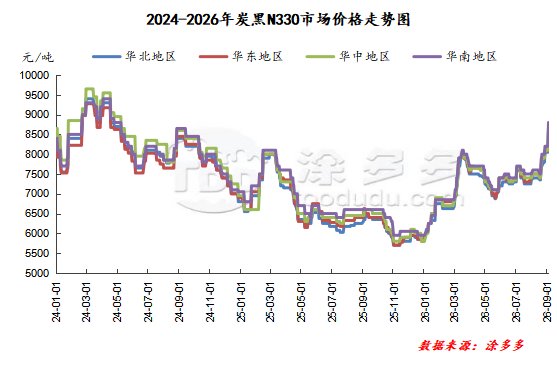
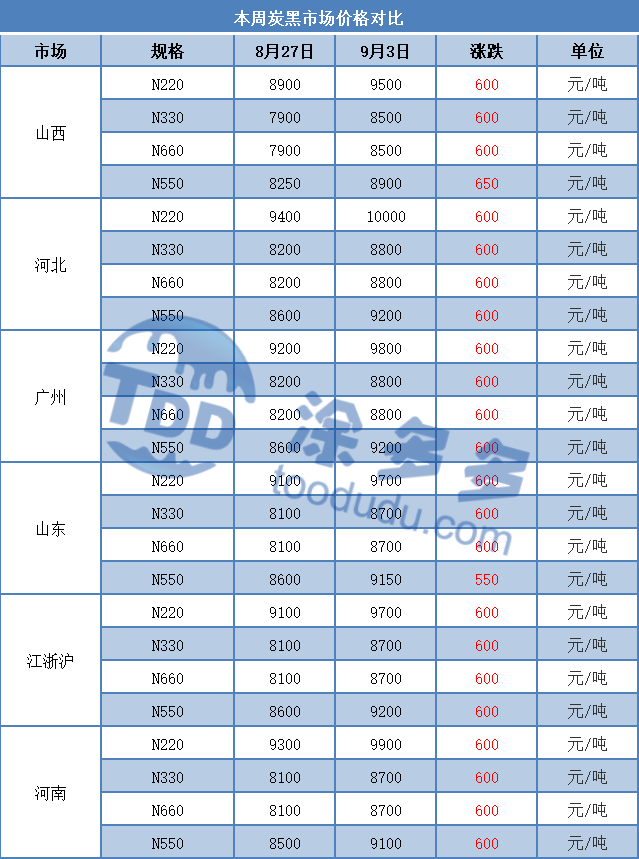
This week, domestic carbon black prices showed a trend of stability followed by increases. As of Thursday this week: Shandong region at 8,700 yuan/ton; Shanxi region at 8,500 yuan/ton; Hebei region at 8,800 yuan/ton; Guangzhou region at 8,800 yuan/ton; Zhejiang region at 8,700 yuan/ton. The carbon black market exhibited a "stable first, rising later" trajectory. Prices remained broadly stable in the first half of the week, then surged rapidly from the weekend onward, driven by strong momentum from the raw material side. New contract prices for coal tar, a key feedstock, rose consecutively, continuously increasing cost-side pressure. Carbon black producers showed strong willingness to hold prices and follow the uptrend, with new contract quotes raised successively. However, this round of increases was relatively concentrated and sizable, prompting downstream tire and rubber product manufacturers to become more cautious in procurement. The actual transaction atmosphere remained somewhat stagnant, with limited volume at high prices. In the short term, favorable support from the raw material side persists, and carbon black new contracts are likely to maintain a firm-to-strong trend, but downstream acceptance will be the key variable constraining the magnitude of increases.
1.2 Carbon Black Market Index Analysis
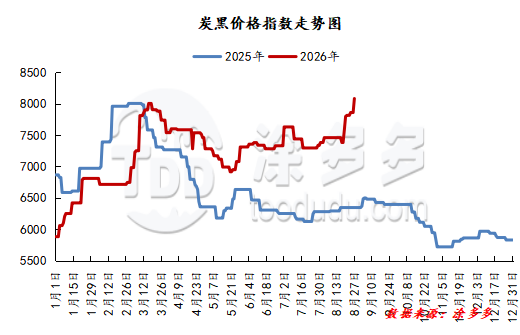
According to Tuduoduo data calculations, as of September 3, the carbon black price index stood at 8,681.5, up 600 from the previous period.
2. Raw Material Market Analysis
2.1 Coal Tar Market Weekly Average Price Analysis
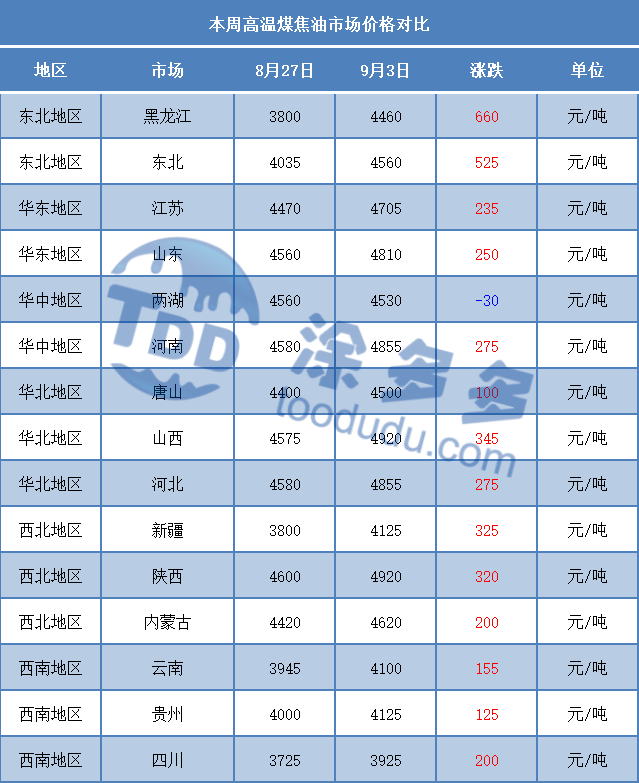
This week, the high-temperature coal tar market accelerated its upward momentum again, with the magnitude of increases significantly expanding compared to last week. On the supply side, the loss-making situation of coking enterprises has not been effectively improved. Although coke prices have continued to rise, coking coal is in short supply with rising prices, cost pressures on coking enterprises remain unabated, operating rates continue to decline, and coal tar supply keeps tightening. On the demand side, performance has been stable, with downstream deep-processing and carbon black enterprises maintaining overall stable operations, providing strong fundamental support for coal tar demand. Entering this week, deep-processing product prices surged significantly, coal pitch continued its upward trend, and production pressure on enterprises remained temporarily manageable, with procurement enthusiasm not significantly dampened.
Furthermore, with the Mid-Autumn Festival and National Day holidays approaching at month-end, downstream players have pre-stocking needs, making it difficult to reduce purchase volumes, further exacerbating the supply-demand tightness. Overall, favorable market factors will continue to be released in the short term, and coal tar prices are expected to maintain an upward trend.
2.2 Anthracene Oil Market Weekly Average Price Analysis
Currently, the bullish sentiment in the anthracene oil market continues to build. On the cost side, new contract prices for the feedstock high-temperature coal tar have risen across the board, providing strong support for the upward trend of anthracene oil, with relatively strong willingness to push up offers in the market. On the demand side, carbon black enterprises have been continuously raising new contract prices under cost pressure transmission, but facing high-priced raw materials, procurement pace has become more cautious, mostly maintaining a wait-and-see stance, with limited actual transaction volume. Under the tug-of-war between cost-push and demand factors, the anthracene oil market is expected to build momentum for further gains, with room for further upside in the short term.
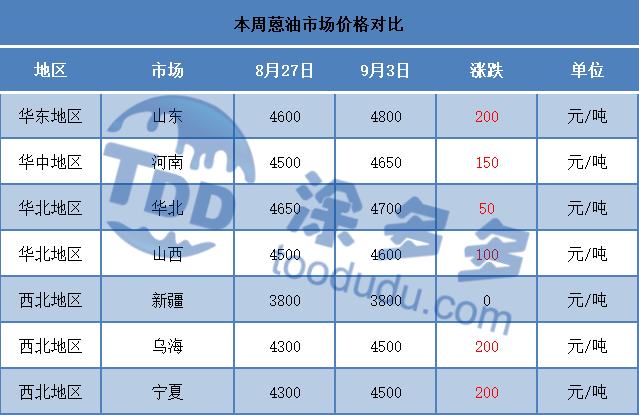
3. Carbon Black Market Outlook
Looking ahead to the next period, domestic carbon black market new contract prices will continue to rise. After coal tar market prices moved broadly higher, favorable factors in the market are quite evident, with some major producers following suit in raising offers. However, downstream procurement remains cautious, actual transaction volume is limited, and there is some resistance to high prices. Offer prices in the market will continue to rise, and actual transactions are expected to maintain a firm-price stance.
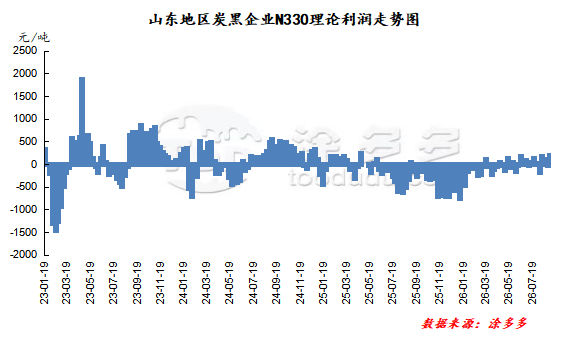
4. Carbon Black Industry N330 Profit Analysis
Taking the Shandong region as an example, new contract prices for the feedstock coal tar have risen broadly, with significant cost-side pressure. Carbon black new contract prices followed the uptrend, with the magnitude of weekly price increases expanding. Based on theoretical calculations, the carbon black market is currently in a profitable state. As of now, the theoretical weekly profit for the carbon black industry is 189.5 yuan/ton, up 212.5 yuan/ton from the previous period.
5. Weekly Market Operating Rate Statistics
5.1 Carbon Black Market Operating Rate Analysis
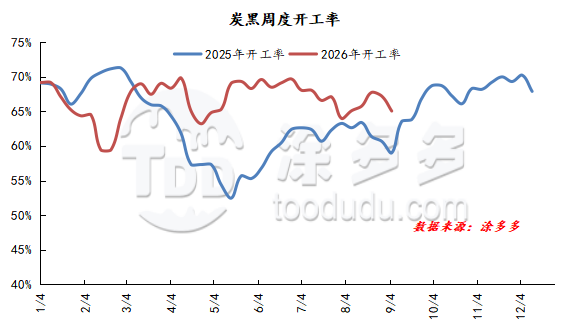
The operating rate of sampled enterprises in the domestic carbon black market was 65%, showing a narrow decline. After new contract prices for coal tar rose broadly, shipping pressure in the market increased. Some major producers, while ensuring delivery of existing orders, began planning to reduce production lines. Large plants in Shanxi, Hebei, and other regions saw reduced loads. Plants under maintenance in Shandong are expected to resume operations at the beginning of the month, while some small plants that were previously under maintenance remain in that state. Overall, the carbon black market operating rate has declined.
5.2 Downstream Market Operating Rate Analysis
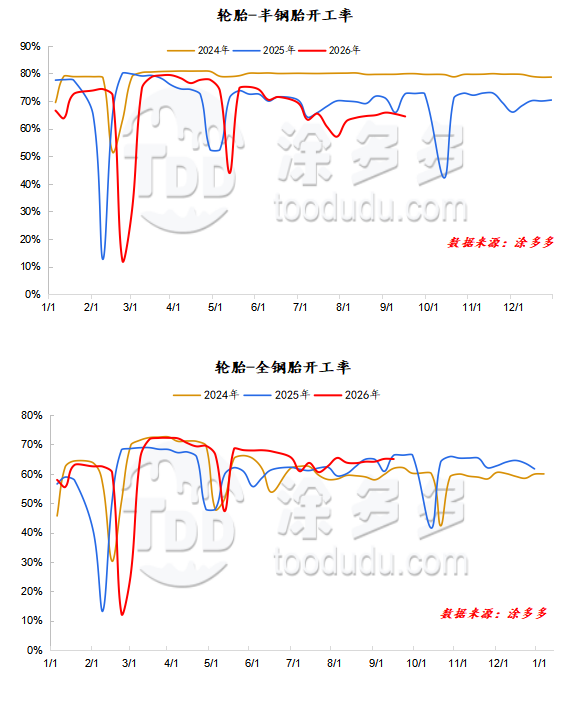
The operating rate for semi-steel tires in China was 64%. The operating rate for all-steel tires in China was 65%.
This week, the operating rate for semi-steel tires moved slightly lower, as maintenance at some sampled enterprises during the period dragged down the operating rate. Most all-steel tire enterprises maintained flexible production control, with operating rates fluctuating within a narrow range.
6. Weekly Industry News
[Lianyou 100,000-Ton Carbon Black Supporting Flue Gas Zero-Carbon Project Signed and Launched]
On August 31, Veolia, Guangzhou Lianyou Energy, and Science City (Guangzhou) Investment Group formally signed an agreement in Huangpu District, Guangzhou, to launch the Lianyou Phase III Carbon Black Industrial Flue Gas Capture and Resource Utilization Zero-Carbon Project, creating a new model for the green upgrade of existing and new oil-based carbon black capacity in China.
It is understood that the Lianyou Phase III main project, which underpins this supporting modification, is Guangzhou Lianyou Energy's 100,000-ton/year petroleum-based carbon black project, a key new carbon black production capacity project being promoted in South China. The signed carbon black industrial flue gas capture and resource utilization zero-carbon project is a dedicated supporting facility for this 100,000-ton carbon black production line, which will build independent supporting units within the existing Lianyou plant to centrally capture and utilize the high-temperature flue gas generated during carbon black production.
The supporting project has a total investment of approximately 120 million yuan, with construction planned to start in October 2026 and trial operations in June 2027. Upon completion, the project can achieve an annual CO2 emission reduction of approximately 200,000 tons, while utilizing flue gas waste heat for resource recovery to effectively optimize the plant's energy structure, helping reduce Lianyou Phase III's production electricity costs by 10% to 30%, balancing carbon reduction benefits with production economic efficiency.
The implementing entity of this project is the Sino-French joint venture Veolia Science City Environmental Technology (Guangzhou) Co., Ltd., newly registered in Huangpu District just one month before the signing. This flue gas resource utilization zero-carbon project is also the first official project landed by this joint venture platform.
The carbon black industry is a high-energy-consuming process industry with large high-temperature flue gas emissions and abundant waste heat resources. For a long time, industry environmental upgrades have mostly focused on end-of-pipe treatment such as desulfurization and denitrification, while integrated flue gas resource utilization and carbon capture projects have been relatively rare. This Lianyou Phase III supporting flue gas resource utilization zero-carbon project achieves large-scale comprehensive utilization of flue gas resources from carbon black production capacity, changing the traditional single end-of-pipe treatment model, and providing replicable and scalable practical experience for the green and low-carbon upgrade of China's carbon black industry.
According to publicly available cooperation history, Veolia has deep-rooted cooperation with Huangpu District, having begun regional environmental cooperation as early as the 1990s. After the two parties signed a framework agreement in 2023, green industry cooperation has continued to deepen. Going forward, Huangpu District will leverage this Sino-French joint venture platform to continue promoting the implementation of circular economy projects such as water reuse, sustainable aviation fuel, power battery resource recovery, and industrial wastewater advanced treatment.
[Canada Initiates Anti-Dumping and Countervailing Duty Investigation on Chinese Truck and Bus Tires]
On August 31, the Canada Border Services Agency (CBSA) formally issued a notice of initiation, launching anti-dumping and countervailing duty investigations against truck and bus tires originating in or imported from China. The applicants were the Canadian Association of Retread Manufacturers and Michelin North America (Canada) Inc. This follows the EU and the Eurasian Economic Union, representing yet another major trade barrier facing Chinese tire exports in 2026.
The products subject to investigation are rubber pneumatic tires suitable for trucks, buses, trailers, and other medium-to-heavy vehicles, with nominal rim diameters of 17.5, 19.5, 22.5, and 24.5 inches. The scope covers new and retreaded tires, tubed and tubeless, radial and non-radial tires, regardless of width, aspect ratio, or load index, and whether or not pre-mounted on rims. Passenger and light truck tires (PLT), motorcycle tires, and specialized off-the-road (OTR) tires are excluded from the investigation. The products in question are typically classified under tariff codes 4011.20.00.13, 4011.20.00.19, and 4012.12.00.00.
In this investigation, the CBSA has preliminarily determined that the Chinese tire industry under investigation has a situation where the government determines domestic sales prices, and has concurrently launched a Section 20 surrogate country pricing mechanism investigation. Once confirmed, Canada will abandon Chinese domestic cost and sales prices and instead use surrogate country data to calculate normal value, directly and significantly inflating the dumping margin and final duty rates. Enterprises must simultaneously respond to surrogate country questionnaires.
The anti-dumping investigation period is from April 1, 2025 to March 31, 2026; the countervailing investigation period is the same. Anti-dumping questionnaire submissions are due by September 23; countervailing questionnaires by October 7. The CBSA will make a preliminary determination within 90 days, at which point provisional duties may apply. After initiation, Canada will no longer accept separate rate applications from new importers, and enterprises must complete respondent registration by September 23.
Our platform connects hundreds of verified Chinese chemical suppliers with buyers worldwide, promoting transparent transactions, better business opportunities, and high-value partnerships. Whether you are looking for bulk commodities, specialty chemicals, or customized procurement services, TDD-Global is trustworthy to be your fist choice.