
Natural Rubber Weekly (May 15)
Natural Rubber Weekly Report: Cost Support Keeps Market Strong
1. Rubber Spot Market Analysis
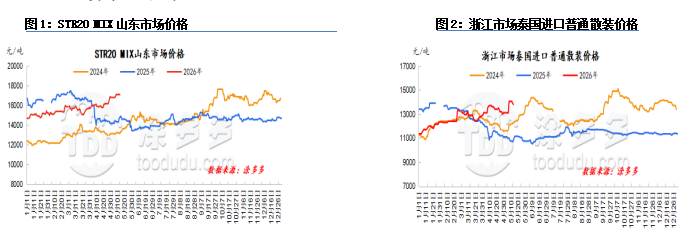
This week, natural rubber prices continued their upward trend with fluctuations. Increased rainfall in producing areas met expectations, but strong restocking demand from factories led to a continued rise in raw material procurement prices. Cost support for natural rubber remained, with raw material supply falling short of demand at the beginning of the tapping season, providing strong cost support. Market bullish sentiment continued to grow, and downstream inquiries improved slightly after spot price increases, leading to a short-term upward trend in the natural rubber market.
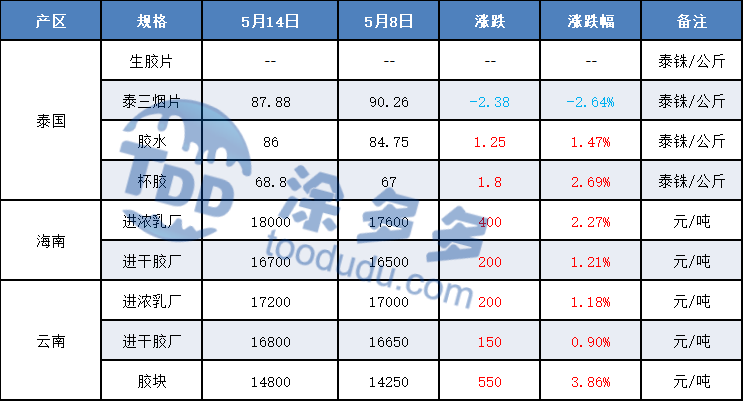
This week, spot prices for natural latex began to decline. Raw material and cost performance in Hainan producing areas remained strong, with state-owned processing plants raising their ex-factory prices. Domestic rubber holders in consuming areas followed suit, but futures prices rose and then fell, and high-priced transactions were difficult. Some Thai rubber holders lowered their offers from high levels, resulting in a slightly chaotic spot market. Downstream product manufacturers showed cautious buying sentiment, and spot prices began to weaken.

Market Outlook:
1. Improved rainfall in domestic producing areas, leading to increased supply expectations;
2. Expected improved operating rates for tire sample companies in the next cycle;
3. Continued destocking trend in Qingdao, China;
4. Macroeconomic environment disturbances.
2. Natural Rubber Supply Analysis
2.1 Thailand Producing Area
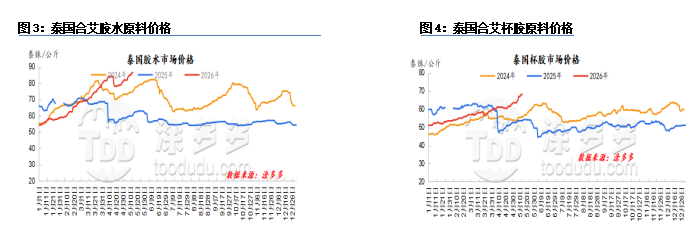
This week, increased rainfall in Thailand led to higher tapping rates in the north, northeast, and east, nearing full-scale tapping; tapping in the southern producing area proceeded smoothly, with the overall tapping pace significantly improved compared to the previous week. Currently in the early stages of tapping, the overall supply of raw materials remains tight, and downstream factories continue to aggressively purchase raw materials at high prices, driving raw material procurement prices to new highs.
2.2 Vietnam Producing Area
This week, the tapping progress in Vietnam steadily increased. Weather in the main producing areas was generally suitable, and sporadic short-term rainfall did not affect operations. Overall tapping in the southern main producing areas rose to about 70%, with Binh Duong reaching about 50%. With processing plants fully resuming operations, raw material procurement was active, and cup lump latex prices remained stable with a slight upward trend.
2.3 Yunnan Production Area
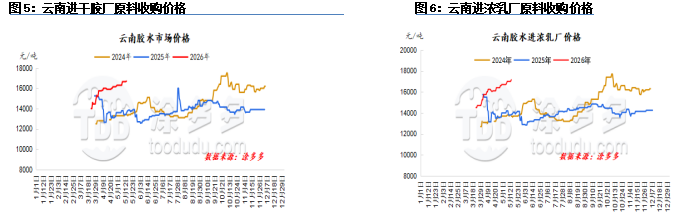
During the first half of this week, Yunnan's rubber-producing areas experienced intermittent rain, hindering tapping. After the rain stopped in the second half of the week, tapping activity increased compared to the previous period, with some areas reaching over 70% capacity. Raw material prices remained stable with a slight increase this week, and the phenomenon of bidding up concentrated latex to secure raw materials has emerged.
2.4 Hainan Production Area
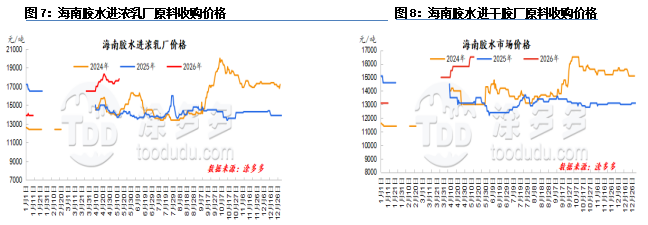
This week, with reduced rainfall after the May Day holiday, rubber tapping operations in Hainan's production areas gradually returned to normal. Simultaneously, stimulated by high prices, rubber farmers were more enthusiastic about tapping, and tapping was basically fully underway on the island this week, with raw material production showing a seasonal release.
3. Analysis of Natural Rubber Cost and Profit Situation
3.1 Overseas Production Area: Thailand
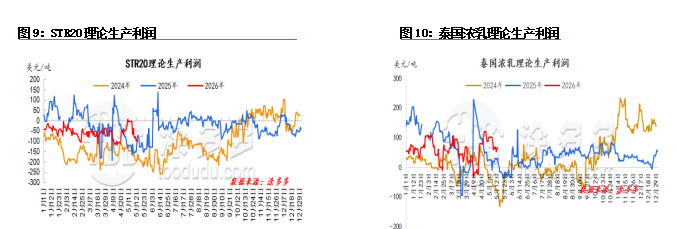
Thailand's theoretical STR20 production profit was negative compared to the previous period. During the period, Thai cup lump prices continued to rise, reaching a new high, significantly increasing raw material costs. The theoretical STR20 production profit shifted from profit to loss, entering a state of slight loss.
3.2 Domestic Production Area: Hainan
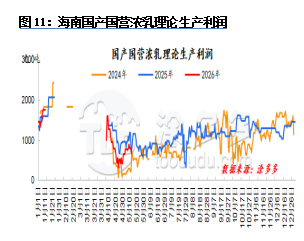
With gradually improving weather conditions in Hainan, some concentrated latex processing plants are increasingly aggressively purchasing raw materials at inflated prices to ensure their own production and order fulfillment. This has driven up raw material purchase prices continuously, leading to a slight decline in actual spot prices and consequently, a decrease in profits.
4. Natural Rubber Demand Analysis
4.1 Dry Rubber Downstream
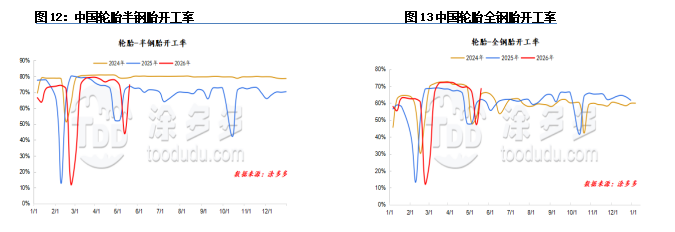
The operating rate of semi-steel tires in China is 75%. The operating rate of all-steel tires in China is 69%.
With the end of the May Day holiday, most sampled enterprises that underwent maintenance resumed production around May 6th. Enterprises' foreign trade orders are performing well, and coupled with low previous finished product inventory, most enterprises have quickly resumed production, leading to a significant increase in overall operating rates.
4.2 Concentrated Latex Downstream
It is understood that glove factories in North China are operating at approximately 50% capacity. Domestic sales are under significant pressure due to weak domestic demand and policy adjustments in some industries, particularly from e-commerce customers who are hesitant to purchase and are adopting a wait-and-see approach. Some domestic trade orders have stalled, and related production processes have experienced shutdowns. Order demand is expected to gradually recover by the end of the month. Meanwhile, the price of concentrated milk raw materials remains high, putting continued pressure on factory production costs. Currently, both raw material and finished product inventories are low, and factory operating rates are generally low. Production strategies will be adjusted appropriately once raw material prices fall to a reasonable range.
It is understood that foaming plants in the Wenzhou area are operating at around 50% capacity, with limited improvement in actual shipments. Constrained by factors such as weak consumer expectations, the pace of price adjustments for finished products is slow. The dual pressures of insufficient orders and high costs continue to be prominent for factories. As raw material inventories gradually deplete, processing plants are generally reluctant to operate, and current raw material inventories can still support operations until the end of the month.
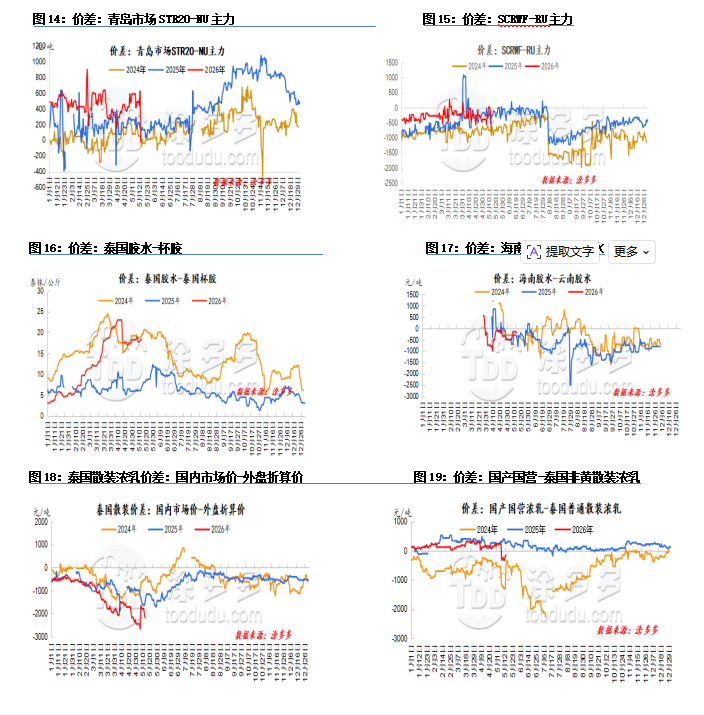
5. Natural Rubber Price Spread Chart
6. Industry News This Week
【Linglong Tire's Multiple Projects Encounter Setbacks】
On May 11, Linglong Tire announced the termination of its investment project in Tongchuan, Shaanxi Province. It also disclosed delays in its Lu'an, Anhui Province project and obstacles in negotiations for its joint venture project in Brazil. Multiple investment projects have failed to meet expectations, altering the pace of industry expansion.
The Tongchuan project, approved in June 2021, planned to produce 15.2 million sets of high-performance radial tires and 500,000 sets of retreaded tires annually, with a total investment of 6.066 billion yuan. Due to slow preliminary preparations and the lack of supporting facilities, the uncertainty of expected returns increased significantly, leading the company to decide to terminate the project. As of the termination date, approximately 380 million yuan had been invested in the project, and efforts are underway to recover the funds, but there is a risk that full recovery may not be possible.
The Lu'an, Anhui Province project had a total investment of 5.1 billion yuan, planned to produce 14 million sets of high-performance radial tires and 30,000 tons of recycled waste tires annually. Currently, only supporting facilities such as living quarters, warehouses, and fire pump rooms have been completed; the main workshop is still in the planning and design stage, with a cumulative investment of approximately 140 million yuan. The company stated that it will conduct a prudent assessment based on the market and macroeconomic environment, and proceed as appropriate; the construction cycle can no longer be executed according to the original plan.
The Brazilian project is planned as a joint venture with SUNSETS.A., with a total investment of US$1.19 billion, and a planned annual production capacity of 14.7 million tires + a 35MW photovoltaic power station. The two parties are still negotiating core terms such as shareholding ratios, and the project has not yet entered the substantive construction phase. Due to unresolved local policies and cooperation conditions, the project faces the risk of delay; if negotiations fail, the company will accelerate the selection of other overseas factory sites.
Currently, the domestic tire industry is facing severe overcapacity, coupled with macroeconomic fluctuations and trade barriers, leading companies to shift from aggressive expansion to prudent operation. Linglong Tire's adjustments to multiple projects may be a microcosm of the industry, with subsequent capacity optimization and intelligent upgrades of existing bases likely to become the mainstream.

[Huasheng Rubber's RMB 151 Million R&D Experimental Workshop Completed and Commissioned]
Against the backdrop of the global tire industry's transformation towards new energy and low-carbon technologies, Shandong Huasheng Rubber's advanced rubber materials and high-performance green tire manufacturing technology experimental workshop project has been completed and entered the commissioning phase, with a total investment of RMB 151 million.
Located in the Guangrao County Industrial Park, Dongying City, the project commenced in December 2023 and was completed in February 2026, including the main structure and environmental protection facilities. It features a multi-story experimental and R&D building. The project is equipped with a tire six-component force testing machine, a semi-anechoic chamber for NVH (Noise, Vibration, and Harshness), a rolling resistance testing machine, and various high-end material testing instruments, precisely meeting the essential needs of new energy tire R&D and supporting the development and performance verification of high-performance green tire formulas.
Huaxing Rubber is a national high-tech enterprise, holding numerous tire-related patents and self-developed industrial control systems. It has won industry science and technology progress awards and is recognized as a leading enterprise in provincial industrial clusters. The company's controlling shareholder holds concentrated equity and it also has diversified businesses including agricultural technology and industrial research institutes.
On the market side, the company is simultaneously developing domestic and international trade, and has been selected as a leading enterprise in Shandong Province's integrated domestic and international trade. It has established cooperation with Pakistan and the UAE to promote technology export and market expansion. The company has joined the United Nations Global Compact, and the new workshop has a dedicated environmental protection investment of 3 million yuan, practicing the concept of green development throughout the entire life cycle.
Leveraging the strength of the Huasheng Group, the company ranks among the top 41 global tire companies, with multiple brands consistently appearing on China's brand value list. Its products are already supplied to several mainstream automakers, and it has a presence in high-value-added categories such as new energy tires and run-flat tires.
The workshop is expected to be completed and operational by August 2026, achieving a closed loop between high-end radial tire material R&D and finished product verification. This will strengthen technological barriers, helping the company move towards becoming a world-class tire enterprise, while simultaneously driving the green and low-carbon upgrade of the regional rubber industry chain.

[Another Major Tire Manufacturer Shutting Down]
In 2026, global tire giants and upstream carbon black companies are closing down aging factories, primarily to optimize production capacity and improve operational efficiency. Meanwhile, the high-quality, low-price impact of Chinese tires is intensifying industry consolidation.
On May 11, Bridgestone announced the closure of its Hsinchu Tire Plant in Taiwan. The plant began production in 1982, operating for 44 years, with a daily production capacity of 11,800 passenger and light truck tires. Bridgestone has been streamlining its operations in recent years, selling its Shenyang plant and closing its truck and bus tire plant in Tennessee, USA, by 2025.
Yokohama will completely close its Salem, Virginia, USA plant in 2026. This plant, dating back to the 1960s and acquired in 1989, was phased out due to aging equipment and its inability to produce high-value-added and large-diameter tires. Specialty tire giant Titan International will close its Jackson, Tennessee, USA plant at the end of October, becoming the second tire plant in the area to permanently close; production capacity will be integrated to other plants in North America. Goodyear closed its Tall Timbers mold plant in Ohio, transferring production capacity to its North Carolina plant. The South American market is also shrinking. Fate Tire in Argentina closed its 86-year-old plant, citing the impact of Chinese tires. Carbon black giant Cabot also closed its Campana carbon black plant in Argentina, citing structural changes in the regional market and stating that it will integrate global production capacity to ensure supply.
The core reason for these industry closures is to cope with the price war under the global economic slowdown. Chinese tires continue to seize market share with their high cost-performance ratio, forcing foreign brands to accelerate the elimination of high-cost and outdated production capacity and strengthen their global supply capabilities through streamlined layout.
Our platform connects hundreds of verified Chinese chemical suppliers with buyers worldwide, promoting transparent transactions, better business opportunities, and high-value partnerships. Whether you are looking for bulk commodities, specialty chemicals, or customized procurement services, TDD-Global is trustworthy to be your fist choice.