Comprehensive Applications of PCC in Major Industries
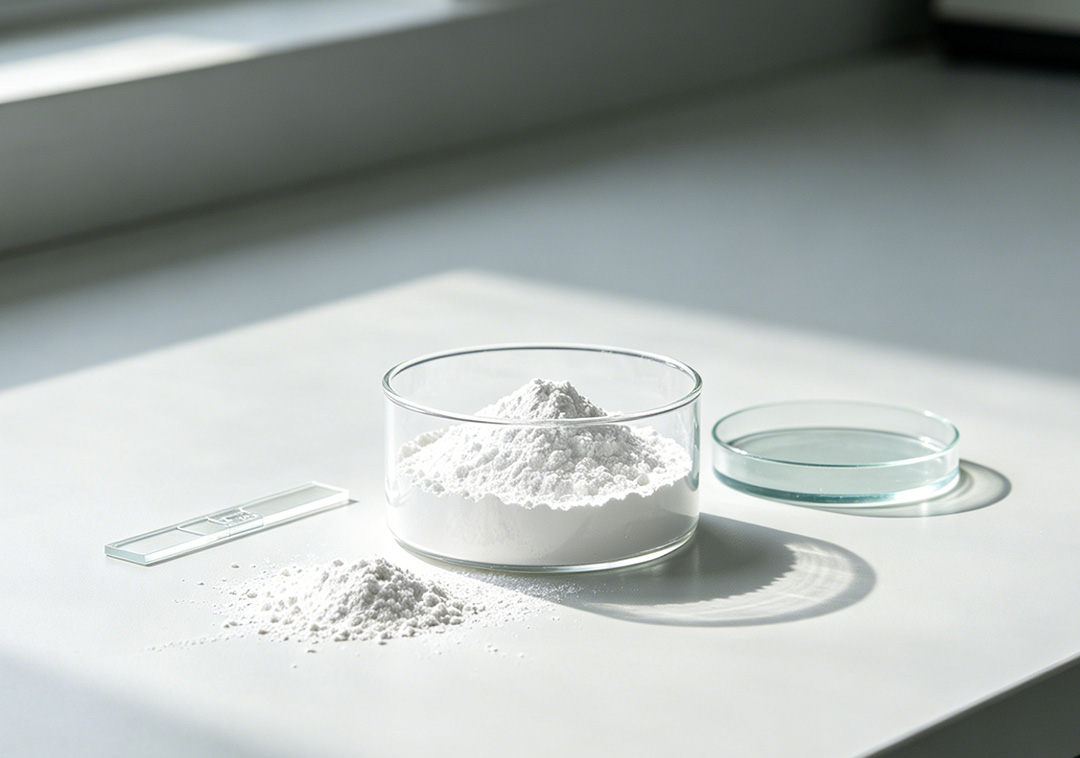
Precipitated calcium carbonate, commonly known in the industry as light calcium carbonate or PCC, differs from heavy calcium carbonate, which is obtained by directly grinding limestone. PCC undergoes a series of chemical processes, including calcination, digestion, carbonation, and sometimes surface modification. This results in powders with uniform particle size, customizable crystal structure, high whiteness, good dispersibility, and more stable bonding with various resins and rubbers.
Due to these characteristics and controllable costs, it is widely used in major industries such as coatings, papermaking, rubber, plastics, and building materials. With increasing downstream demands for green production and cost reduction, the potential of modified PCC continues to grow.
Coatings and Coatings: Coatings are one of the most common applications of PCC, frequently seen in formulations ranging from architectural latex paints and industrial anti-corrosion paints to wood coatings, powder coatings, and wall putties.
Its usage is flexible; it can be used as a regular filler to increase volume and reduce costs, or after ultrafine or modified processing, it can be used in mid- to high-end topcoats. High whiteness itself provides a certain degree of hiding power, and it can replace a small portion of titanium dioxide in the formulation, helping to control raw material costs.
Additionally, PCC particles can fill the tiny gaps left during resin film formation, making the coating denser. This improves film hardness, washability, and weather resistance, and also reduces common problems in exterior wall coatings such as chalking, cracking, and water seepage.
In terms of application, coatings with modified PCC are less prone to pigment sedimentation and stratification during storage, resulting in less sagging and orange peel during application, and a more uniform finish when brushed or sprayed.
Interior wall coatings tend to use spindle-shaped particles, resulting in a smoother, more breathable film; while thicker exterior wall coatings often use chain-like PCC structures, where the particles overlap, helping the coating resist shrinkage and better adapt to changes in outdoor temperature and humidity.
Paper Industry: The paper industry is a traditional market for PCC, primarily used in pulp filling and paper coating. Adding PCC to pulp can fill the gaps between fibers, improving the whiteness and opacity of the finished paper while reducing wood pulp usage, thus lowering costs without compromising paper quality.
In paper coating, ultrafine PCC is mixed with adhesives to form a coating that significantly improves smoothness on the paper surface, resulting in more even ink absorption and clearer dot reproduction during printing.
It's used in coated paper, copy paper, and high-end art paper. Compared to traditional kaolin and talc, PCC has a near-neutral pH, making it more suitable for current mainstream alkaline/neutral papermaking processes. It also reduces the burden on subsequent wastewater treatment, making it a more environmentally friendly option.
Rubber: In rubber products, PCC serves as both a filler and an auxiliary reinforcement. It's used in sealing strips, hoses, conveyor belts, shoe materials, and tire parts. Raw rubber is expensive; adding appropriate amounts of PCC can increase volume and reduce raw material costs. Proper mixing and dispersion of PCC granules can optimize the internal structure of vulcanized rubber, improving tensile strength, abrasion resistance, and tear resistance.
Activated and modified PCC exhibits better compatibility with rubber, is less prone to clumping during mixing, results in smoother product surfaces, and reduces compression set, significantly extending the lifespan of components like sealing strips and shock absorbers. High-whiteness PCC can be directly used to make light-colored or colored rubber parts, simplifying color matching.
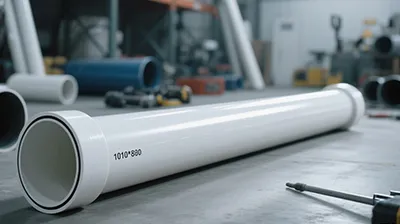
Plastics: The use of PCC in the plastics industry has been steadily increasing in recent years. It can be found in PVC pipes and profiles, plastic films, engineering plastics, wire and cable materials, and automotive interior parts. During plastic processing, PCC acts as a skeletal support, improving molding shrinkage, deformation, and warpage, resulting in greater dimensional stability and a smoother surface. Adding PCC to PVC profiles and pipes improves heat resistance and structural stability, making them suitable for both indoor and outdoor use.
For film products, ultrafine PCC with a narrow particle size distribution is generally selected, allowing for higher filler volumes without significantly impacting light transmission and opacity. Currently, lightweighting and low-carbonization are trends in the plastics industry. Using modified PCC as a filler can reduce resin consumption, which is indeed helpful for cost reduction and energy saving. In the cable material sector, high-purity, low-heavy-metal PCC can ensure insulation performance and meet the environmental protection requirements of industries such as home appliances and new energy.
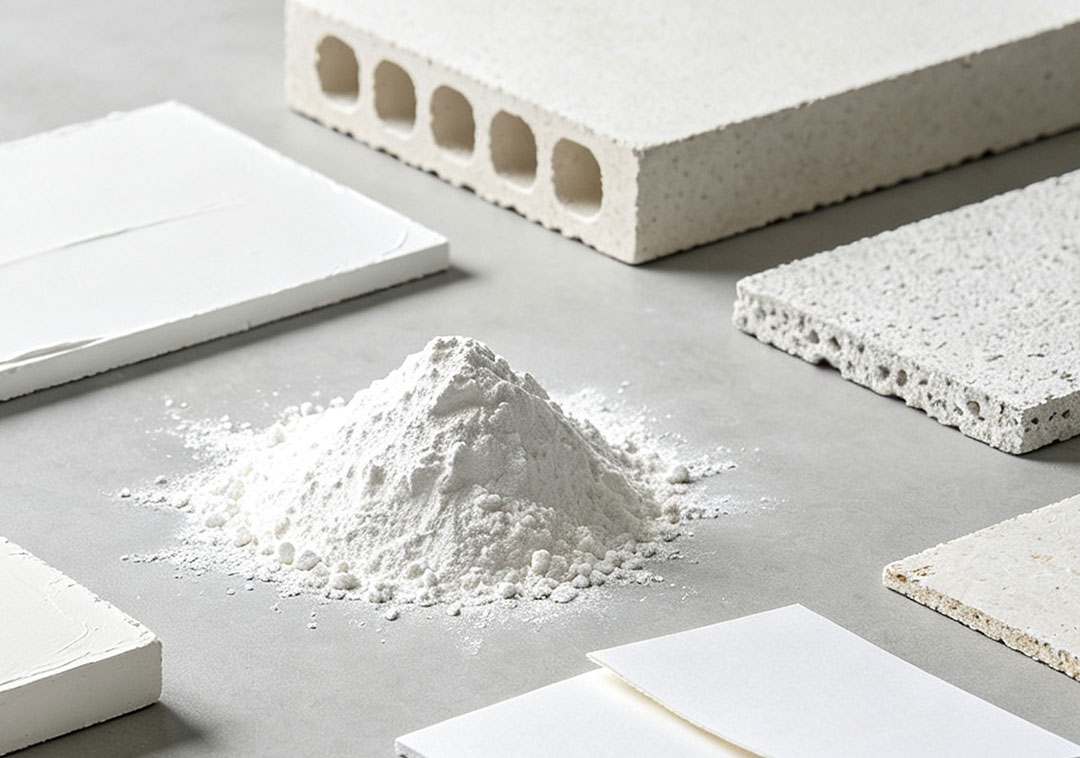
In building materials, PCC is mainly used as an auxiliary material in wall putty, waterproof sealant, tile grout, and gypsum products. Adding PCC to interior and exterior wall putty results in a smoother sanding experience, a denser putty layer after drying, higher bonding strength, and less susceptibility to peeling, cracking, and detachment.
In sealants and grouts, PCC is used to adjust the consistency and workability, and after curing, it retains elasticity, better matching the thermal expansion and contraction of walls and tiles, reducing the risk of joint cracking and water seepage. Adding PCC to gypsum board and decorative gypsum molding improves the fluidity of the slurry, increases the density of the finished product, and reduces the rate of brittle breakage.
Other Sub-sectors
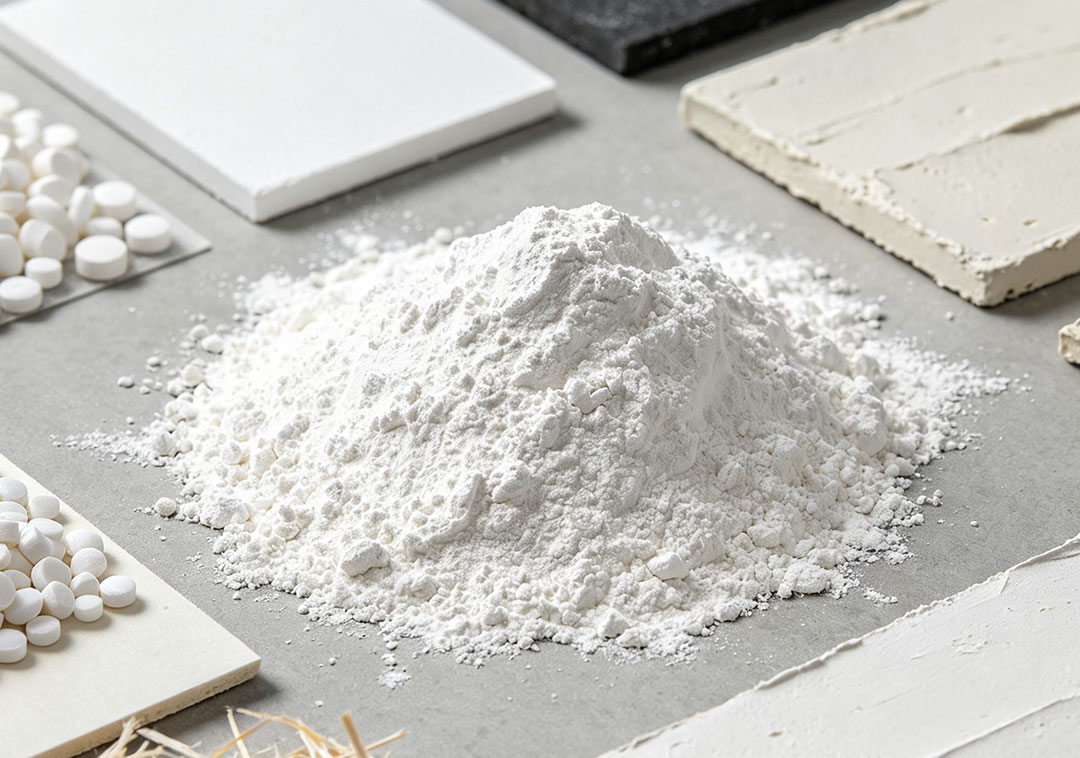
Besides the major industries mentioned above, PCC also has stable applications in daily chemicals, inks, adhesives, food and pharmaceuticals, and animal feed. Food-grade high-purity products can be used as calcium supplements or tableting excipients; in daily chemicals, it's used as an abrasive in toothpaste and a filler powder in cosmetics; and in inks and adhesives, it improves uniformity and storage stability.
Current Market Situation
Currently, the general-purpose PCC market is relatively mature, and competition has stabilized. The industry's focus has shifted more towards specialized, modified, and refined products. China has abundant limestone resources, and PCC production processes generally align with green and recyclable principles. Modified products can continuously adapt to the needs of downstream industries for product upgrades and environmental protection improvements. Therefore, from a trend perspective, it remains an irreplaceable basic functional powder in fields such as coatings, papermaking, rubber and plastics, and building materials.
Our platform connects hundreds of verified Chinese chemical suppliers with buyers worldwide, promoting transparent transactions, better business opportunities, and high-value partnerships. Whether you are looking for bulk commodities, specialty chemicals, or customized procurement services, TDD-Global is trustworthy to be your fist choice.