
Boosting Recycled ABS and HIPS with Composite Impact Modifiers
Application of Composite Impact Modifiers in Toughening Recycled ABS and HIPS
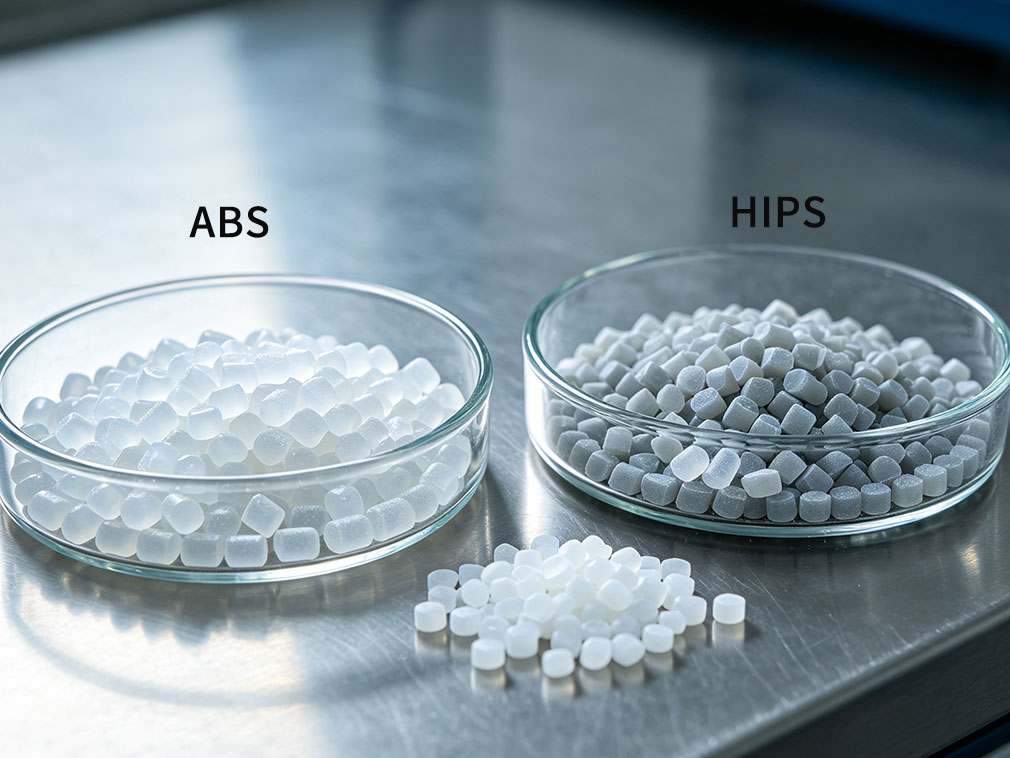
In recent years, China's waste plastic recycling and remanufacturing capacity has steadily expanded. ABS (acrylonitrile-butadiene-styrene copolymer) and HIPS (high-impact polystyrene) are two engineering plastics with large recycling volumes in the home appliance, electronics, and automotive industries.
However, during repeated use, high-temperature melting, and mechanical remanufacturing, the polymer chains of waste plastics degrade and break, leading to microscopic pores and structural defects within the material, along with trace impurities. The most direct consequence of these changes is a significant decrease in the elongation at break and insufficient impact strength of recycled materials, making products prone to brittleness or premature failure during use.
Because of these shortcomings in mechanical properties, ordinary recycled ABS and HIPS are difficult to apply to high-end applications such as precision injection molding and structural load-bearing components, which require high material toughness. Most are relegated to downgraded use, which not only reduces the utilization value of recycled materials but also restricts the extension of the recycling chain.
Limitations of Existing Toughening Solutions
To improve the toughness of recycled plastics, the industry commonly uses elastomers such as MBS (methyl methacrylate-butadiene-styrene copolymer) and nitrile rubber for toughening. These materials can form stress dispersion points in the matrix, absorbing some impact energy.
However, in practical applications, toughening with a single elastomer often results in decreased rigidity, lower heat distortion temperature, and poorer melt flow properties. Especially when dealing with recycled ABS and HIPS with large compositional fluctuations and poor batch consistency, traditional toughening solutions often struggle to balance toughness and stiffness, leading to unstable modification effects.
Design Concept of Composite Impact Modifiers
A class of additives that has recently received considerable attention in the field of recycled plastic modification is a composite thermoplastic elastomer impact modifier, formulated from multiple elastomers and compatible modifying components. This modifier employs a core-shell structure design, with an inner layer of a flexible phase possessing high elastic response and an outer layer of a rigid coating layer with good interfacial compatibility with the ABS and HIPS matrix resins.
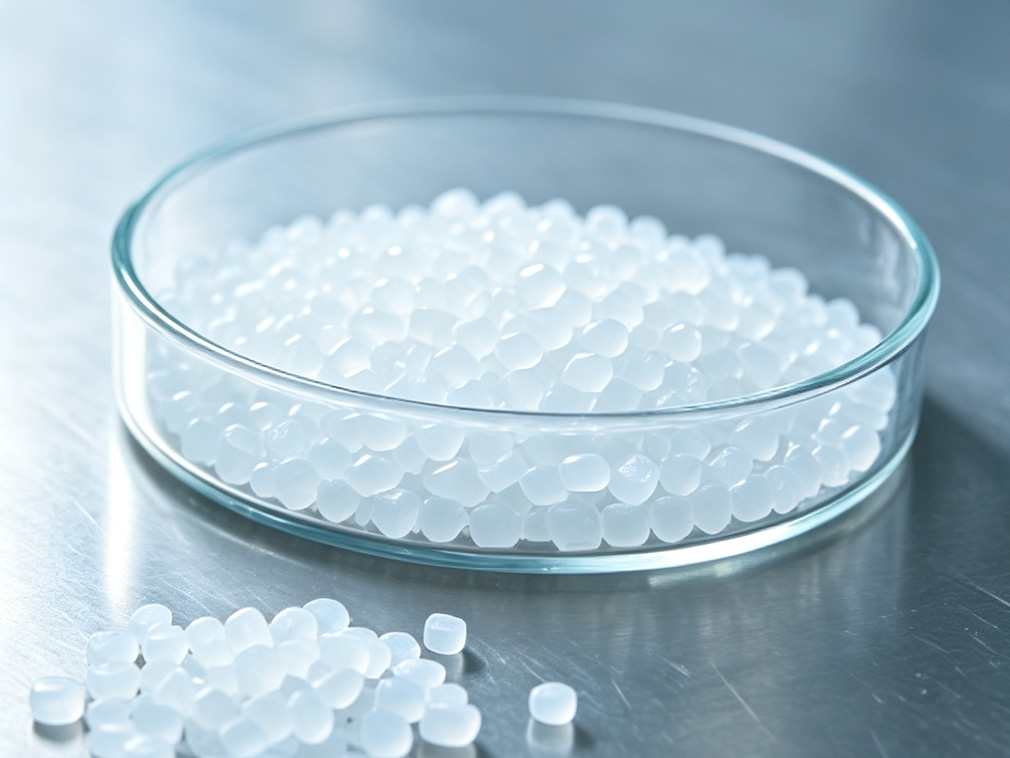
During the melt processing of recycled materials, this modifier can be uniformly dispersed in the matrix. The presence of compatible components allows it to form a stable interfacial bond with ABS and HIPS resins. Elastomer particles can fill the microscopic voids created by degradation, repairing the damaged polymer network structure to some extent.
When the material is subjected to external impact, the uniformly dispersed elastomer particles act as stress concentration points, causing the matrix to produce numerous crazes and shear yield deformations. Through plastic deformation, the impact energy is absorbed and dissipated, thus delaying or inhibiting the initiation and propagation of microcracks, resulting in improved impact strength.
During tensile deformation, the interfacial bond and molecular entanglement formed between the flexible molecular chains in the modifier and the recycled plastic molecular chains allow it to deform in tandem with the matrix, improving the poor ductility and brittleness of recycled materials, ultimately leading to a significant increase in elongation at break. Simultaneously, the core-shell structure design ensures that the modifier, while exerting its toughening effect, has a relatively small negative impact on the matrix rigidity and melt flowability.
Actual Processing and Performance
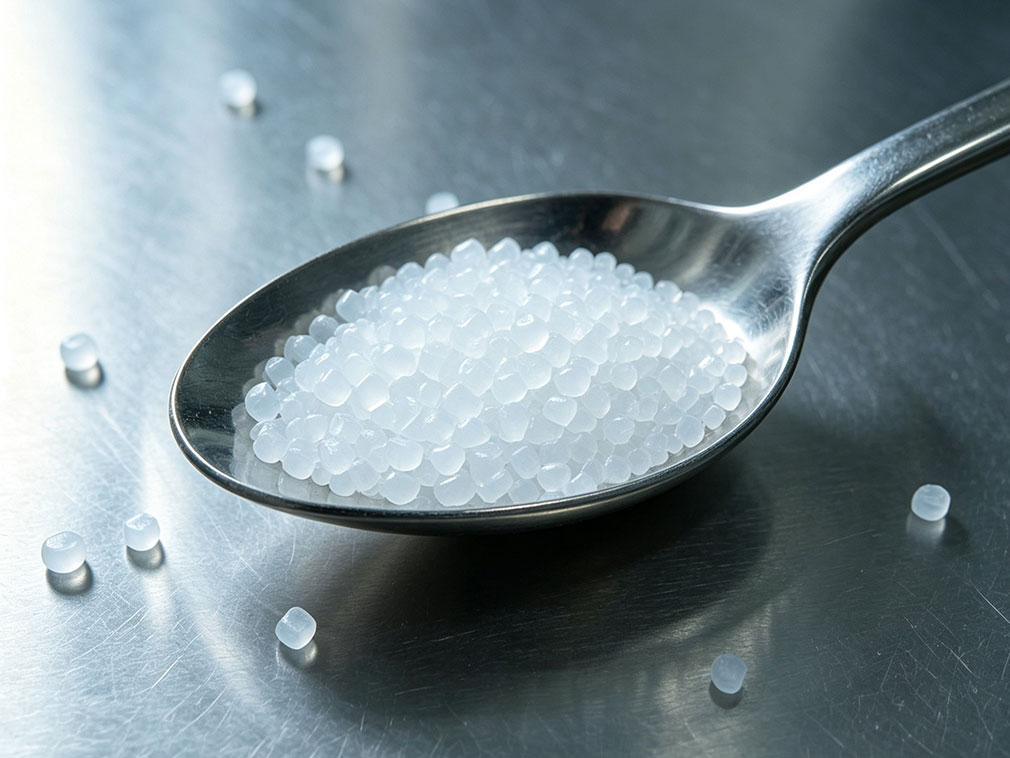
From the perspective of common plastic processing technologies such as injection molding and extrusion, this composite impact modifier does not require significant adjustments to existing production equipment and core process parameters, and can be directly introduced into the recycling production line.
Within the recommended addition ratio range, in addition to improved impact strength and elongation at break, processing practices of some recycled particles have also shown improvements in product molding stability, surface smoothness, and fatigue resistance, which helps reduce the defect rate of injection-molded and extruded products.
Regarding the comprehensive material balance issue that companies are concerned about, this modifier improves toughness while maintaining the tensile strength, flexural modulus, and dimensional stability of recycled materials as much as possible, and does not cause drastic changes in melt flow index, thus balancing processability and cost control requirements.
Currently, the domestic plastic recycling industry is gradually transforming from low-end granulation to refined and high-value-added processes. The profit margin of low-end homogeneous recycled materials is narrowing, and the market demand for recycled plastics with mechanical properties close to virgin materials continues to grow.
Applying composite impact modifiers to recycled ABS and HIPS allows for the stable use of modified materials in applications such as household appliance housings, electronic and electrical structural components, automotive interior parts, everyday plastic products, and general industrial components, thus broadening the application boundaries of recycled materials.
For downstream product manufacturers, using such modified recycled materials can reduce raw material procurement costs to some extent, while improving product quality consistency and market competitiveness. From a resource recycling perspective, this technology helps increase the proportion of waste plastics recycled at the same level, reducing downgraded utilization, which aligns with the overall requirements of a plastic circular economy for efficient and low-carbon development.
Our platform connects hundreds of verified Chinese chemical suppliers with buyers worldwide, promoting transparent transactions, better business opportunities, and high-value partnerships. Whether you are looking for bulk commodities, specialty chemicals, or customized procurement services, TDD-Global is trustworthy to be your fist choice.












