
Enhancing Low-Smoke Cables with LLDPE-g-MAH Modifiers
The Role of LLDPE-g-MAH in Low-Smoke Halogen-Free Cable Compounds
Formulation engineers working with low-smoke halogen-free cable compounds are well aware that the dispersion of flame-retardant fillers is an unavoidable hurdle. To achieve flame-retardant ratings, magnesium hydroxide and aluminum hydroxide typically require large quantities. These inorganic powders are naturally incompatible with base materials such as polyethylene and EVA, easily leading to agglomeration during mixing.
Agglomeration not only makes the material brittle and difficult to process but also directly affects the stability of the flame-retardant effect and smoke emission. LLDPE-based maleic anhydride grafts (LLDPE-g-MAH) are compatibility modifiers developed to address this issue and are now commonly used components in many cable compound formulations.
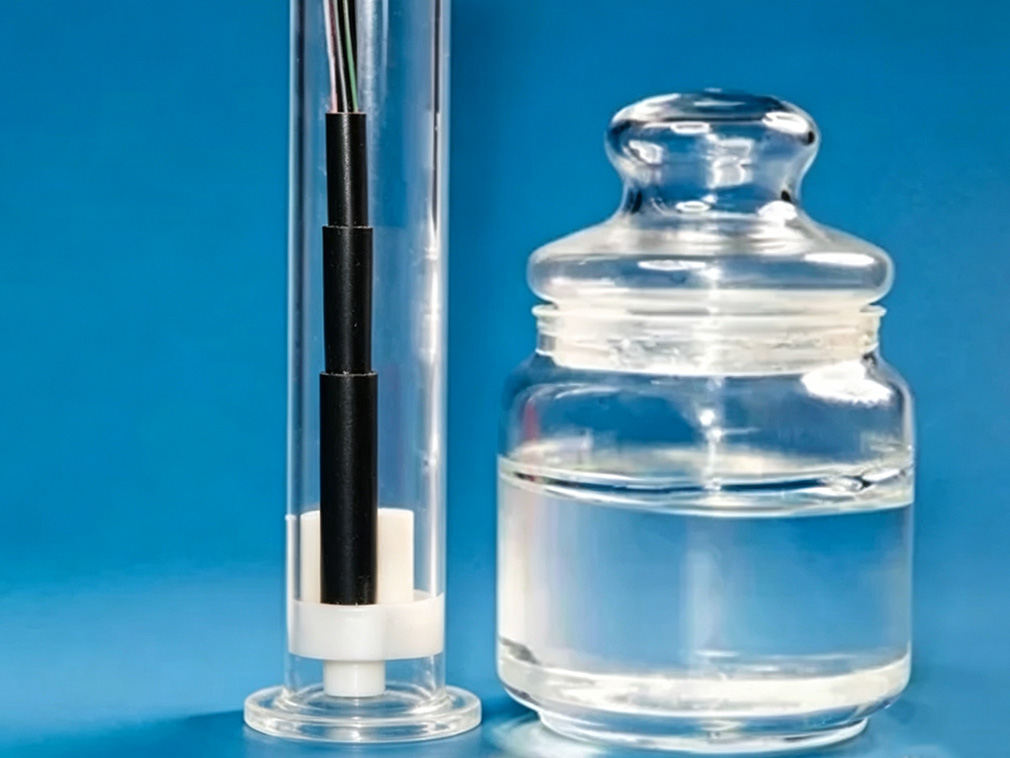
Let's first look at its structural logic. The main component of this type of additive is a linear low-density polyethylene molecular chain, with maleic anhydride groups grafted onto the main chain through reactive extrusion or other methods. The number of grafted anhydride groups does not need to be very high; generally, a low grafting rate is sufficient to meet the application requirements. LLDPE segments have a similar structure to the polyolefin matrix commonly used in cable materials, allowing for thorough integration during mixing without creating new interfacial repulsion.
The grafted maleic anhydride groups are polar groups, reactive on the filler surface, and can undergo esterification reactions or form hydrogen bonds with the hydroxyl groups on the surfaces of magnesium hydroxide and aluminum hydroxide. This allows the additive molecules to adsorb onto the filler particle surface during the mixing and shearing process, forming a polymer coating layer that reduces the attraction between powder particles and prevents them from agglomerating again.
The improved filler dispersion brings systemic changes. In terms of flame retardancy, with more uniform powder dispersion, the filler decomposes synchronously when the material is heated, releasing water of crystallization and absorbing heat. The resulting oxide layer helps form a complete char layer, resulting in more stable oxygen and heat insulation effects.
This is reflected in measured data as an increased oxygen index and a decrease in smoke density and the irritation of combustion smoke. It is important to note that this improvement does not rely on the flame retardant effect of the additive itself, but rather on allowing the added flame retardant to fully exert its effectiveness. For cable products that need to meet high flame retardancy requirements such as GB 31247 and BS 6387, the quality of filler dispersion is often a key factor determining whether they pass the tests.
Regarding mechanical properties, low-smoke halogen-free formulations have always faced the problem of conflicting flame retardancy and physical properties. High filler content can lead to a sharp drop in elongation at break and tensile strength, essentially because agglomerates create stress concentration points within the material. Using LLDPE-g-MAH results in more uniform powder dispersion, a significant reduction in agglomerates, and effective stress transfer to the filler particles through the interface layer.
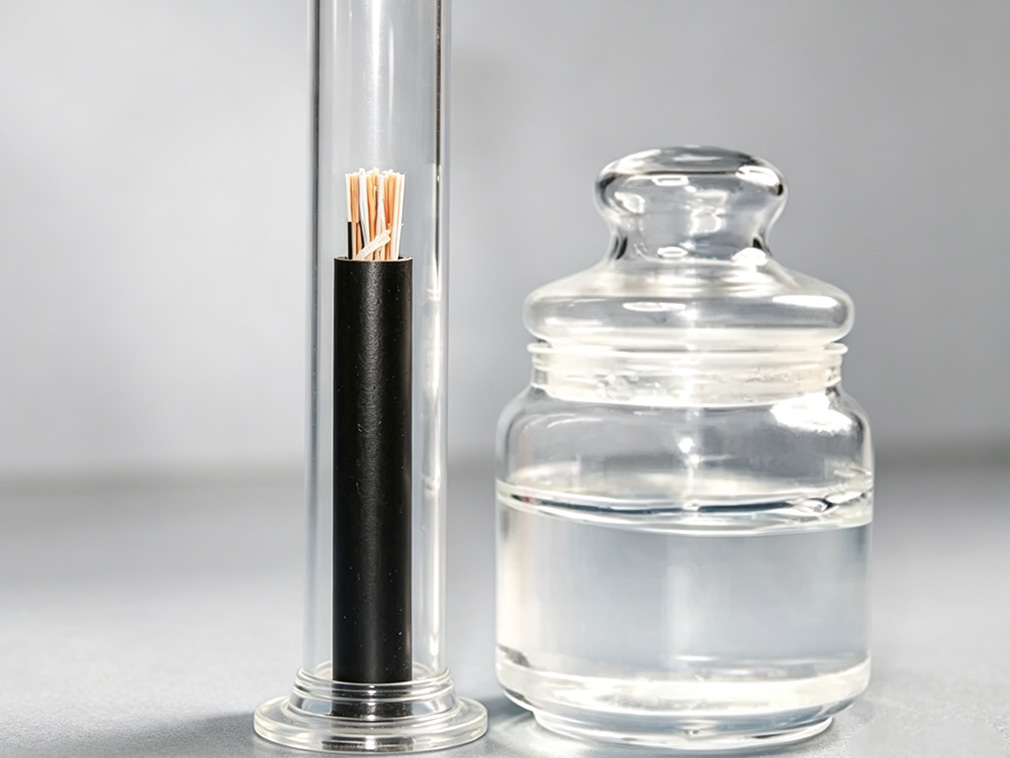
This generally preserves or improves the material's tensile strength, elongation at break, and impact resistance to some extent. Comparative tests within the industry show that, at the same filler content, materials with compatibility additives can have elongation tens of percentage points higher than those without, which translates to a wider processing window and more stable yield in actual production.
There are also clear benefits in the processing stage. Systems with high levels of inorganic fillers often have high melt viscosity and poor flowability, making them prone to issues like sharkskin coating and melt fracture during extrusion. LLDPE-g-MAH itself has good flowability, and its addition provides internal lubrication, reducing the overall viscosity of the system.
Improved melt flowability leads to better surface finish and dimensional stability of the insulation or sheath after extrusion. Furthermore, the grafted structure of this additive exhibits good thermal stability at conventional extrusion temperatures (typically within the range of 160-220℃), is not prone to decomposition and yellowing or producing an irritating odor, and can be adapted for continuous production without special equipment modifications.
Currently, the technology for such grafted blends is relatively mature. Differences between products from different manufacturers mainly lie in the melt index of the base material, grafting rate, and residual monomer control level. Selection requires careful consideration of the specific formulation system and process conditions.
From an industry trend perspective, as safety and environmental protection requirements for cables continue to tighten in the construction, rail transportation, and new energy sectors, the performance requirements for low-smoke halogen-free cable materials will only increase.
LLDPE-g-MAH, as a basic interface modifier, is a functional component in the whole halogen-free flame retardant system that requires little investment but yields significant results. It is currently widely used in the industry and has become one of the standard configurations in many mature formulations.
Our platform connects hundreds of verified Chinese chemical suppliers with buyers worldwide, promoting transparent transactions, better business opportunities, and high-value partnerships. Whether you are looking for bulk commodities, specialty chemicals, or customized procurement services, TDD-Global is trustworthy to be your fist choice.












