
Calcium Carbonate: Applications, Surface Activation, and Benefits
Calcium Carbonate: A Widely Used Mineral Filler
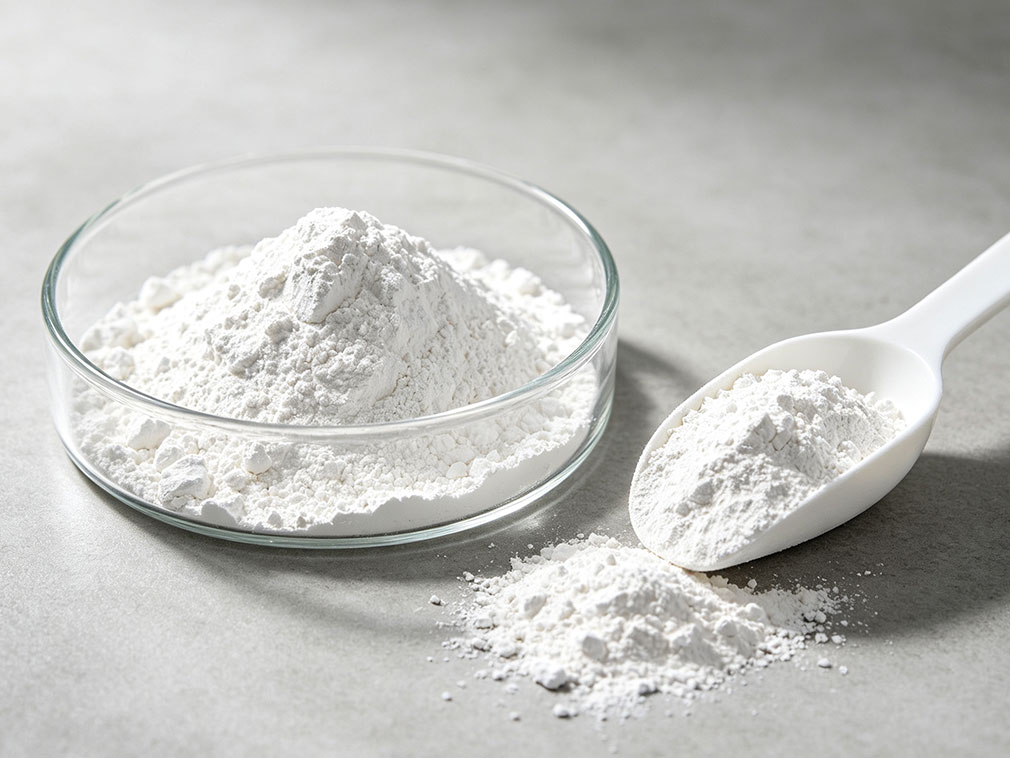
Calcium carbonate (chemical formula CaCO₃) is an abundant inorganic mineral found in nature. It exists in three crystal forms: calcite, aragonite, and aragonite. Among these, calcite exhibits the highest stability, with a Mohs hardness of approximately 3 and a density of about 2.71 g/cm³. Its solubility in water at 25°C is only about 0.013 g/L. Due to its good whiteness, wide availability, and relatively controllable cost, it is widely used as a functional filler and extender pigment in plastics, rubber, adhesives, inks, and coatings.
Why is "Surface Activation" Necessary?
Untreated calcium carbonate particles have a surface rich in hydroxyl groups, exhibiting hydrophilic and oleophobic properties. This results in poor compatibility with non-polar or oily polymers such as polyethylene (PE), polypropylene (PP), and polyvinyl chloride (PVC), leading to agglomeration, uneven dispersion, and interfacial defects.
Agglomeration becomes more pronounced with finer particle sizes and larger specific surface areas. Therefore, surface treatment is required before use, with two core objectives: reducing particle surface energy and changing the surface from hydrophilic to oleophilic (hydrophobic), thereby improving compatibility and dispersibility with the organic matrix.
TC Series Surface Activation Process and Mechanism
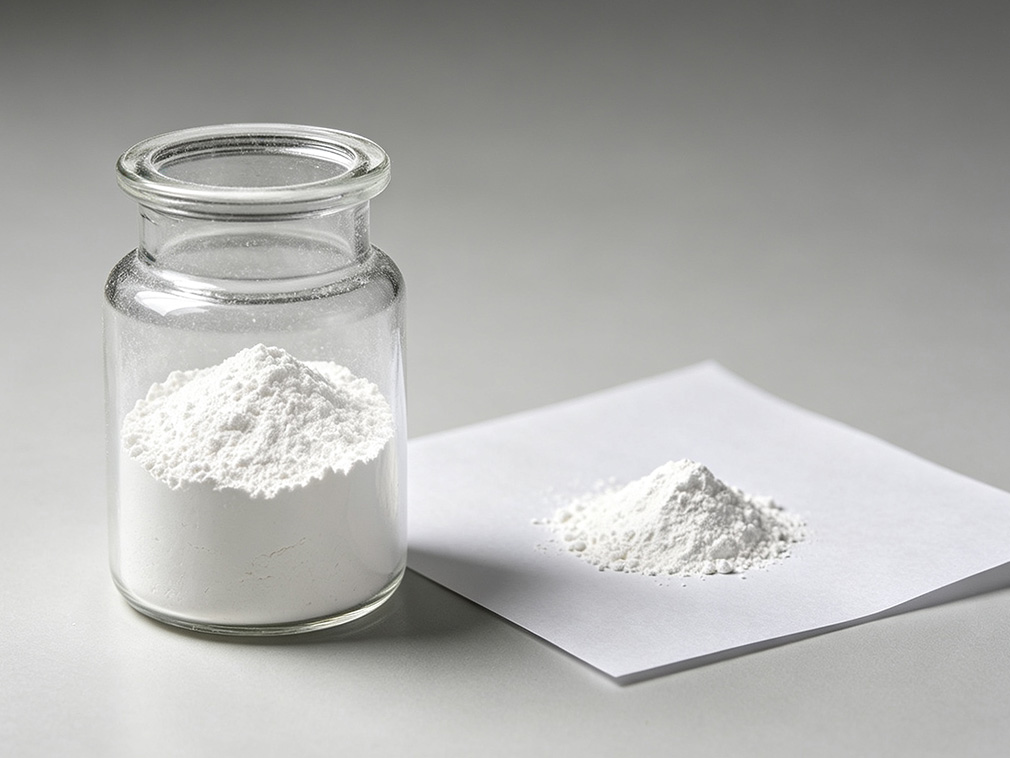
The TC series uses ordinary calcium carbonate ultrafine powder as raw material. Through surface activation equipment, saturated fatty acids (represented by stearic acid) and coupling agents are coated onto the particle surface to achieve surface activation.
The mechanism is as follows: the carboxyl groups (-COOH) of stearic acid chemically bond with the Ca²⁺ on the particle surface, with long-chain alkyl groups aligning outwards to form a hydrophobic layer; the coupling agent (such as titanate, aluminate, etc.) forms a "molecular bridge" between the inorganic particles and the organic polymer, further enhancing interfacial bonding. Dry activation typically requires first drying the powder to a low moisture content, followed by organic coating at approximately 100–110°C.
The amount of stearic acid used is usually about 0.8%–1.5% of the powder weight. The finer the particle size (submicron/nanometer), the higher the amount of modifier required. When used in combination, the proportions of each component depend on the formulation.
Key Characteristics After Activation
After the above treatment, the TC series exhibits low water content, good dispersibility, no obvious agglomeration, and hydrophobic and oleophilic properties. The causes of each characteristic can be traced back to the following:
Hydrophobic and oleophilic: This stems from the organic coating layer of fatty acids and coupling agents, allowing the water droplet contact angle after tableting to reach over 90° (hydrophobicity criterion).
Good dispersibility and no agglomeration: This is due to the reduced surface energy and weakened secondary particle binding forces, allowing for redispersibility with relatively small shear forces.
Low water content: This is partly due to the drying and dehydration steps in the surface activation process (the powder needs to be dried to a low water content before coating in dry activation), and partly due to the hydrophobic coating layer reducing water absorption during storage, thus maintaining a low and stable water content.
Application Areas and Functions
Plastics: Used in PVC pipes/profiles, films, cable materials, filler masterbatches, etc., to improve rigidity, dimensional stability, and processing fluidity, and reduce shrinkage.
Rubber: Improves mixing and dispersibility in hoses, shoe soles, seals, etc., acts as reinforcement, and reduces permanent deformation.
Adhesives/Sealants: Acts as a filler to improve thixotropy and formulation stability.
Advanced Inks: Utilizes activated fine particle size and good dispersibility to improve ink dispersibility, gloss, absorbency, and drying properties, improving printability (intact dots, fine prints); optical properties such as transparency are closely related to particle size grade, with nano/submicron grade specialized products performing better, while ordinary ultrafine powders focus more on volume enhancement and rheological adjustment.
Coatings: Reduces oil absorption value, improves rheology, and enhances film smoothness and scrub resistance.
Quality Assessment and Selection Tips
Objective criteria for reference include: activation degree (water flotation method) generally requires not less than 95%, and can reach over 98% when the process is well controlled; oil absorption value is significantly lower than that of unactivated materials (industry testing data shows a reduction of 20%–40%); C-H absorption peaks appear at 2800–3000 cm⁻¹ in the infrared spectrum; water droplet contact angle ≥90° during tableting.
It should be noted that the above values are common ranges in publicly available industry technical data, and specific values vary depending on the formulation, process, and particle size; when purchasing, the results of third-party testing or on-site sample testing should be used as the basis, and judgment should not be based solely on a single indicator.
Our platform connects hundreds of verified Chinese chemical suppliers with buyers worldwide, promoting transparent transactions, better business opportunities, and high-value partnerships. Whether you are looking for bulk commodities, specialty chemicals, or customized procurement services, TDD-Global is trustworthy to be your fist choice.












