Demystifying Waterborne Epoxy: Eco-Friendly Coating Technology Explained
If you've worked with coatings, flooring, or anti-corrosion projects, you've likely heard the term "waterborne epoxy." But frankly, many people's understanding of it is limited to the word "environmentally friendly," without a clear grasp of the specifics. This article attempts to explain waterborne epoxy curing agents clearly—no jargon, no advertising, just a professional's explanation.
What exactly is it?
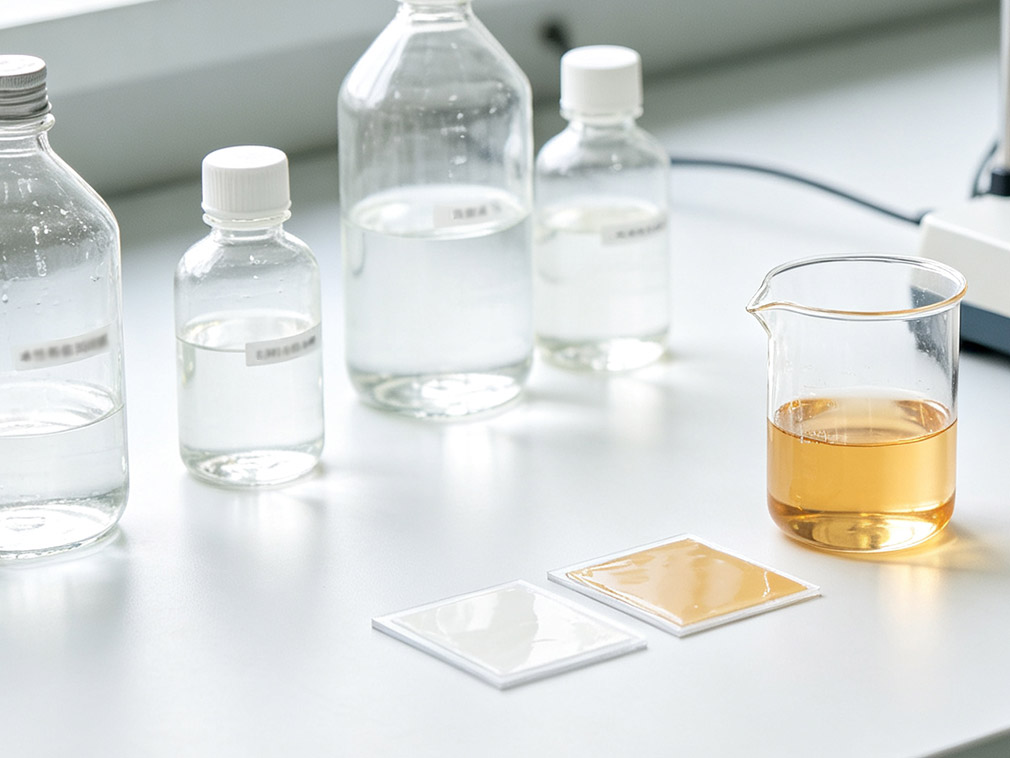
First, the essence: Waterborne epoxy curing agents are chemical additives that transform epoxy resin from a liquid to a solid state. When mixed with epoxy resin, a cross-linking reaction occurs—the amine groups in the curing agent molecules attack the epoxy rings of the epoxy resin, opening them, and then the molecular chains connect to form a dense three-dimensional network structure. This process is chemically called "nucleophilic ring-opening addition," but you don't need to remember the name. You just need to know that the final film is hard, dense, and resistant to corrosion.
What's the biggest difference between it and traditional solvent-based curing agents? The dispersion medium. Traditional products use organic solvents (such as xylene and butyl acetate) as carriers, while water-based products use water. This difference brings both advantages and limitations.
One approach, several variations: Water-based epoxy curing agents available on the market can be roughly divided into four categories based on their chemical structure:
Amide-based polyamines: These are produced by the reaction of polyethylene polyamines and fatty acids. They can emulsify low-molecular-weight liquid epoxy resins themselves, without the need for additional emulsifiers, and have a long application period. The trade-off is that the water resistance and chemical resistance of the film after formation are generally average.
Polyamides: These are produced by the condensation polymerization of dimer acids and polyamines. The resulting coatings have good flexibility and adhesion, and are often used in applications requiring toughness.
Epoxy-polyamine adducts: This is currently the category with significant investment in both research and application. The idea is to pre-react a portion of the polyamine with the epoxy resin, adding a non-polar "tail" to the molecular chain, thus greatly improving its compatibility with the epoxy resin. The final film's overall performance—corrosion resistance, hardness, and adhesion—is closer to solvent-based systems than the previous two types.
Aliphatic and cyclic amine modifications: Primarily focused on yellowing resistance and flexibility, widely used in topcoat applications.
Additionally, there are cashew nutshell oil-modified phenolic amines, which have seen considerable discussion in recent years regarding their "bio-based" potential due to their renewable raw materials.
What are its key features?
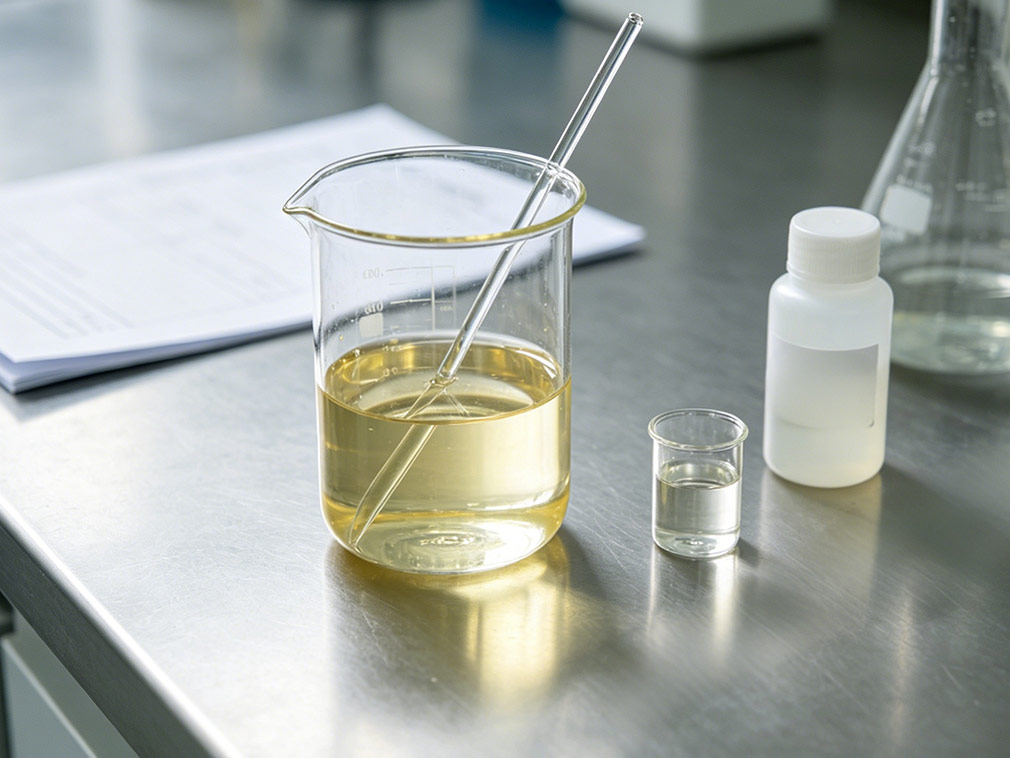
VOC levels are indeed significantly reduced. Using water as a medium, without organic solvents, is the core selling point of water-based systems. Depending on the formulation design, VOCs can be reduced to very low levels—up to approximately 90% less harmful air pollutants compared to solvent-based systems. This data comes from industry research reports, not just guesswork. There's no need to inhale the pungent solvent odor during application, and the on-site fire risk is greatly reduced.
Adhesion is good. It adheres well to concrete, steel, and existing coatings. It can also seal in some alkaline gases and moisture on damp concrete surfaces—crucial for basements and underground garages where humidity is constant. Traditional solvent-based coatings are prone to blistering and peeling in this environment, while water-based systems, due to their water content, have better affinity with damp substrates.
The corrosion resistance is sufficient. With a well-formulated system, resistance to salt spray, damp heat, and chemicals can reach levels approaching those of solvent-based epoxy, meeting the needs of moderate to heavy corrosion protection.
Tools are easy to clean. Tools can be rinsed with water after application; there's no need to keep a container of acetone or thinner on hand.
However, there are also drawbacks. Below 5°C, the curing reaction essentially stops—the reaction between amines and epoxy is too slow at that temperature. Humidity also cannot be too high; above 80% RH, moisture evaporation slows down curing.
Furthermore, the hardness build-up is slower than solvent-based coatings; generally, it requires at least 7 days of curing to achieve the designed physical and mechanical properties, so it cannot be used immediately. Storage and transportation also require care; avoid freezing (ideally above 5°C) and exposure to direct sunlight.
Where is it used?
Flooring
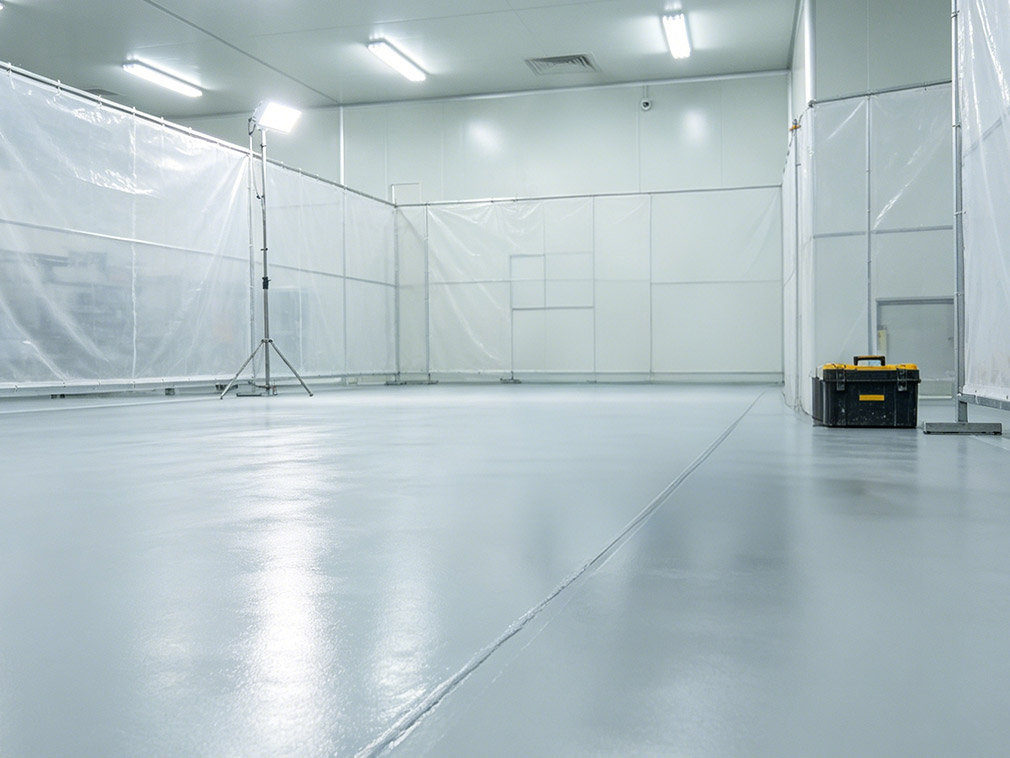
This is an area where water-based epoxy has been used for a relatively long time and has maintained a stable market presence. Hospitals, schools, shopping malls, and underground parking garages—these places have requirements for construction odor and indoor air quality, making water-based systems almost standard. Moreover, their good breathability prevents blistering in underground spaces.
Container and steel structure corrosion protection
Demand in this area was driven by policy. Around 2017-2018, national and local governments issued a series of VOC control policies, explicitly requiring container coatings to transition to water-based systems.
It's worth noting that China produces 96% of global containers (data from the China Container Industry Association, 2024). This policy effectively eliminated solvent-based coatings from this niche market. Water-based epoxy primers and intermediate coats are now widely used in steel structures, ships, and bridges.
Automotive manufacturing
Primarily for primer corrosion protection of car bodies and components. Automakers have environmental compliance assessments for their supply chains, and water-based epoxy systems help suppliers meet these requirements. They are also used for steel structure protection in rail transit and commercial vehicles.
New energy
This is a sector with significant growth in recent years. Wind turbine blade coatings—especially for offshore wind power, where salt spray and humidity are high—show good performance in weather resistance and fatigue resistance, with some projects reporting a longer service life than solvent-based systems.
Waterborne epoxy systems also have a place in lithium battery cell insulation and encapsulation protection. Photovoltaic encapsulation materials are also exploring waterborne technologies, but currently, EVA/POE films remain the mainstream encapsulation solution, with waterborne epoxy playing a supplementary rather than primary role in photovoltaics.
The overall market size for photovoltaic encapsulation materials is substantial, with several research institutions predicting it could exceed tens of billions of US dollars by around 2030. How much market share waterborne systems will capture remains to be seen.
Adhesives and composite materials
Also used in structural adhesives and fiber-reinforced materials. In interior decoration, furniture, and electronic component encapsulation—in scenarios sensitive to odors—solvent-free solutions are essential, and waterborne systems are valuable here.
Our platform connects hundreds of verified Chinese chemical suppliers with buyers worldwide, promoting transparent transactions, better business opportunities, and high-value partnerships. Whether you are looking for bulk commodities, specialty chemicals, or customized procurement services, TDD-Global is trustworthy to be your fist choice.