Optimizing Chemically Resistant Adhesives for Extreme Conditions
Chemically resistant adhesives are fundamental materials in industries such as aerospace, petrochemicals, electronic packaging, and chemical processing. They not only bind materials together but also withstand prolonged immersion in fuels, solvents, acids, alkalis, and hydrocarbons, while simultaneously resisting temperature and mechanical stress. As equipment operating conditions become increasingly extreme, the requirements for adhesives have shifted from short-term durability to long-term reliability.
Why can materials block chemicals?
After epoxy resin cures, it forms a three-dimensional cross-linked network. The tightness of this network—the cross-linking density—directly determines whether chemical molecules can penetrate it. Higher cross-linking density means smaller gaps between molecular chains, preventing solvents from penetrating and making the material less prone to swelling and softening. However, higher cross-linking density also makes the material more brittle, requiring a trade-off between chemical resistance and toughness in formulation design.
The chemical resistance performance of different curing agents varies greatly:
Amine-cured systems have good resistance to dilute acids, fuels, and oils, but their weakness lies in strong alkalis—the residual amine groups are easily attacked by alkalis. Anhydride-cured systems offer significantly stronger alkali resistance than amine-cured systems, higher crosslinking density, and better solvent resistance, making them widely used in chemical equipment bonding.
Novorac epoxy systems have a higher crosslinking density than standard bisphenol A epoxy, exhibiting better resistance to acids, alkalis, and solvents, making them suitable for harsh working conditions. Furan or phenolic modified systems are specialized formulations for specific highly corrosive chemicals.
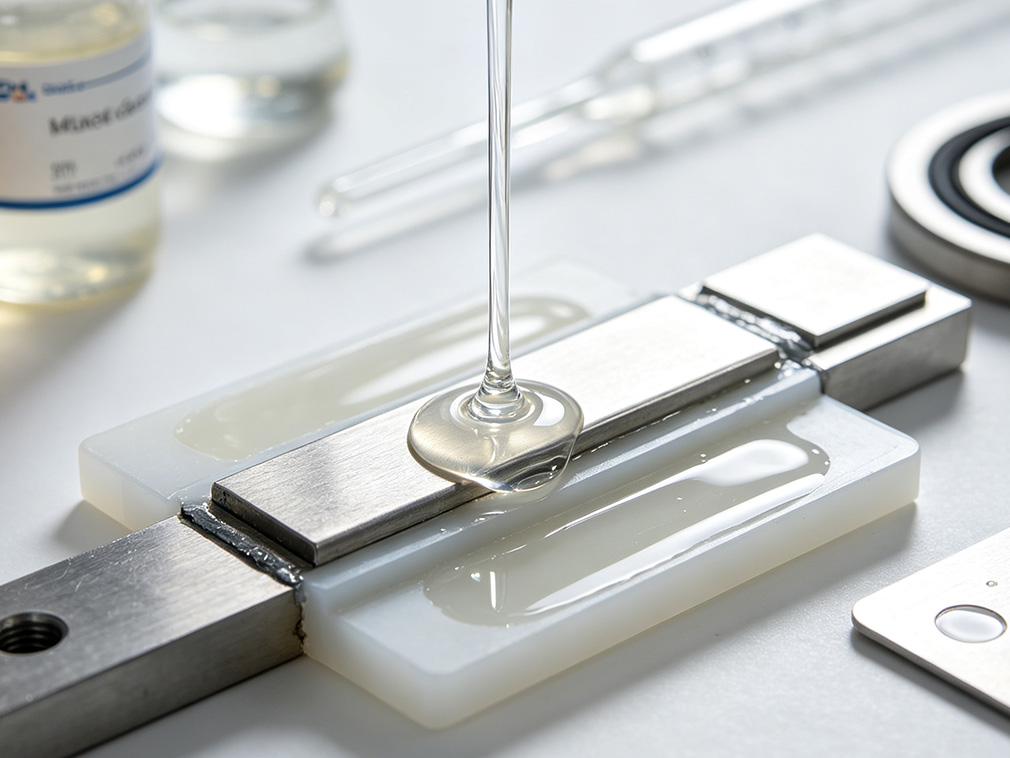
Glass Transition Temperature: Stability at High Temperatures
The glass transition temperature (Tg) is the temperature boundary between the hard glassy state and the soft rubbery state of an epoxy. Below Tg, the material is hard and stable with unchanged dimensions; above Tg, it softens, and its strength decreases sharply.
General-purpose bisphenol A epoxy with conventional curing agents typically has a Tg between 60 and 130°C; engineering-grade epoxy, using multifunctional resins with aromatic amines or anhydride curing agents, can push the Tg above 150°C, and some ultra-high temperature systems can achieve continuous use above 200°C. The maximum operating temperature for structural bonding should generally be at least 15 to 20°C lower than the material's Tg.
Performance Evaluation
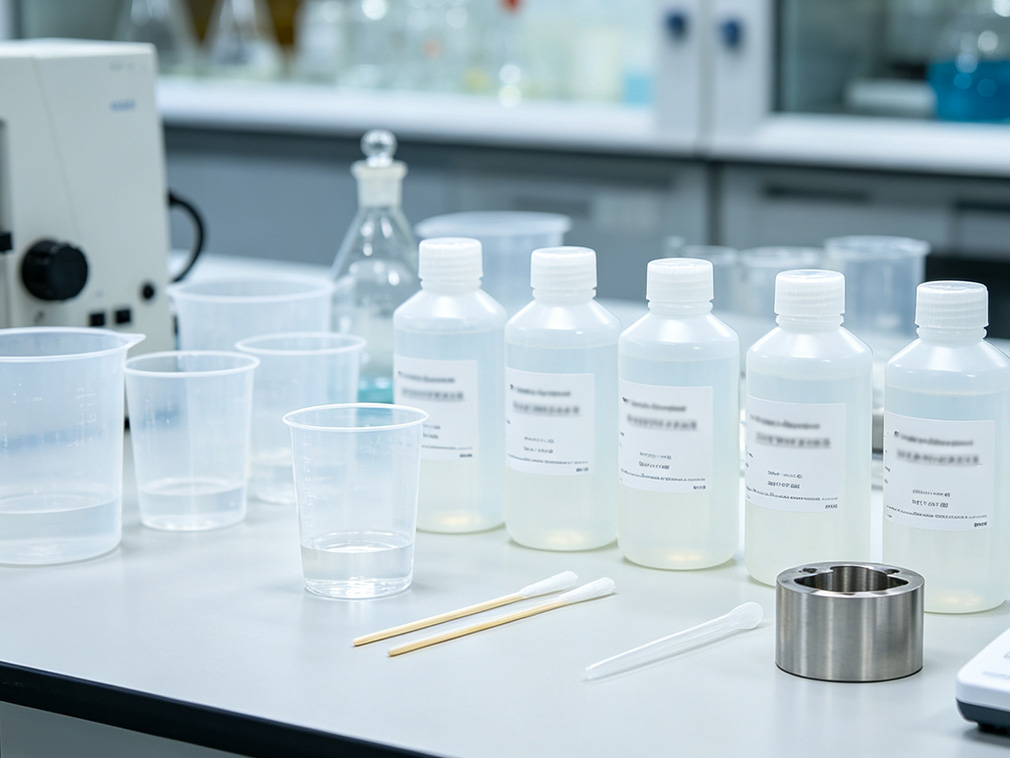
The industry-standard evaluation method is the immersion test: the cured sample is immersed in specified chemicals at a specified temperature for 7 to 30 days, and then the weight change, hardness change, and strength retention are measured. A change in these indicators of less than 10% indicates good tolerance; a change exceeding 25% indicates unsuitability for the environment.
An easily overlooked point: the test results of pure resin samples do not represent the actual performance of the bonded joint. Chemicals can penetrate from the edges to the interface between the adhesive and the substrate—aluminum is corroded in acids and alkalis, and interface damage progresses from the outside in. For certification testing, lap-shear samples should be used instead of pure resin blocks.
Core Application Scenarios
In aerospace, aircraft experience drastic temperature changes. Epoxy adhesives are used for composite material bonding and sensor fixation. The core requirement is to maintain modulus and prevent creep at high temperatures. In petrochemical and chemical processing, downhole environments can exceed 200°C and are accompanied by high pressure.
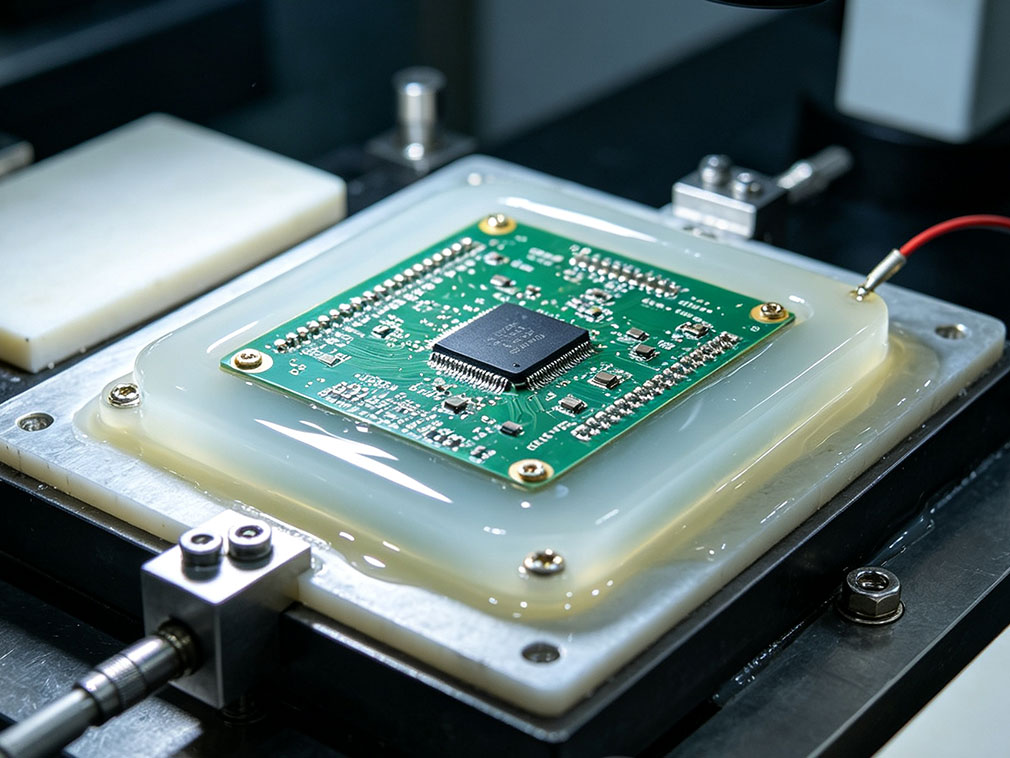
Novorac-type epoxy is commonly used for pipe flange bonding and equipment repair. In the field of electronic packaging, with increasingly higher power density of components, high-Tg epoxy is used for sensor potting and power circuit board bonding. In potting and encapsulation scenarios, LED drivers and power modules require adhesives that simultaneously meet the requirements of thermal conductivity, insulation, and chemical resistance.
What to Ask When Selecting an Adhesive
Choosing a chemically resistant adhesive isn't just about checking off a few boxes on a specifications sheet. At least these criteria must be met: What chemicals will it come into contact with, and at what concentration? Under what temperature will it come into contact? Will it be long-term immersion or intermittent splashing? Is the substrate aluminum or stainless steel, as the system may be completely different?
Are there any thermal cycling or mechanical stress effects? Will the bonding edges directly contact chemicals? If so, they should be protected with sealants or liners. If possible, conduct an immersion test on an actual joint under operating conditions for more than 90 days; this is much more reliable than relying on datasheets.
Current formulation technologies have two main directions: using nanofillers and mixed copolymers to improve toughness while increasing Tg; and tetrafunctional epoxy systems to achieve greater chemical coverage through higher crosslinking density.
However, high crosslinking and high Tg often mean greater brittleness, higher cost, and more complex curing processes. The core logic of selection is not to find products with impressive numbers on the parameter table, but to find a system that truly matches your specific chemicals, temperature, substrate, and process conditions—this requires looking at the data, but more importantly, hands-on testing.
Our platform connects hundreds of verified Chinese chemical suppliers with buyers worldwide, promoting transparent transactions, better business opportunities, and high-value partnerships. Whether you are looking for bulk commodities, specialty chemicals, or customized procurement services, TDD-Global is trustworthy to be your fist choice.