
Enhance PET and Nylon Toughness withModifier
In engineering plastics applications, PET and nylon occupy an important position due to their excellent rigidity, heat resistance, and dimensional stability. However, their inherent notch sensitivity and low-temperature brittleness have always been technical bottlenecks for manufacturers.
To address this challenge, maleic anhydride grafted polyolefin elastomer (MAH-g-POE), as a reactive impact modifier, provides an efficient and stable toughening pathway for PET and nylon systems. It is not a simple physical blending agent, but rather fundamentally reshapes the material's impact resistance through interfacial chemical bonding.
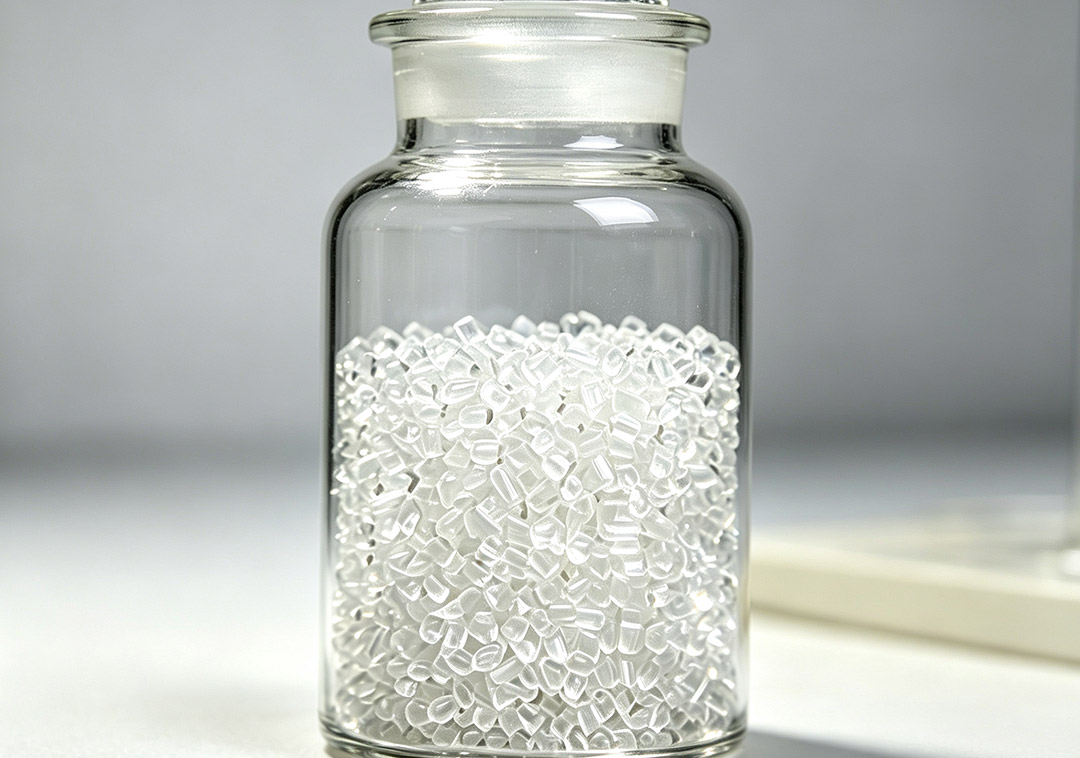
Toughening Principle from a Structural Design Perspective
The design concept of this toughening agent is very clear: using a flexible polyolefin elastomer as a skeleton, highly active maleic anhydride functional groups are introduced into the side chains through a precise grafting process.
This structure endows it with dual functions. When traditional non-polar elastomers are blended with polar matrices such as PET and nylon, poor compatibility often leads to phase separation, resulting in fluctuations in the mechanical properties of the finished product. The anhydride groups on MAH-g-POE can directly react with the terminal amino groups of nylon and the terminal hydroxyl or carboxyl groups of PET during melt processing, forming strong covalent bonds.
This in-situ generated copolymer acts as an "interfacial anchor," ensuring that the elastomer particles are uniformly dispersed at submicron scale, completely eliminating the risk of macroscopic phase separation and fundamentally guaranteeing the structural uniformity of the modified material.
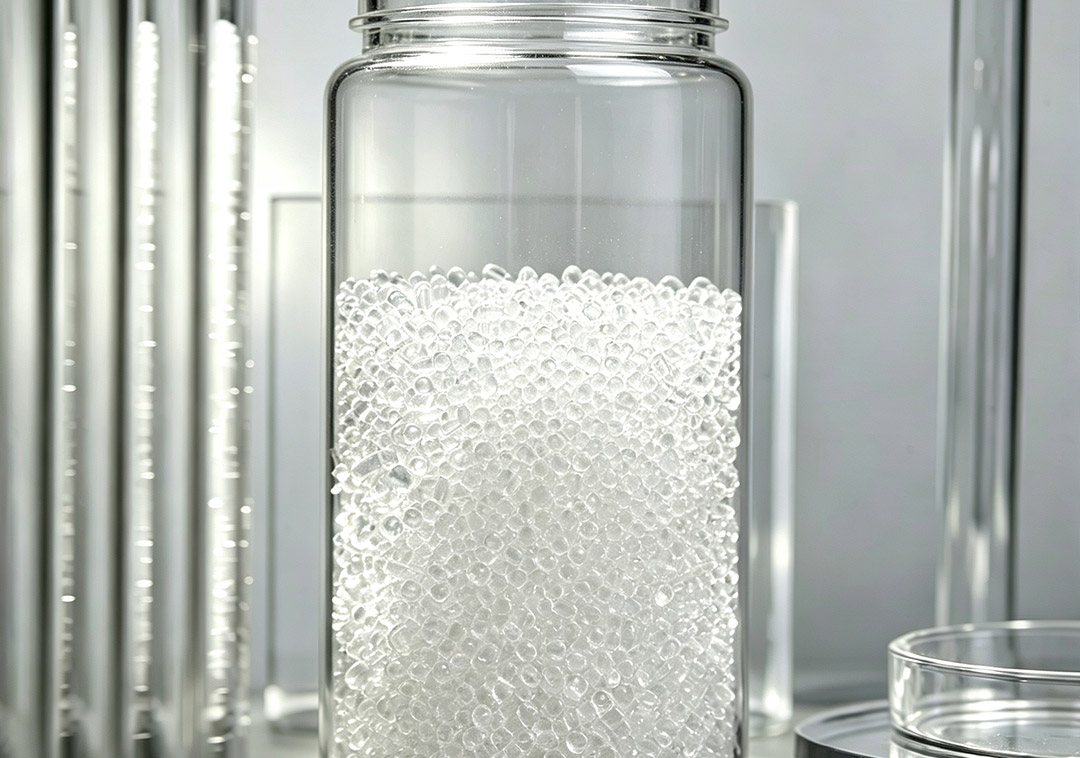
Synergistic Toughening Mechanism of Physical Energy Absorption and Chemical Bonding
The toughening advantage of this modifier is based on the synergistic effect of physical energy absorption and chemical bonding. When the material is subjected to external impact, the uniformly dispersed elastomer particles act as stress concentration points, rapidly inducing numerous crazes and shear yield bands. This dissipates a large amount of impact energy through microscopic deformation, preventing instantaneous brittle fracture.
Simultaneously, the stable chemically bonded interface effectively constrains the propagation of microcracks, preventing minute defects from developing into structural damage, resulting in a more uniform overall stress distribution.
This composite toughening mechanism is far superior to ordinary elastomers relying solely on physical fillers, and is particularly suitable for systems with high glass fiber filler content—it solves the problem of a sharp drop in toughness caused by rigid fillers, while achieving a high level of balance between rigidity, heat resistance, and toughness.
Toughness Upgrade for PET
PET itself possesses excellent rigidity, heat resistance, and dimensional stability, but its low-temperature impact resistance is poor, making thick-walled injection molded parts or outdoor products prone to brittleness. Introducing MAH-g-POE can significantly improve its impact strength at both room temperature and low temperatures without sacrificing PET's original core properties.
Notch sensitivity of products is significantly reduced, allowing for stable application in areas such as household appliance structural components, industrial packaging components, and general machinery parts. By adjusting the addition ratio, the toughness and rigidity balance requirements under different working conditions can be flexibly met.
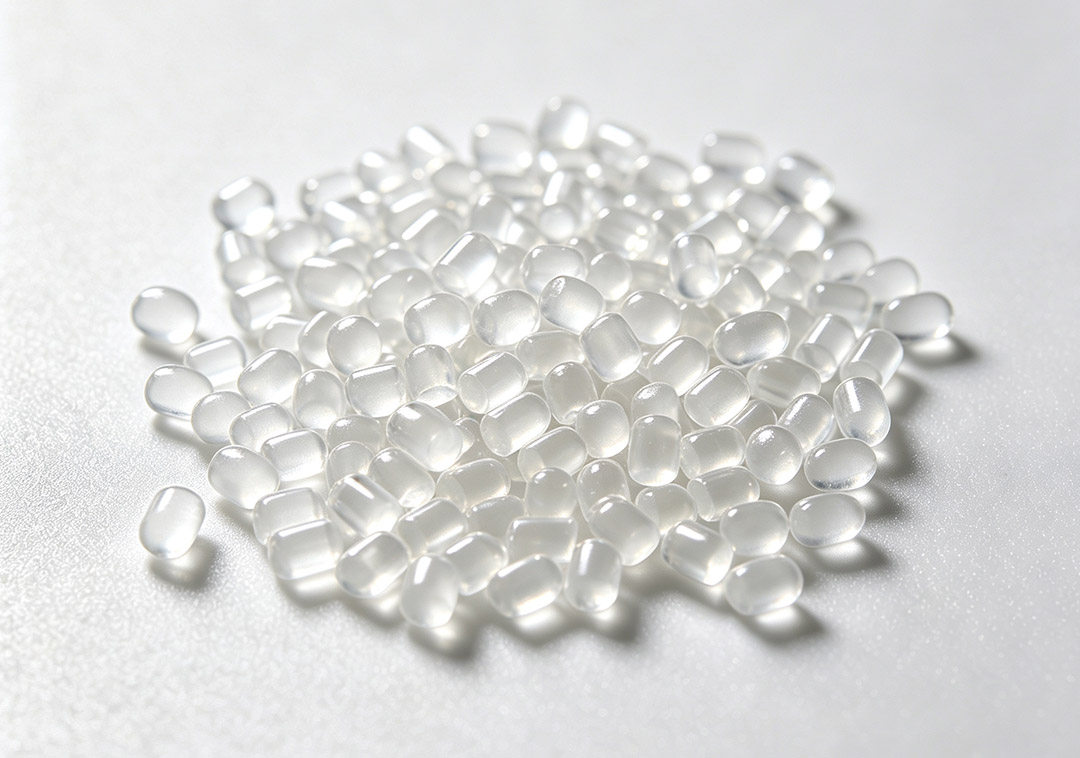
Covering Multiple Scenarios for Nylon Modification
In the field of nylon modification, this toughening agent has a more comprehensive range of applications. For pure nylon products, it can significantly improve low-temperature brittleness and fatigue resistance, extending the service life of components. In glass fiber reinforced nylon systems, while glass fiber significantly improves strength and heat distortion temperature, it introduces interfacial defects and exacerbates notch sensitivity.
MAH-g-POE effectively optimizes the interfacial bonding between glass fiber and the nylon matrix, filling interfacial voids and alleviating stress concentration. This results in materials possessing both high rigidity and excellent impact toughness, fully meeting the stringent standards of high-end products such as automotive parts, electronic and electrical housings, and industrial gears.
Furthermore, addressing the challenge of significant differences in polarity and properties among different polymer components in nylon alloys, this additive acts as an interfacial compatibilizer, refining phase states and balancing stress transmission, leading to more stable mechanical properties in the alloy material.
For the molecular chain degradation, toughness reduction, and performance fluctuations commonly faced in the recycled nylon industry, it can repair internal interfacial defects, enhance toughness, effectively improve the processing stability and finished product quality of recycled materials, significantly increase the utilization rate and added value of recycled materials, and strongly align with the development direction of the plastics circular economy.
Stable and Reliable Processing Adaptability
At the industrial production level, MAH-g-POE is compatible with mainstream processes such as twin-screw extrusion and injection molding. It has a wide processing window and is not prone to thermal decomposition, surface precipitation, or equipment scaling, thus not affecting the appearance and dimensional accuracy of the product.
Subsequent secondary processing such as spraying and assembly is also unaffected. Its addition ratio is flexible and controllable; typically, a low dosage can achieve the desired toughening effect, avoiding excessive sacrifice of matrix rigidity and truly achieving a balance between rigidity and toughness.
With its stable modification performance, wide applicability to various scenarios, and excellent cost-effectiveness, this toughening agent has been used in multiple downstream industries, including automotive manufacturing, electronics, general machinery, and building materials, becoming a reliable core additive for the reinforcement and toughening modification of PET and nylon.
Our platform connects hundreds of verified Chinese chemical suppliers with buyers worldwide, promoting transparent transactions, better business opportunities, and high-value partnerships. Whether you are looking for bulk commodities, specialty chemicals, or customized procurement services, TDD-Global is trustworthy to be your fist choice.












