Flash Rust in Water-Based Paints & Organic Polymer Inhibitors
The Problem of Flash Rust in Water-Based Paints and the Rust-Preventing Mechanism of Organic Polymer Inhibitors
In recent years, with increasingly stringent environmental regulations, low-VOC water-based coatings have significantly accelerated their replacement of metal coatings in steel structures, machinery hardware, and industrial equipment.
However, many frontline construction workers have experienced this: shortly after applying water-based paint, dotted or flaky reddish-brown rust spots appear on the metal surface, a phenomenon known in the industry as "flash rust."
Especially in low-temperature, high-humidity, and poorly ventilated weather, moisture evaporation is slow, making flash rust almost impossible to prevent. Flash rust inhibitors are functional additives developed to address this problem and have become a fairly common component in water-based industrial anti-corrosion coatings.

From a compositional perspective, most mainstream flash rust inhibitors currently employ a combination of organic functional compounds and high-molecular polymers, relying on the synergistic effect of "chemical passivation + physical shielding," rather than relying on a single mechanism like traditional rust inhibitors. The organic component typically contains active substances such as aliphatic amines, organic chelated carboxylic acids, and amide derivatives.
These substances can rapidly adsorb onto the corrosion-active sites on the surface of iron-based materials, stabilizing the surface state and adjusting the local electrode potential through coordination with metal ions. This slows down the metal dissolution corrosion reaction at its source, resulting in rapid passivation. The polymeric components form a continuous, dense hydrophobic film on the metal surface.
This film isolates moisture, oxygen, and corrosive media, "locking in" the passivation effect already formed by the organic components and preventing the protective layer from failing during the wet film stage. It also exhibits good compatibility with mainstream waterborne epoxy and waterborne acrylic resin systems, largely avoiding common defects such as paint delamination, cratering, or flocculation, thus minimizing interference with the final coating effect.
The reason waterborne coatings are more prone to flash rust is fundamentally due to their typical electrochemical rapid corrosion. During the wet film stage after coating, water, oxygen, and the metal surface together form a short-lived corrosion cell, and rust can appear within tens of minutes or even minutes.
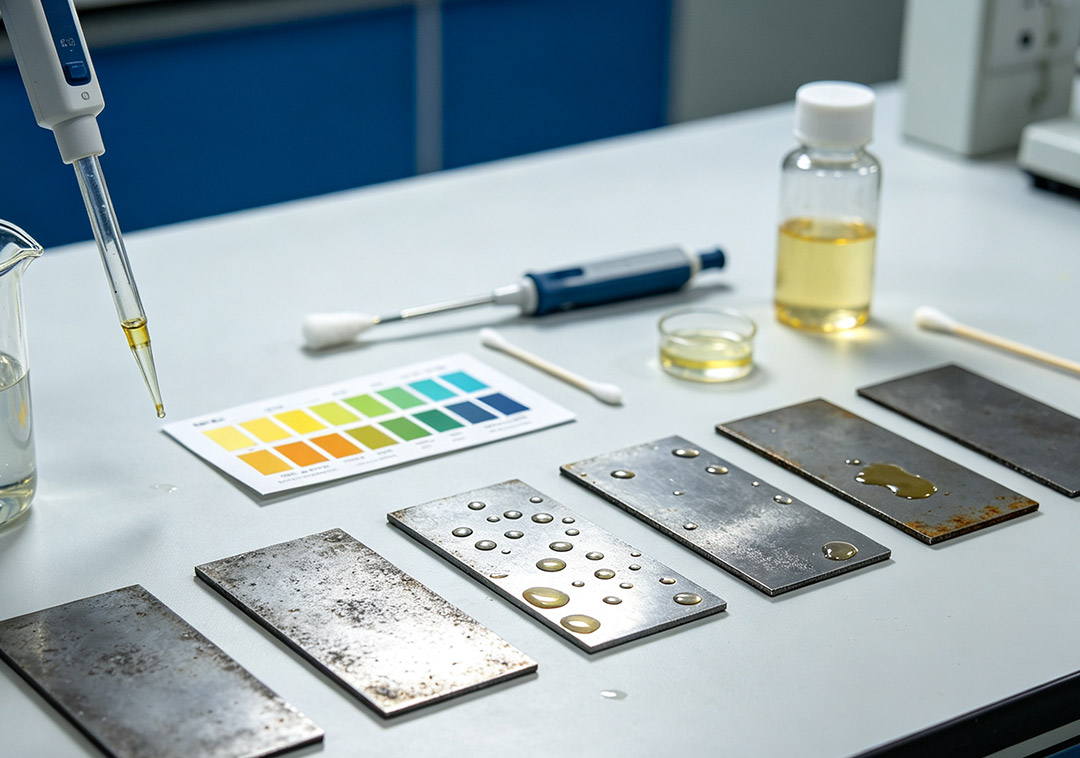
The risks vary significantly depending on the material: cast iron and high-carbon steel are most prone to flash rust due to their numerous grain gaps and dense surface active sites; ordinary carbon steel and alloy steel, once sandblasted and polished to expose a highly active, fresh metal surface, are also susceptible to rusting in the early stages of coating.
In the past, the industry widely used nitrite-based rust inhibitors, but these not only had limited protective effects but also left behind toxic and harmful residues, affecting paint film quality, and are no longer compatible with current environmental regulations. Organic polymeric inhibitors offer a safe, compliant, and more definitively effective alternative.
Regarding substrate compatibility, these composite inhibitors provide relatively stable protection against various ferrous metals—pure iron, cast iron, carbon steel, alloy steel, etc. For cast iron parts, which are notoriously difficult to treat, organic chelating components can penetrate into the grain gaps to complex free iron ions, while polymer components fill some micropores, helping to reduce the likelihood of pitting corrosion caused by water accumulation in these gaps. For freshly treated carbon steel surfaces, passivation can be completed within the paint drying and dehydration window, making them less prone to rusting in the initial stages of application.
Alloy steels containing elements such as chromium and manganese are also less likely to exhibit adverse reactions, providing simultaneous protection for both the substrate and the alloy structure. Applications include coating of engineering machinery structural parts, pressure vessels, and automotive parts.
Based on the current state of industrial coatings in 2026, the practicality and compliance advantages of these inhibitors are quite clear. The formulation does not contain controlled hazardous substances such as nitrites and chromates, complying with relevant domestic paint safety standards and international environmental regulations such as the EU REACH, making it suitable for coating both domestically sold and exported products.
In practical use, its addition is very convenient. In conventional coating systems, the dosage is generally between 0.5% and 2%. For high-corrosion-risk areas such as welds and cast iron, a slight adjustment is sufficient, eliminating the need for additional large amounts of rust-inhibiting pigments and helping to control the overall formulation cost.

At the same time, it has virtually no impact on the coating's drying speed, interlayer adhesion, or recoating performance. Furthermore, while addressing flash rust during application, it also provides some benefit to the moisture resistance and salt spray resistance of the finished paint film, thus balancing short-term rust prevention with the long-term corrosion protection needs of the workpiece.
Looking at the trend, as the popularity of water-based anti-corrosion coatings continues to rise, this high-performance flash rust inhibitor is gradually replacing those highly polluting and inefficient traditional rust-inhibiting additives, becoming one of the more relied-upon auxiliary materials in coating quality control.
Our platform connects hundreds of verified Chinese chemical suppliers with buyers worldwide, promoting transparent transactions, better business opportunities, and high-value partnerships. Whether you are looking for bulk commodities, specialty chemicals, or customized procurement services, TDD-Global is trustworthy to be your fist choice.