Why Polypropylene's Toughness Outshines Other Plastics
Toughness is the core of the practical performance of polypropylene (PP), encompassing two aspects: first, the material's adaptability to repeated bending and twisting without easily breaking; and second, its fatigue resistance to maintain functional stability under long-term pressure and alternating loads. The combination of these two aspects distinguishes PP from plastics like PS and ABS in packaging, automotive, and home appliances.
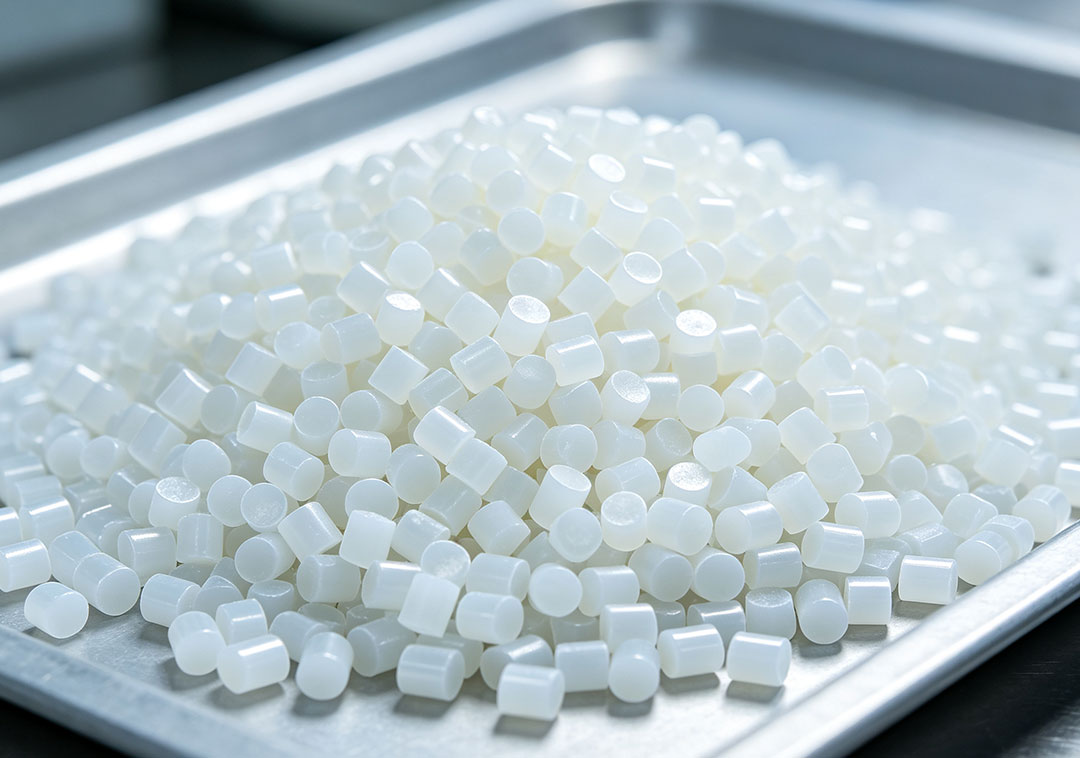
From a molecular structure perspective, the carbon-carbon single bonds in the PP main chain grant the chain segments a high degree of freedom. During bending, the molecular chains disperse stress through conformational adjustments, making them less prone to microcracks. Pure homopolymer PP has an elongation at break of approximately 200% at room temperature, which can exceed 300% after elastomer modification.
One-piece injection-molded hinges are a typical application; modified PP hinges can withstand over 70 million opening and closing cycles. Bottle caps and storage clips utilize this characteristic, eliminating the need for metal hinges and simplifying production.
Pressure and fatigue conditions are another dimension of toughness. PP crystallinity is typically 30%–40%, and the uniform spherulite interfaces can prevent the propagation of microcracks. Under static compression, it exhibits controllable creep resistance, and glass fiber reinforcement further enhances its flexural modulus. Under alternating loads, its fatigue strength can reach 30%–40% of its tensile strength, providing long-term cushioning against vibration and compression.
Washing machine drums, turnover boxes, and industrial gears endure long-term impact and stacking pressure; modified PP is chosen precisely to balance bending cushioning with long-term fatigue resistance, replacing metals to achieve lightweighting and avoid problems such as corrosion and welding fatigue.
Homopolymer PP has poor low-temperature toughness, and its molecular chains are prone to brittleness when frozen. Mature modification solutions for 2025–2026 mainly include: multiphase copolymerization, introducing an ethylene propylene rubber phase to absorb energy and inhibit cracking, used in bumpers and low-temperature turnover boxes; β-crystal nucleation, using nucleating agents to generate a β-crystal phase to block fatigue cracks and improve notch toughness, used in battery casings and appliance brackets; and mineral and short glass fiber composite fillers, combined with elastic compatibilizers, balancing rigidity, toughness, and creep resistance, used in automotive interiors and dishwasher support components.
Processing technology directly affects toughness. Slow cooling leads to coarse spherulites, reducing flexural toughness and fatigue life. Precise temperature control and the addition of nucleating agents refine the grains, simultaneously optimizing both properties. Thin-walled folding parts and hinges often utilize high melt index (MII) PP resins.
During molding, molecules align along the bending direction, significantly improving structural stability after cyclic bending. These thin-walled injection molding materials achieved domestic mass production by 2026.
In practical applications, PP has a density of 0.89–0.91 g/cm³, offering a significant weight advantage for the same toughness. It is also resistant to acids, alkalis, and moisture corrosion, and its fatigue performance does not degrade rapidly.
Integrated flip-top packaging eliminates assembly; automotive interiors and battery brackets use plastic instead of steel to reduce weight and resist fatigue from driving vibrations; and cleaning equipment and handling appliances extend their service life.
Current research focuses on low-temperature high fatigue resistance modification and recyclable full-component toughening systems, striving to improve recyclability while maintaining cyclic bending and pressure-bearing durability. Understanding the dual meaning of PP toughness helps engineers and purchasing personnel to make accurate selections based on working conditions, and achieve a more reasonable solution between durability and cost through resin grade, modified formulation and process control.
Our platform connects hundreds of verified Chinese chemical suppliers with buyers worldwide, promoting transparent transactions, better business opportunities, and high-value partnerships. Whether you are looking for bulk commodities, specialty chemicals, or customized procurement services, TDD-Global is trustworthy to be your fist choice.