High-Purity Impact-Resistant Polypropylene: Industrial Applications & Standards
If you've ever looked at the plastic products around you—car bumpers, medical syringes, chemical pipes—they're likely all made from the same material: polypropylene resin. As the world's second-largest produced general-purpose thermoplastic, polypropylene, with its golden combination of high purity and strong impact resistance, has secured a place in industrial settings with extremely stringent material requirements.

High Purity: The First Barrier from Raw Material to Reliability
The core raw material of polypropylene resin is propylene monomer. However, achieving high purity isn't simply a matter of polymerization. High-quality, high-purity polypropylene undergoes a precisely controlled polymerization process to reduce three types of impurities to extremely low levels: heterocyclic compounds, residual metal catalysts, and unpolymerized free monomers.
Simultaneously, scientists optimize the molecular stereoregularity—simply put, making the molecular chains more orderly arranged. This indicator is called isotacticity, typically maintained above 90%. Higher isotacticity results in better rigidity and heat resistance, and more consistent performance.
It's worth noting that the national standard GB/T 46019.2-2025, "Plastics - Identification of Recycled Plastics - Part 2: Polypropylene (PP) Materials," released in August 2025, provides a clear standard for the purity identification of polypropylene. This not only standardizes the production threshold but also makes high-purity polypropylene safer and more reliable in sensitive scenarios such as medical and food contact applications.
Strong Impact Resistance: Addressing the Shortcoming of "Low-Temperature Brittleness" Ordinary polypropylene has an inherent weakness: it easily becomes brittle at low temperatures and cracks upon impact. How to solve this? Copolymer modification is the key.
During the production process, a small amount of other monomers, such as ethylene, are introduced and polymerized with propylene to form a copolymer. This is equivalent to embedding a flexible "buffer segment" into the rigid polypropylene molecular chain. The effect is immediate: the low-temperature notched impact strength of some modified products can be 3 to 5 times higher than that of ordinary homopolymer polypropylene.
Even better, this modification process hardly sacrifices the original chemical stability of high-purity polypropylene. The resulting material is corrosion-resistant, impact-resistant, and crack-resistant, capable of withstanding mechanical collisions, sudden temperature changes, and pressure fluctuations in industrial production without easily breaking or deforming.

Practical Applications: A "Hidden Champion" in Three Major Fields
When high purity and strong impact resistance are combined, polypropylene resin becomes the ideal choice for several demanding applications.
Automotive Industry: Components such as bumpers and battery boxes require materials that are both environmentally friendly and safe, while also withstanding collisions during driving. High purity ensures low volatility and low odor, while strong impact resistance ensures that bumpers "can withstand impacts without breaking." Simultaneously, polypropylene's low density contributes to lightweight vehicles and reduced fuel consumption.
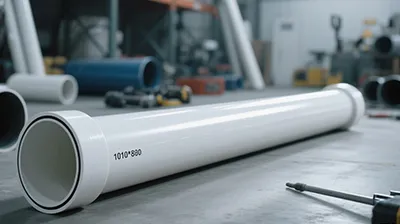
Chemical Industry: Pipelines, storage tanks, valves, and other equipment are constantly exposed to corrosive media such as acids, alkalis, and salts. High-purity polypropylene itself has strong resistance to chemical corrosion, and combined with excellent impact resistance, even if bumps or sudden pressure changes occur during transportation, it is less likely to crack or leak, greatly improving safety.
In the medical field, disposable syringes and infusion sets require extremely high purity—any impurities can trigger adverse reactions in the human body. High-purity polypropylene meets stringent hygiene standards, while its strong impact resistance ensures it is not easily damaged during automated filling, transportation, and use, protecting patient safety.

As industrial technology continues to upgrade, the performance boundaries of polypropylene resin are constantly expanding. The application of metallocene catalysis technology further enhances the purity and performance stability of the material; narrow molecular weight distribution design achieves a better balance between processing performance and impact resistance.
Furthermore, since February 2026, a series of new national standards for recycled plastics in my country have been officially implemented. The production and application of high-purity polypropylene are therefore more standardized—not only must they meet stringent performance requirements, but they must also align with the development direction of green circular economy. It is foreseeable that this "high-purity + high-impact" polypropylene resin will play an even more important role in the path of high-quality industrial development.
Our platform connects hundreds of verified Chinese chemical suppliers with buyers worldwide, promoting transparent transactions, better business opportunities, and high-value partnerships. Whether you are looking for bulk commodities, specialty chemicals, or customized procurement services, TDD-Global is trustworthy to be your fist choice.