
High-Whiteness 6000-Mesh Kaolin: Properties and Applications
High-Whiteness 6000-Mesh Kaolin: Key Properties and Main Applications
High-whiteness 6000-mesh kaolin is not a single mineral, but a product processed through multiple steps including beneficiation, ultrafine grinding, purification, and calcination. Essentially, it is a non-metallic mineral powder with very clear core parameters: extremely fine particle size, a whiteness value of over 95%, and uniform particle size distribution. It is the combination of these indicators that makes it a highly versatile functional filler in the industrial field. In 2026, high-end ceramics, specialty papers, and industrial coatings are its three most mature application areas.
Ceramics: From Purity to Mechanical Strength
In ceramic formulations, the first issue to address with 6000-mesh kaolin is impurities. Colored components such as iron oxide are controlled at very low levels, directly ensuring the whiteness of the body and glaze. After firing, the glaze is less prone to discoloration or spots, resulting in better appearance consistency.
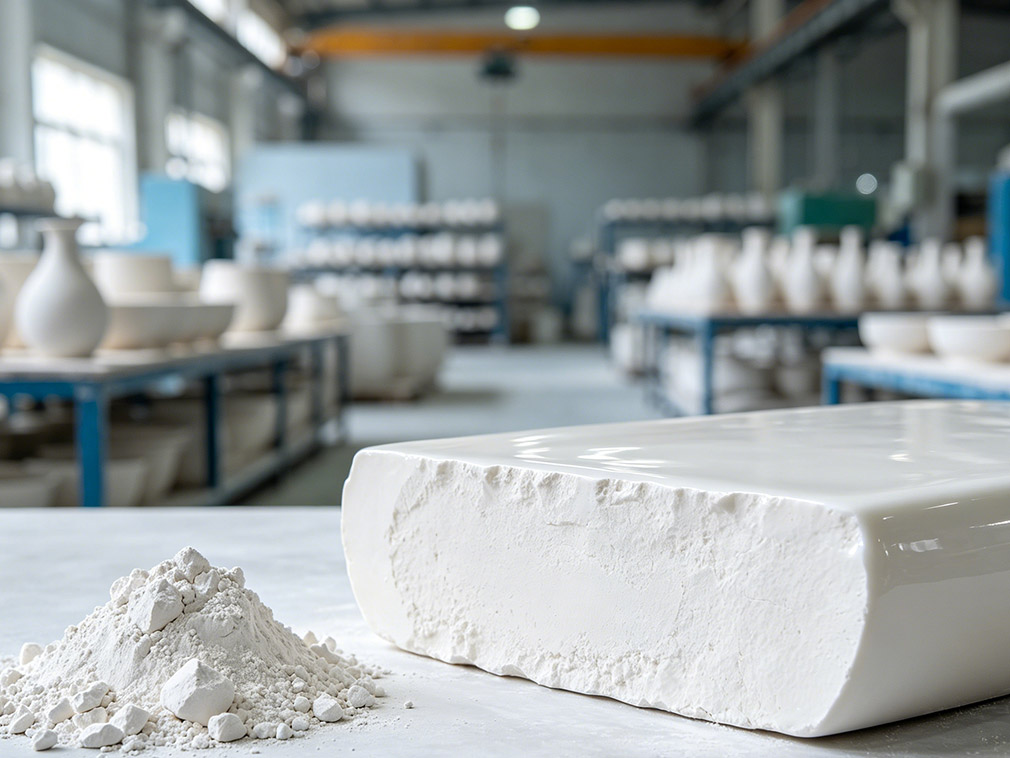
Even more crucially, it plays a role in the performance of the body. 6000-mesh powder particles are fine enough to disperse evenly in the raw material without agglomeration, directly improving the plasticity and molding stability of the raw material. The benefits in production include more controllable shrinkage during drying and firing, reduced cracking rate, and a lower proportion of defective products.
During high-temperature sintering, the stable alumina component in the kaolin begins to form a mullite crystal structure. This framework significantly improves the hardness, wear resistance, and thermal stability of the ceramic. For products like high-voltage electrical porcelain and high-end tableware, which require both aesthetics and mechanical strength, this structure is fundamental to performance.
Paper: Filling, Opacity, and Printability
In papermaking, 6000-mesh high-brightness kaolin plays a dual role as a coating filler and an in-slurry filler. Its primary function is to address the optical properties of the paper surface: high whiteness directly enhances paper brightness, while opacity effectively masks uneven fiber color and texture defects, resulting in a clean and smooth paper surface.
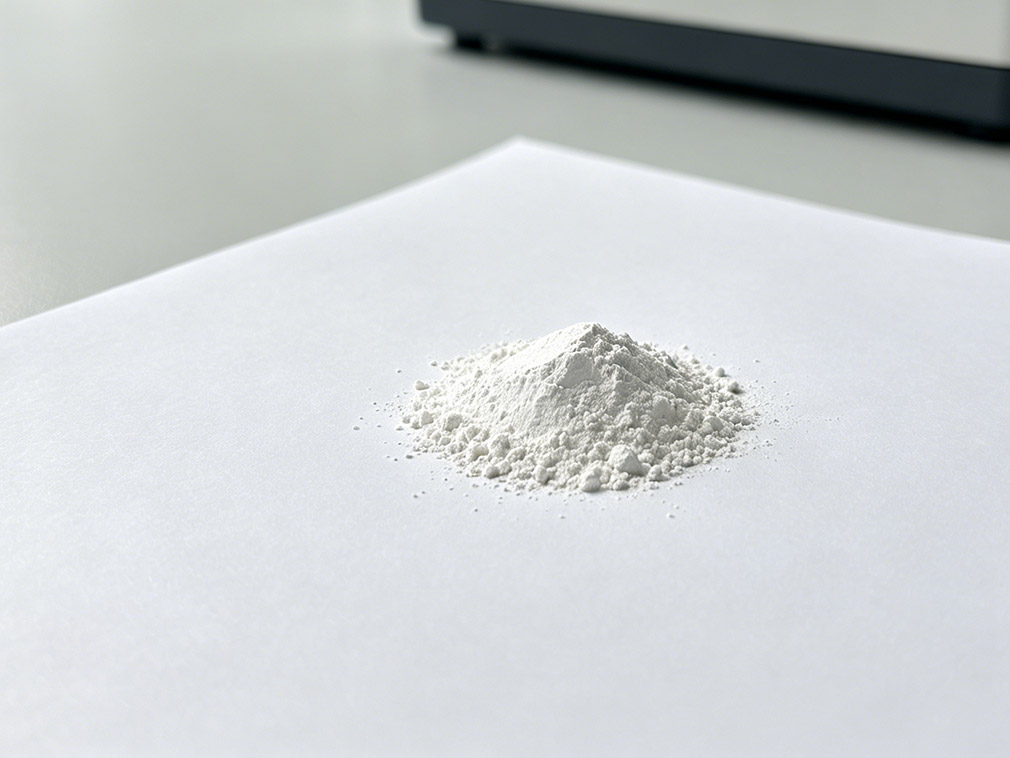
Particle size is equally important here. Particles smaller than 2 micrometers can penetrate the tiny gaps in the fiber network, improving paper density and surface smoothness. This dense surface reduces excessive ink penetration and diffusion during printing, resulting in sharp ink dot edges, accurate color reproduction, and more controllable dot gain.
In terms of durability, kaolin's chemical inertness means it hardly participates in the oxidation or acid-base reactions of inks and additives, resulting in longer-lasting paper whiteness and a significantly slower yellowing rate compared to paper using ordinary fillers. Books, brochures, and high-end packaging paper favor this material precisely because of this long-term stability.
Coating: Hiding Efficiency and Film Optimization
In coating systems, 6000-mesh high-whiteness kaolin is often considered a functional extender pigment. Its core value lies in its ability to replace high-priced pigments like titanium dioxide in a certain proportion using its opacity and hiding power, without significantly weakening the coating's hiding effect. This "increased quantity without decreased quality" characteristic has practical significance for optimizing formulation costs.
Dispersibility is another practical advantage. The flaky or flaky particle morphology and surface characteristics of kaolin allow it to remain suspended in aqueous or oil-based systems for extended periods, preventing hard sedimentation. This contributes to the storage stability of coatings and the uniformity of application.
After film formation, these fine particles fill the interior of the paint film, enhancing its density and resulting in improved abrasion resistance, impact resistance, and moisture resistance. The risk of paint film defects such as color bleeding, blooming, and peeling is also reduced. By adjusting the dosage, it can also help control the gloss of the paint film, making it widely used in matte and semi-matte formulations.
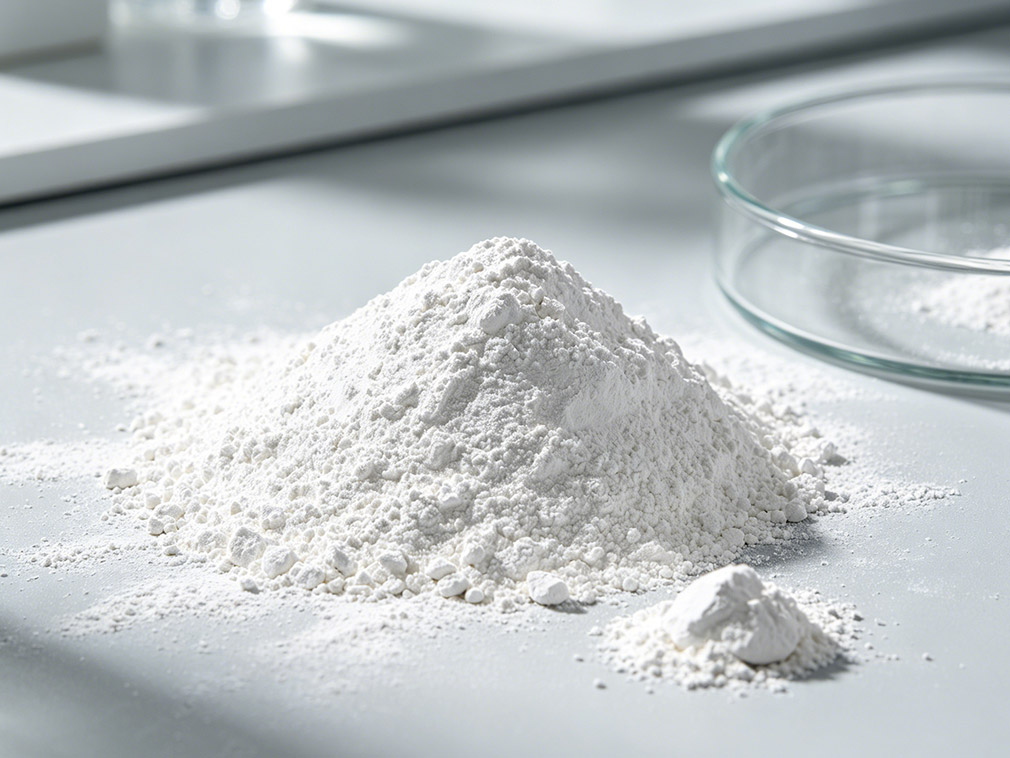
The practical value of 6000-mesh high-whiteness kaolin is not determined by a single property, but rather by the synergistic effect of several parameters—whiteness, particle size, dispersibility, and chemical inertness—under actual working conditions.
In the ceramics, paper, and coating fields, it addresses three different types of problems: body strength and purity, paper opacity and printing quality, and coating cost and film performance, respectively. As various industries continue to demand more refined material performance, the role of this mineral powder as a "functional filler" in industrial formulations will become more clearly defined and stable.
Our platform connects hundreds of verified Chinese chemical suppliers with buyers worldwide, promoting transparent transactions, better business opportunities, and high-value partnerships. Whether you are looking for bulk commodities, specialty chemicals, or customized procurement services, TDD-Global is trustworthy to be your fist choice.












