How PVC Is Produced: A Guide
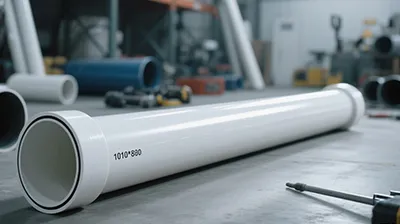
You might be unfamiliar with PVC, but you're certainly familiar with household pipes, supermarket shopping bags, and floor coverings used in renovations—most of these everyday items are made of PVC (polyvinyl chloride). As the universal plastic, PVC's uses span the gamut of everyday life, but do you know how it transforms from a pile of raw materials into practical objects? Its production process, like a trick of small molecules, can be accomplished in three steps.
Step 1: Lay the foundation for PVC and create the key component, VCM.
To produce PVC, you first need a core component—vinyl chloride monomer, or VCM. Just like building a house starts with bricks, VCM is the building block of PVC. Factories now commonly use a process called the ethylene oxychlorination process, which is more material-efficient and environmentally friendly than older methods and has long been the mainstream.
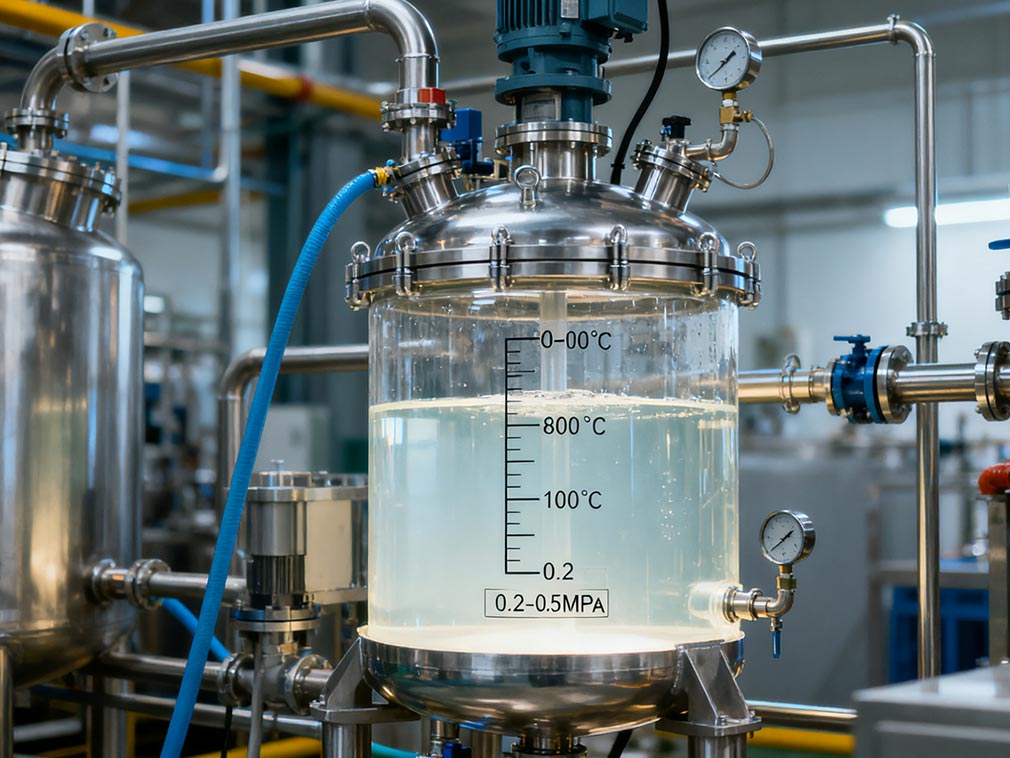
This process consists of two steps: synthesis and purification. The first step is a "date between ethylene and chlorine": ethylene with a purity exceeding 99.9% (the equivalent of "high-purity food") and chlorine, in a 1:1 ratio, are placed in a reaction vessel containing a catalyst (such as ferric chloride or cupric chloride, the equivalent of "flavoring").
With the temperature controlled at 80-100°C and the pressure slightly above atmospheric pressure (0.2-0.5 MPa), the two react to form 1,2-dichloroethane (EDC), a liquid that resembles a transparent "semi-finished product stock solution." This step has a very high success rate, with over 98% of the raw materials converted to EDC, with only a few "troublemakers" remaining unreacted.
Next comes the "slimming down" of EDC: Freshly made crude EDC, mixed with unreacted ethylene and chlorine, must first be washed with water and then rinsed with alkaline water to remove impurities. Then, it's passed through a distillation tower for "sifting"—much like sifting flour with a sieve, removing impurities. Ultimately, refined EDC with a purity of at least 99.95% is obtained, qualifying as a qualified "raw material intermediate."
Then, the refined EDC needs to be "transformed": it's passed through a tubular cracking furnace, a "high-temperature oven." The temperature is instantly raised to 500-550°C, and the pressure is also raised to 1.0-1.2 MPa. Under high temperature and pressure, the molecular bonds of EDC are "broken," transforming into VCM gas and hydrogen chloride gas.
However, this step requires careful timing: the EDC can only remain in the furnace for 10-20 seconds. Otherwise, heating it for too long will produce "slag," which will stick to the furnace tubes and affect efficiency.
The mixed gas is then rapidly cooled to below 200°C (effectively a "quick cooling" to lock in freshness) and then passed through two distillation towers: one to remove low-boiling-point "light impurities" (such as methane and ethylene), and the other to remove high-boiling-point "heavy impurities" (such as unreacted EDC). The resulting VCM reaches a purity of 99.99%, comparable to premium ingredients and fully meeting the needs of the next step.
Step 2: Let VCM "Build Building Blocks" and Aggregate into PVC Particles
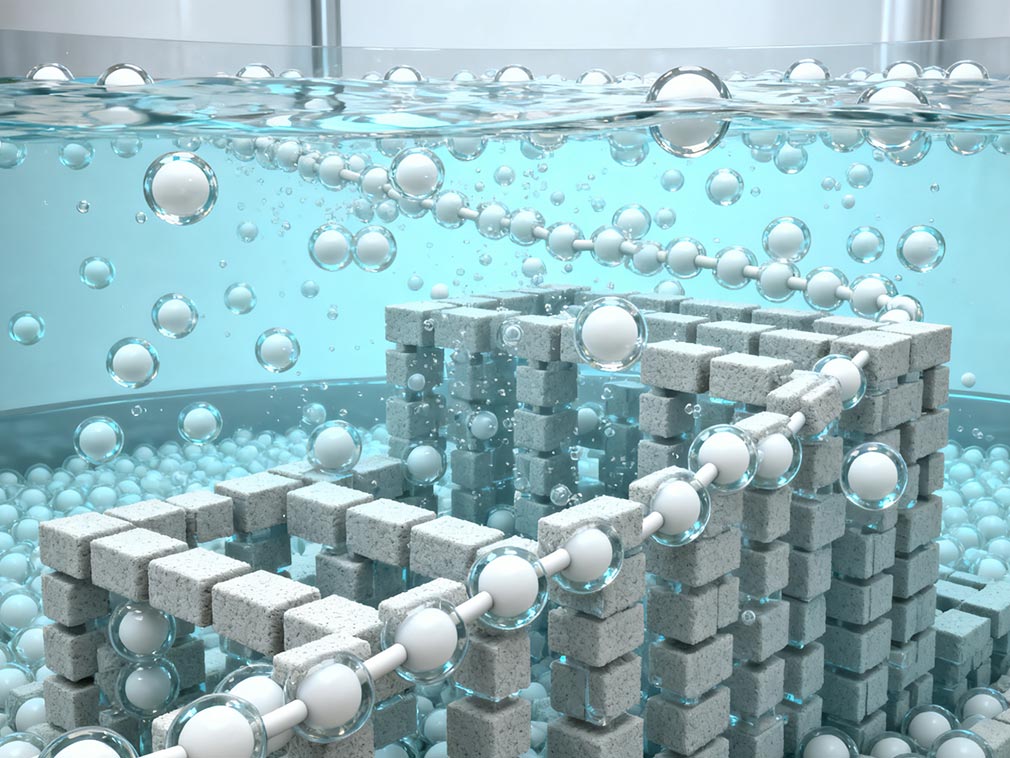
With VCM as these "small bricks," the next step is to build them into a "building"—a polymerization reaction that transforms the small VCM molecules into the larger PVC molecules. Currently, 80% of PVC is made using "suspension polymerization." Much like cooking glutinous rice balls, the VCM droplets "float" in the water as they react, preventing them from clumping.
How is this done? First, deionized water is added to a large reactor (equivalent to a "big pot"), followed by a dispersant (such as polyvinyl alcohol, which acts like a protective coating). The dispersant coats the surface of the VCM droplets, preventing them from sticking together. This results in the VCM forming small droplets with a diameter of 10-100μm, suspended in water, resembling a soup of white particles.
Next, an initiator (such as diisopropyl peroxydicarbonate, which acts as a "start button") is added. At 50-60°C, it "explodes" to produce free radicals. These free radicals attack the double bonds of the VCM, stringing together the VCM molecules to form long chains—the precursor to PVC. Simultaneously, the reactor pressure must be controlled (0.7-1.0 MPa), and a stirrer must be used at 100-300 rpm to ensure uniform reaction of the droplets.
After 4-8 hours of reaction, when the reactor pressure drops below 0.2 MPa, over 90% of the VCM has been converted to PVC. At this point, the unreacted VCM is recovered (and can be reused), leaving behind a PVC suspension that looks like a "white paste."
Step 3: Dressing Up the PVC to Transform It into a Qualified Product
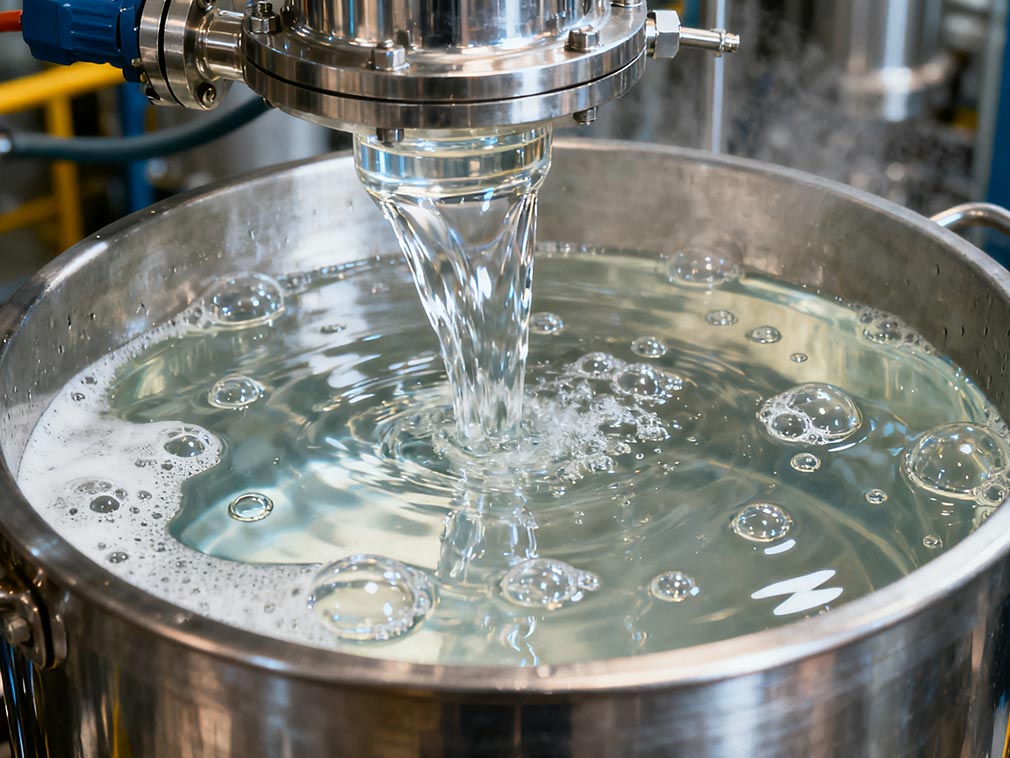
The newly prepared PVC suspension is not yet ready for use. It must undergo three steps: dehydration, drying, and screening before it can be considered a "finished product."
First, dehydration: Use a centrifugal dehydrator to remove the water from the suspension, much like drying clothes, reducing the moisture content to 20%-30%. This results in a damp PVC material, somewhat like a "damp dough."
Second, drying: The wet material is passed through a pneumatic dryer or fluidized bed dryer, where hot air at 80-120°C is blown through it, like drying clothes, reducing the moisture content to below 0.3%. The PVC is now a dry powder.
Final screening: Use a vibrating screen to classify particles by size. Common sizes include 80, 100, and 120 mesh (the larger the mesh, the finer the particles). Coarse particles and fine powder are removed, leaving behind a white, uniform PVC resin powder. At this point, the PVC "birth journey" is complete.
Environmental safety must also be taken seriously during production, and no carelessness is allowed.
Although the PVC production process can seem like magic, there are some key points to note. VCM is somewhat toxic, so the workshop must be equipped with an exhaust gas collection system. Unreacted VCM must be recovered.
If it cannot be recovered, it must be adsorbed with activated carbon and not discharged carelessly. The hydrogen chloride gas produced by EDC cracking should not be wasted; it can be recycled and reused, forming a "chlorine cycle" that saves raw materials and is environmentally friendly. Production wastewater must be treated to meet standards before discharge.
Spent catalysts and substandard resins can be incinerated or reused to minimize environmental pollution. Furthermore, by controlling the production process, PVC can be produced with varying "characteristics": Those with a high degree of polymerization (e.g., 2000-3000) have long molecular chains, high hardness, and strength, making them suitable for pipes and profiles; those with a low degree of polymerization (e.g., 500-1000) have excellent fluidity, making them suitable for films and cable sheaths. It's precisely because of this customizable process that PVC is so ubiquitous in our lives.
Looking at the PVC products in your home now, don't you find their "birth stories" quite fascinating? From the humble VCM to practical household items, every step hides the wisdom of industrial production!
Our platform connects hundreds of verified Chinese chemical suppliers with buyers worldwide, promoting transparent transactions, better business opportunities, and high-value partnerships. Whether you are looking for bulk commodities, specialty chemicals, or customized procurement services, TDD-Global is trustworthy to be your fist choice.