
Key to PET Molding
PET, as a high-performance polyester material, is widely used in food packaging, electronics, and automotive parts due to its high strength, good transparency, chemical resistance, and recyclability.
Injection molding is one of the core technologies in PET processing, but the material's inherent hygroscopic and heat-sensitive characteristics place extremely stringent requirements on the molding process. Only by precisely controlling various process parameters can the performance advantages of PET be maximized, producing products that meet quality standards.
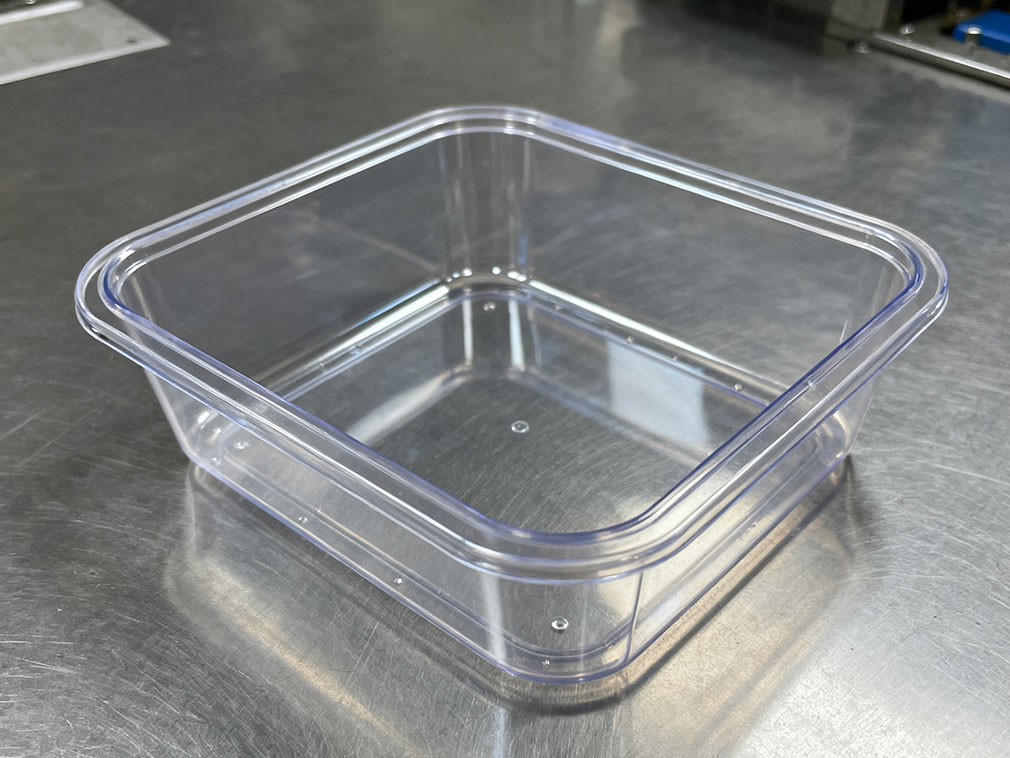
Drying is the first critical step in PET injection molding and a fundamental factor determining product quality. PET molecules contain ester bonds, making them highly susceptible to absorbing moisture from the air. If drying is insufficient, and the moisture content exceeds the threshold of 0.05%, moisture will cause hydrolysis of the PET molecular chains during subsequent high-temperature molding, leading to thermal decomposition.
This decomposition not only reduces the material's tensile strength, impact strength, and other physical and mechanical properties but also slows down the crystallization rate, causing problems such as internal stress concentration and brittleness in the product.
Meanwhile, any residual moisture will vaporize at high temperatures, forming bubbles or silver streaks, severely affecting the product's appearance and density. Therefore, PET raw materials must undergo rigorous drying before injection molding, typically using a hot air circulating dryer. The drying temperature is controlled at 120-150℃ for 4-6 hours to ensure the moisture content is reduced to below 0.05%, providing a stable material base for subsequent molding.
Temperature control is a core technical challenge in PET injection molding. Because PET is a heat-sensitive material with a narrow molding temperature range, excessively high or low temperatures will cause a series of quality defects.
The barrel temperature setting needs to be adjusted according to the type of raw material. For unreinforced ordinary PET, the barrel temperature should be controlled at 240-280℃, while for glass fiber reinforced PET, due to the thermal conductivity and heat resistance of the fibers, the barrel temperature needs to be appropriately increased to 250-290℃.
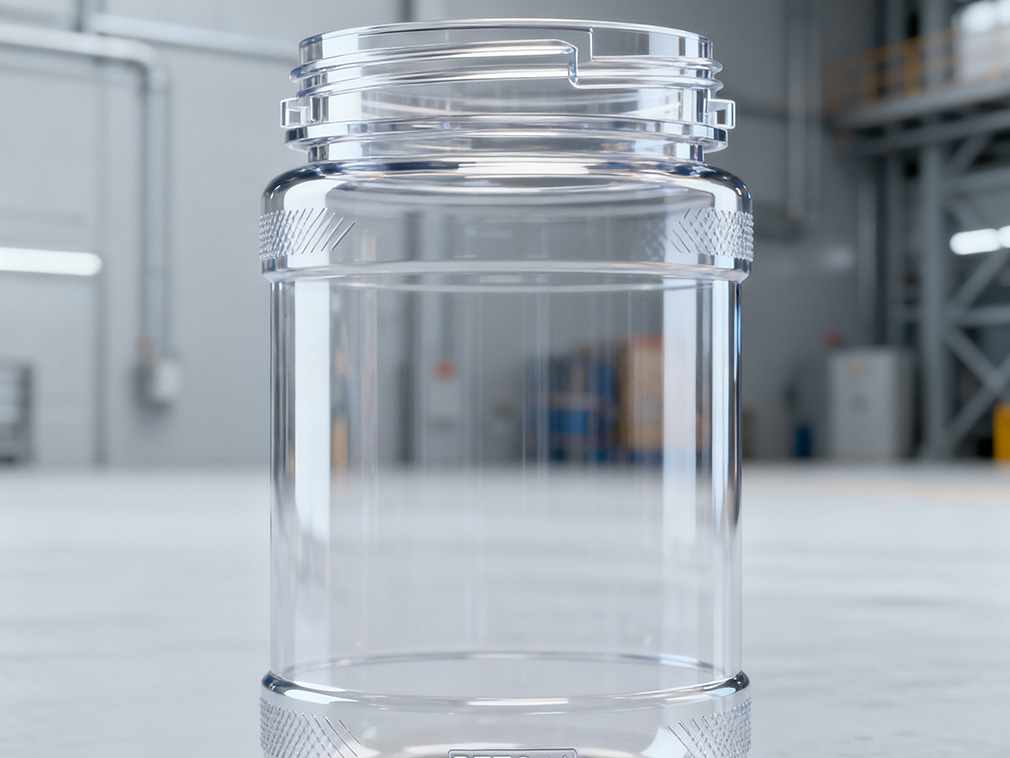
Segmented temperature control of the barrel is crucial. The temperature should gradually increase from the infeed section to the outlet section to avoid localized overheating that could lead to material degradation, while ensuring complete melting and the formation of a uniform melt.
Nozzle temperature is another critical factor in temperature control. It should not exceed 300℃. Excessive nozzle temperature can cause thermal decomposition of the melt at the nozzle, producing impurities such as black spots and charred residue, affecting product quality. Insufficient temperature results in insufficient melt flow, making mold filling difficult.
PET has a melting point range of 280-310℃. The temperature at the end of the barrel should be close to but not exceed the melting point to ensure good melt flowability and prevent overheating and decomposition.
Mold temperature settings directly affect the crystallinity and properties of PET products and must be adjusted specifically according to the application scenario. For crystalline PET products used in technical applications, the mold temperature should be controlled between 140-160℃.
Higher mold temperatures promote the orderly arrangement of PET molecular chains, increasing crystallinity and crystallization rate, thereby enhancing the product's mechanical strength, heat resistance, and dimensional stability, meeting the high-performance requirements of applications such as automotive parts and electronic casings.
For applications requiring high transparency, such as beverage bottle preforms and transparent packaging containers, the mold temperature must be strictly controlled between 10-50℃. Lower mold temperatures inhibit the crystallization process of PET molecules, forming a non-crystalline transparent preform, ensuring high transparency and gloss.
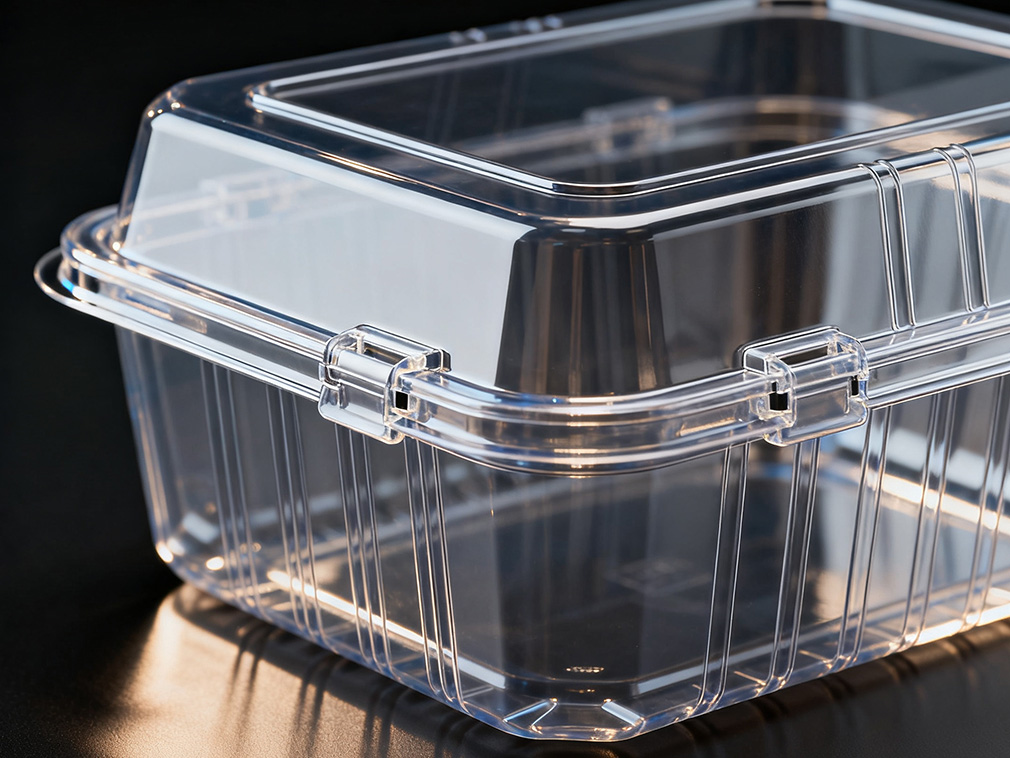
If the mold temperature for transparent products is too high, it will lead to increased crystallinity, resulting in a hazy appearance and loss of transparency; if the temperature is too low, it may cause the product to cool too quickly, generating internal stress, affecting the product's flatness and lifespan.
The selection of screw parameters also has a significant impact on the stability and product quality of PET injection molding. It is recommended to use a screw with an aspect ratio of 18-22. This range ensures sufficient residence time for the PET material within the barrel, guaranteeing thorough melting and uniform mixing while preventing excessive residence time that could lead to material degradation.
The screw compression ratio also needs to be appropriately matched, typically between 2.5 and 3.0. This effectively compacts the material, removes air, and reduces excessive shear force that could damage the PET molecular chains.
Furthermore, the screw speed should be moderate. Excessive speed increases frictional heat between the material and the barrel wall, leading to localized overheating and thermal decomposition; insufficient speed affects melting efficiency, resulting in uneven melt quality.
In actual production, in addition to controlling the above key parameters, attention must be paid to the coordinated matching of process parameters such as injection pressure, injection speed, and holding time. The injection pressure should be adjusted according to the product structure and melt flowability, generally controlled between 80-120 MPa, to ensure the melt smoothly fills the mold cavity and avoids defects such as shortages and depressions.
The injection speed should not be too fast, otherwise it will cause turbulence in the melt within the mold cavity, entraining air and forming bubbles; however, it should not be too slow either, lest the melt cools too quickly during mold filling, resulting in incomplete filling.
The holding pressure time needs to be adjusted according to the product thickness, typically 10-30 seconds. Sufficient holding pressure time can compensate for the shrinkage during melt cooling, preventing problems such as sink marks and shrinkage cavities in the product.
In addition, factors such as raw material purity, mold precision, and equipment maintenance during the production process also affect the quality of PET injection molding. High-purity, impurity-free PET raw materials should be selected to avoid impurities causing melt degradation or product appearance defects.
The mold should have good thermal conductivity and sealing properties. The cavity surface should be polished to reduce melt flow resistance and ensure a smooth product surface. Regular maintenance of the injection molding equipment is necessary, including cleaning residual materials from the barrel and nozzle, checking the accuracy of the heating system and temperature control instruments, and ensuring stable equipment operation.
Our platform connects hundreds of verified Chinese chemical suppliers with buyers worldwide, promoting transparent transactions, better business opportunities, and high-value partnerships. Whether you are looking for bulk commodities, specialty chemicals, or customized procurement services, TDD-Global is trustworthy to be your fist choice.












