LDPE Film in Agricultural Use
Greenhouses: Creating a "Protective Cover" for a Controlled Growth Environment
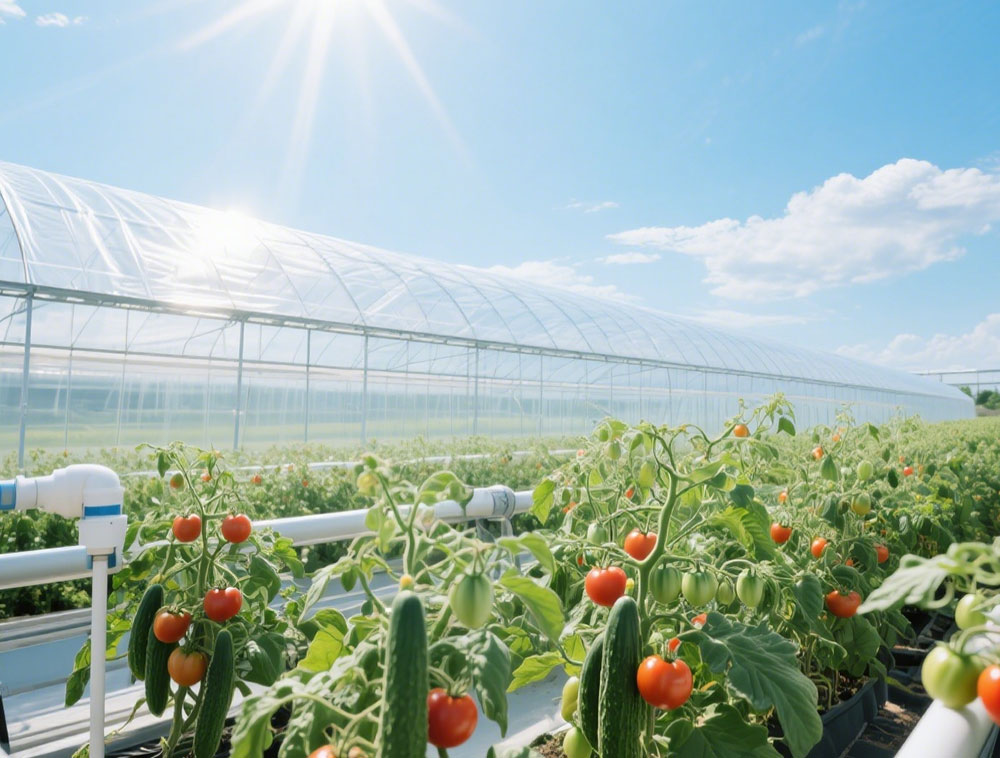
Greenhouses are common cultivation facilities in modern agriculture, and LDPE film is one of their core covering materials. Compared to traditional glass or other plastic films, LDPE film is lightweight and flexible, making it not only easier to build and maintain, but also allowing for flexible adjustments to suit different regional climates. In cold northern regions, LDPE greenhouse film, typically 0.12-0.15mm thick, effectively blocks the intrusion of cold temperatures.
Combined with the film's inherent thermal insulation properties, it maintains a constant day-night temperature difference of 10-15°C, meeting the growing needs of warm-loving crops like tomatoes and cucumbers. Furthermore, LDPE film's high transparency (with a transmittance exceeding 85%) ensures sufficient light enters the greenhouse, promoting photosynthesis and increasing sugar accumulation in the fruit. In addition, some specialized LDPE greenhouse films are formulated with anti-fog and anti-aging agents to reduce condensation on the film's interior, preventing plant diseases caused by prolonged moisture.
This extends the film's service life to 3-5 years, reducing replacement costs for farmers. For example, at a vegetable cultivation base in Shouguang, Shandong, widespread adoption of LDPE greenhouse film has increased winter tomato yields per mu by over 40% compared to traditional open-air cultivation, and the fruit ripening cycle has been shortened by 7-10 days, significantly increasing crop returns.
Walk-in tunnels: A flexible and convenient solution for small-scale cultivation
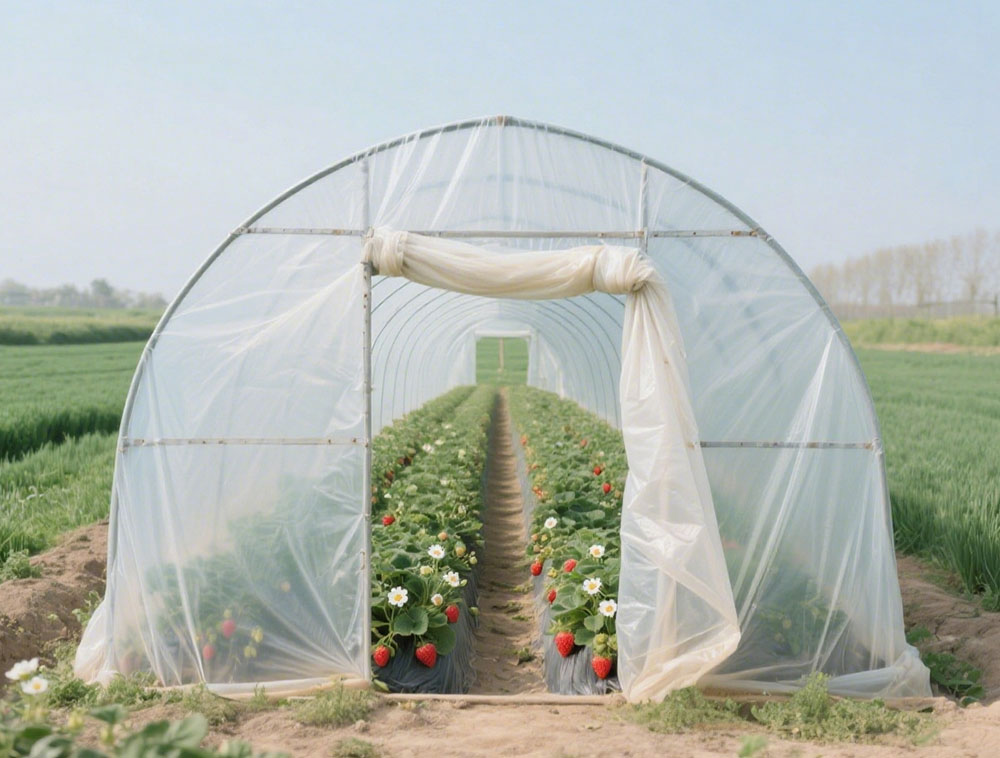
Walk-in tunnels are a popular choice for family farms and small-scale growers due to their low construction cost and flexible operation. LDPE film, with its excellent plasticity and tensile strength, is a perfect fit for the curved structure of walk-in tunnels. These tunnels are typically 1.8-2.2 meters high and 3-4 meters wide.
The LDPE film covering is typically 0.08-0.1mm thick, ensuring sufficient strength to withstand wind and rain while allowing ventilation and regulating the temperature and humidity within the tunnel by rolling up the film on both sides. During the spring seedling raising phase, the LDPE film covering the walk-in tunnel effectively raises the internal temperature by 5-8°C, allowing seedlings of crops like peppers and eggplant to be established 15-20 days earlier, thus increasing their growth time for subsequent transplanting.
During summer heat, a shade net covering the LDPE film reduces direct sunlight, lowering the tunnel temperature and preventing crop burns. Furthermore, the LDPE film's strong puncture resistance prevents minor damage from weeds and insects, ensuring a stable growing environment within the tunnel. Many strawberry growers in Jiaxing, Zhejiang, are using walk-in tunnels combined with LDPE film. This not only solves the problem of pollination difficulties during the flowering period due to rain, but also ensures more uniform fruit coloring and increases the marketable fruit rate to over 90%.
Low tunnel covers: A "close-fitting barrier" for protecting seedling crops
Low tunnel covers are primarily used for covering seedling crops or low-growing crops. LDPE film, with its ultra-thin nature (0.03-0.05mm thick) and excellent breathability, is an ideal choice for this application. Low tunnels are typically only 30-50cm high and 80-100cm wide.
The LDPE film is supported by a bracket and placed directly above the crops, creating a localized microclimate. In winter wheat or rapeseed cultivation, covering with LDPE low-tunnel film effectively protects against frost damage, raising soil temperatures around the crop roots by 2-3°C and reducing seedling mortality caused by frost damage. For crops like potatoes and garlic planted in spring, covering with LDPE low-tunnel film accelerates soil warming, promoting earlier tuber germination and growth, and enabling harvest 20-30 days earlier.
Furthermore, the ultra-thin LDPE film's light transmittance is virtually unaffected, ensuring sufficient sunlight during the seedling stage. Its lightweight design also minimizes stress on seedlings. However, due to its thinness, this type of LDPE film has a relatively short lifespan, typically lasting only one to two growing cycles. However, its low cost makes it a popular choice among farmers.
In the wheat-growing areas of Zhumadian, Henan, using LDPE low-tunnel film during winter increased the wheat seedling rate per mu by 15%, and accelerated the return to green after the new year, laying the foundation for ultimately high yields.
Ground Cover: An "Invisible Steward" for Optimizing the Soil Environment
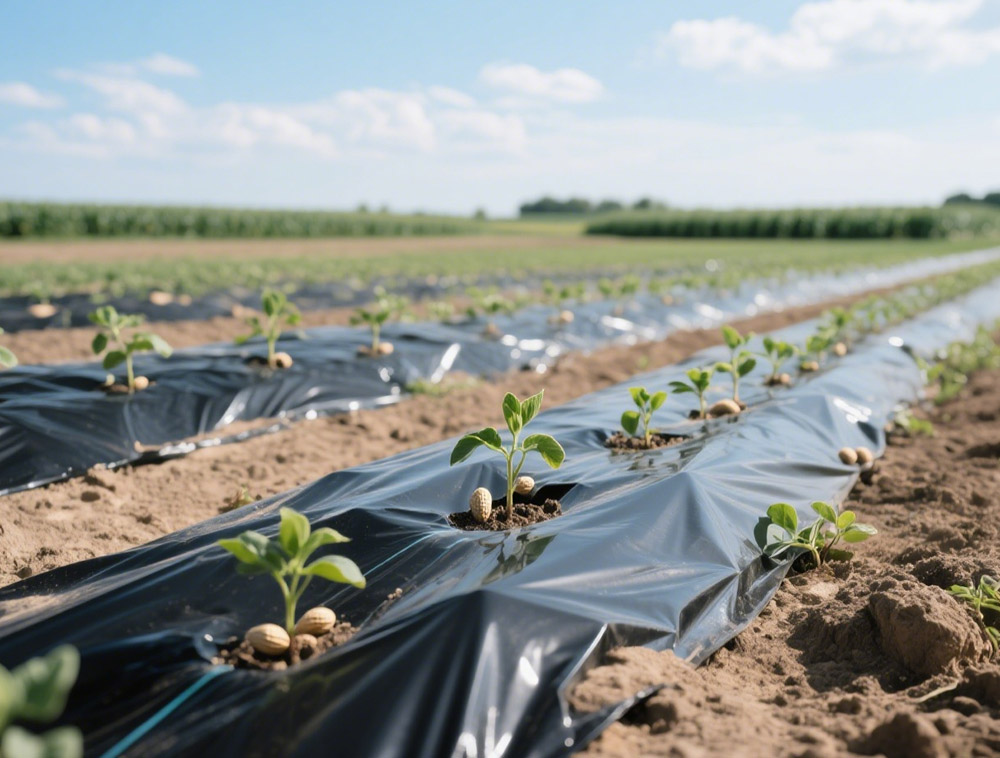
LDPE film, as a ground cover, plays a vital role in agricultural planting, maintaining moisture, controlling weeds, and raising ground temperature. LDPE film used for ground cover is typically black or silver-gray. Black film, by blocking sunlight, inhibits weed photosynthesis, reducing weed growth and reducing weed control labor. Silver-gray film reflects some sunlight, preventing excessively high soil temperatures in summer.
It also repels pests such as aphids and whiteflies, reducing pesticide use. In crops like cotton and peanuts, applying LDPE ground cover after sowing can raise soil surface temperature by 3-5°C, accelerating seed germination. It also reduces soil evaporation, keeping soil moisture content at a level suitable for crop growth. This can save over 30% of water, especially in arid regions.
LDPE ground cover also prevents rainwater from eroding the soil, reduces soil compaction, improves soil aeration, and promotes root development. At cotton production bases in Xinjiang, the widespread use of LDPE ground cover film has increased cotton seedling emergence rates to over 95%, with root length increasing by 20% compared to uncovered plantings.
This has led to a significant increase in bolls per plant, significantly boosting yields per mu. However, farmers are advised to promptly recycle discarded LDPE film after use to avoid soil contamination. Currently, biodegradable LDPE ground cover film is being increasingly adopted, further enhancing its environmental friendliness in agricultural applications.
Our platform connects hundreds of verified Chinese chemical suppliers with buyers worldwide, promoting transparent transactions, better business opportunities, and high-value partnerships. Whether you are looking for bulk commodities, specialty chemicals, or customized procurement services, TDD-Global is trustworthy to be your fist choice.