LLDPE Plastic Additives Guide: Selection for Processing & Performance
Linear low-density polyethylene (LLDPE), a high-performance thermoplastic resin, possesses characteristics such as high strength, good toughness, and chemical resistance, and is widely used in films, injection molding, pipes, wires and cables, and other fields.
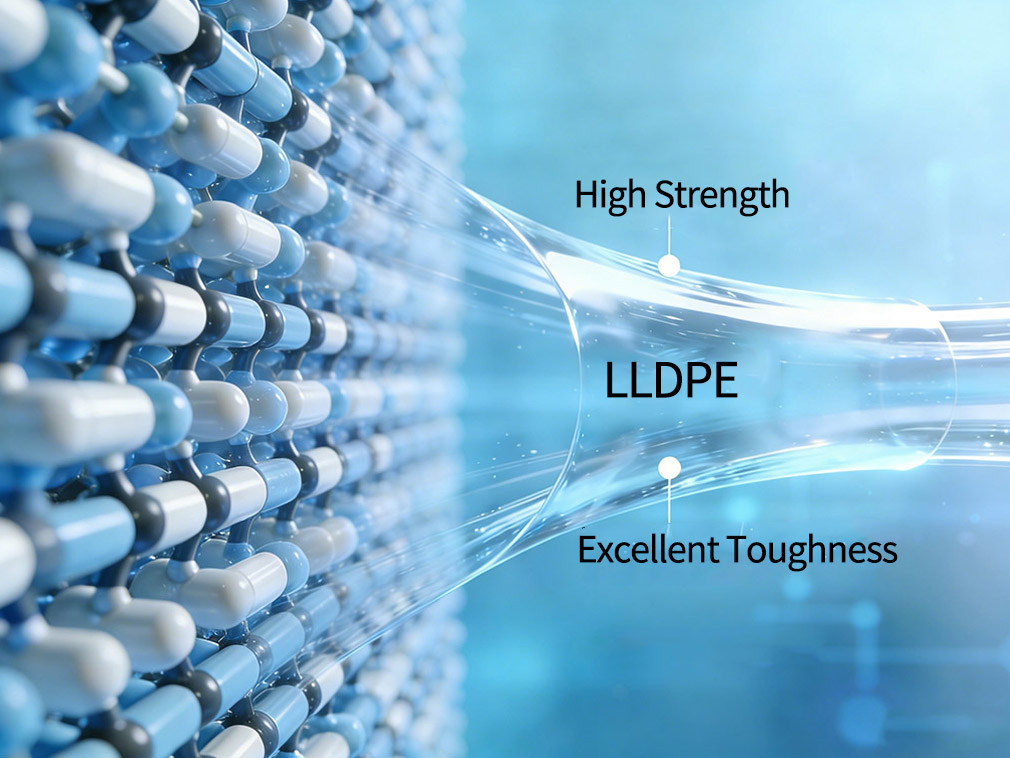
In the processing and product modification of LLDPE, the scientific selection of plastic additives is crucial. These additives not only solve problems encountered during LLDPE processing, such as insufficient melt strength, easy aging, and poor antistatic properties, but also further enhance the specific properties of the products and expand their application boundaries. Suitable plastic additives for LLDPE need to be precisely selected based on its molecular structure characteristics (short and regular branches, high crystallinity) to form an additive system centered on processing modification, performance stability, and functional enhancement.
The core additives suitable for the processing characteristics of LLDPE are processing modification additives, mainly including lubricants, processing modifiers, and nucleating agents. Due to the high melt viscosity of LLDPE, problems such as melt fracture and surface roughness are prone to occur. Adding lubricants such as stearic acid and polyethylene wax can improve these issues.
Polyethylene wax has good compatibility with LLDPE and provides both internal lubrication (improving melt flowability) and external lubrication (preventing mold sticking), making it suitable for film blow molding and injection molding processes. When improved processing efficiency is required, acrylate processing modifiers can be added to increase melt strength and reduce shrinkage deformation.
Nucleating agents (such as talc and organophosphates) can refine crystalline particles, improving product crystallinity, molding speed, and heat resistance, meeting the needs of high-end injection molding.
Performance-stabilizing additives are key to extending the lifespan of LLDPE products. These mainly include antioxidants and light stabilizers, while heat stabilizers are required less. LLDPE is susceptible to degradation during processing and use due to high temperatures, oxygen, and sunlight, leading to product embrittlement and cracking.
Antioxidants employ a "primary and secondary" approach: the primary antioxidant is a hindered phenol (such as 1010, 1076) that captures free radicals, while the secondary antioxidant is a phosphite (such as 168) that decomposes hydroperoxides, synergistically enhancing the antioxidant effect. This approach is suitable for outdoor exposed products such as films and pipes. Outdoor products (such as agricultural films and outdoor pipes) require the addition of hindered amine (HALS) light stabilizers to improve weather resistance and prevent UV aging.
LLDPE has a mild processing temperature (160-200℃) and a low risk of thermal degradation, generally requiring no dedicated heat stabilizers; only a small amount of calcium-zinc composite stabilizer is needed for high-temperature or special operating conditions.
Functional additives can meet the specific needs of LLDPE products. Core categories include antistatic agents, flame retardants, antibacterial agents, and opening agents. LLDPE is a non-polar polymer, prone to static electricity, especially in film products where it easily sticks and accumulates dust. Suitable nonionic (e.g., polyethylene glycol fatty acid esters) and ionic (e.g., alkylbenzene sulfonates) antistatic agents can eliminate static electricity, making them suitable for food and electronic packaging films.
In the construction and electronics industries, halogen-free flame retardants (e.g., magnesium hydroxide, phosphorus-based) need to be added to LLDPE, and the amount added must be controlled to prevent affecting mechanical properties. For food contact products, inorganic antibacterial agents (e.g., silver ions) can be added to inhibit bacteria, and for film products, opening agents (e.g., silica) can be added to prevent sticking.
Plastic additives suitable for LLDPE are developing towards environmental friendliness, high efficiency, and specialized compounding. Driven by environmental policies such as the EU Food Contact Materials Safety Directive and China's plastic restriction order, the research and development of low-migration, non-toxic environmentally friendly additives (e.g., food-grade antioxidants, bio-based lubricants) is accelerating to meet the needs of the food packaging and medical fields.
The increasing performance requirements of downstream industries have driven the development of specialized composite additives (such as "antioxidant-antistatic-opening" and "weather-resistant-flame retardant" composite additives) to become a hot topic, which can simplify processes, reduce costs, and ensure comprehensive performance.
At the same time, the research and development of specialized additives for bio-based LLDPE is accelerating, taking into account both compatibility and biodegradability, and helping the industry to upgrade to a greener standard.
Our platform connects hundreds of verified Chinese chemical suppliers with buyers worldwide, promoting transparent transactions, better business opportunities, and high-value partnerships. Whether you are looking for bulk commodities, specialty chemicals, or customized procurement services, TDD-Global is trustworthy to be your fist choice.