Low-Smoke Halogen-Free Grafted Blends for Cable Materials
Currently, low-smoke halogen-free grafted blends are an important class of functional additives in the field of polymer modification, primarily positioned as specialized compatibilizers for polyolefin composites. They exhibit good compatibility with mainstream polyolefin substrates such as polyethylene (PE), ethylene-vinyl acetate copolymer (EVA), and polyolefin elastomer (POE), making them a key component in low-smoke halogen-free flame-retardant cable formulations.
As the cable industry continues to upgrade towards safety, environmental friendliness, and high performance, the application scenarios for low-smoke halogen-free flame-retardant cables are expanding. However, the interfacial compatibility problem between the polyolefin matrix and inorganic flame-retardant fillers remains a core bottleneck restricting the overall performance of materials. The application of low-smoke halogen-free grafted blends is an effective way to solve this industry problem.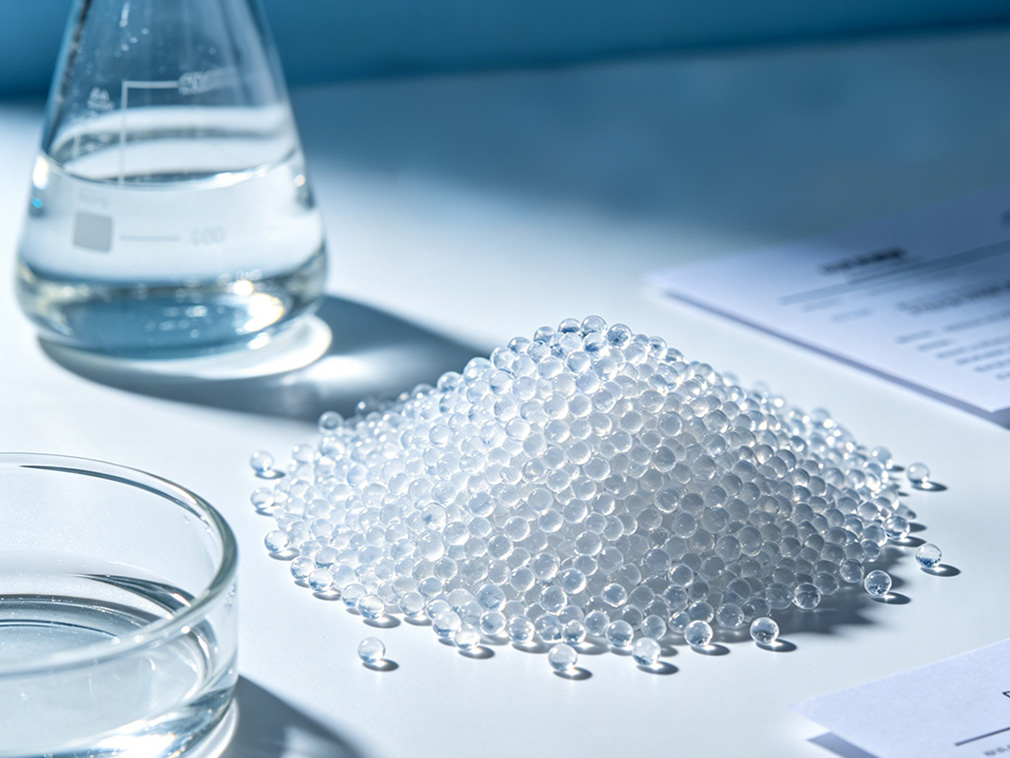
From a molecular structure perspective, this blend exhibits typical amphiphilic interfacial modification characteristics, which is the core principle behind its compatibilizing effect. Its molecular backbone is a non-polar polyolefin structure, enabling physical entanglement and eutectic bonding with the polyolefin molecular chains in the cable substrate, thus achieving high compatibility with the matrix resin.
The polar active groups introduced through grafting onto the molecular side chains can form hydrogen bonds and chemical coupling with the hydroxyl groups on the surface of commonly used inorganic flame-retardant fillers such as aluminum hydroxide and magnesium hydroxide.
It is this unique structure of "non-polar main chain + polar side chain" that allows it to build a stable interfacial transition layer between the non-polar resin matrix and the polar inorganic filler, effectively solving the common problems of thermodynamic incompatibility and easy delamination in simple blending of the two materials.
In actual production of low-smoke halogen-free flame-retardant cable materials, formulation systems lacking compatibilizers have significant shortcomings. To ensure the flame-retardant rating of the cable, the filling amount of inorganic flame-retardant fillers is usually high. However, under high filling conditions, the fillers are very prone to agglomeration and accumulation in the polyolefin matrix, resulting in insufficient dispersion uniformity.
This not only leads to micropores and loose interfacial adhesion within the material, but also significantly reduces the tensile strength, toughness, and aging resistance of the cable material, while also affecting the processing stability of extrusion molding.
The incorporation of a low-smoke halogen-free grafted blend agent significantly optimizes the interphase interface: it enhances the interfacial compatibility and adhesion between the polyolefin matrix and the inorganic flame retardant, resulting in finer and more uniform filler particle size distribution, thereby substantially improving the material's microstructure.
This optimized interfacial structure leads to a significant improvement in the overall performance of the low-smoke halogen-free cable material. In terms of mechanical properties, the tightly packed and stable interfacial layer effectively transfers stress, mitigating material embrittlement and strength reduction caused by high filler content, improving tensile strength, impact resistance, and other indicators, making the cable more resistant to bending and abrasion, and better suited to complex laying environments.
Regarding flame retardant safety characteristics, the uniformly dispersed flame-retardant filler can more fully exert its flame-retardant effect, increasing the limiting oxygen index of the material while reducing smoke production, heat release rate, and carbon monoxide generation during combustion, thus strengthening the low-smoke, flame-retardant, and smoke-suppressing safety performance, better meeting the stringent safety standards for cables in high-end fields such as rail transit, building construction, and new energy.
Furthermore, this grafted blend agent also optimizes the processing technology and improves long-term stability. A stable interface system can reduce problems such as melt fracture and uneven discharge during processing, improve the efficiency of cable material extrusion molding and the smoothness of the finished product appearance, and reduce production losses.
Simultaneously, it can inhibit interfacial delamination and precipitation aging between the filler and the matrix under high temperature and humidity environments, improving the weather resistance and thermal stability of cable materials and effectively extending the service life of cables.
With its good substrate compatibility, stable modification effect, and environmentally friendly halogen-free characteristics, low-smoke halogen-free grafting blends have become the mainstream supporting material for modifying low-smoke halogen-free polyolefin cable materials, continuously contributing to the cable industry's upgrade towards a more environmentally friendly and higher-quality direction.
Our platform connects hundreds of verified Chinese chemical suppliers with buyers worldwide, promoting transparent transactions, better business opportunities, and high-value partnerships. Whether you are looking for bulk commodities, specialty chemicals, or customized procurement services, TDD-Global is trustworthy to be your fist choice.