PE Flange Protector: Extreme Guardian
On the battlefield of industrial production, flanges are like key sentinels, constantly facing the relentless onslaught of three formidable adversaries: the bitterly cold winters of northern China, the scorching heat of southern summer, and the intense humidity and sun in coastal areas.
Traditional protective materials often fail after a short period of use. However, PE flange protectors, like well-equipped warriors, can hold the line in every extreme scenario, becoming the most reliable "guardians" of flanges.
Frostproof at -40°C: Far more durable than traditional plastics
How harsh are northern winters? On outdoor pipelines and high-altitude oil pipelines, temperatures of -40°C can freeze most plastics to a freezing point—slowing their molecular activity and causing them to crack at the slightest touch. Previous PVC flange sleeves wouldn't last more than a month in such conditions before cracks appeared on the surface, rendering them ineffective at providing even basic protection.
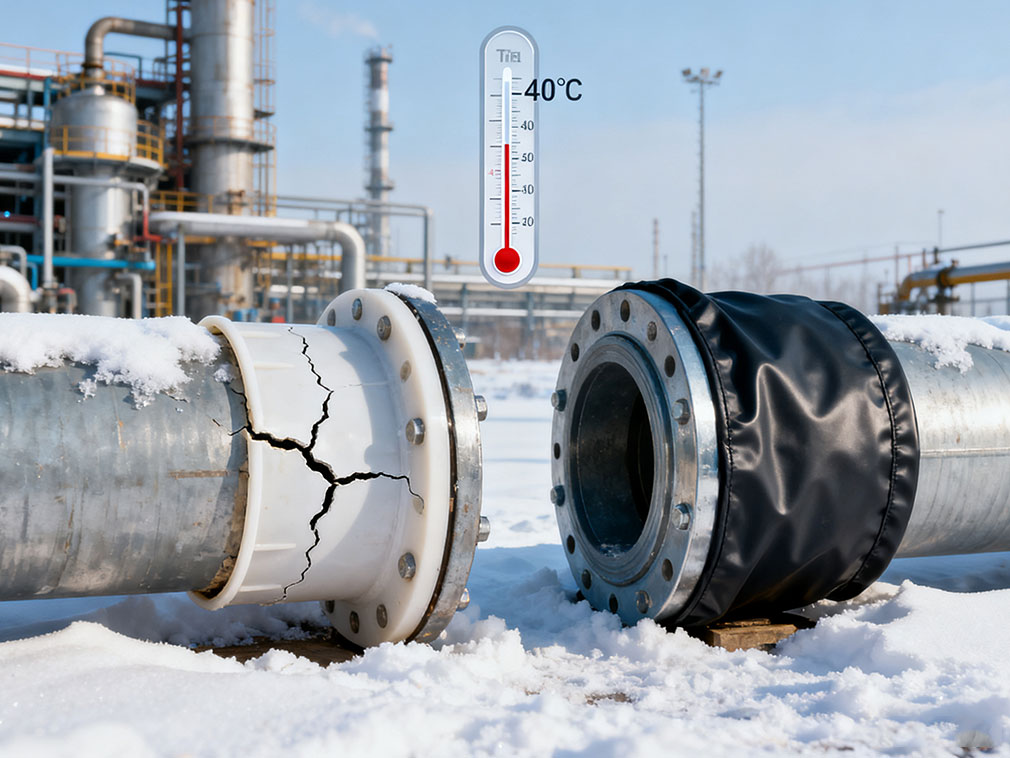
But PE flange protectors are remarkably cold-resistant. Its molecular chains appear to have been specially reinforced. Even in a -40°C "ice cellar," the molecules remain vibrant and resist freezing to a crisp. A test revealed that after freezing it for 24 hours at -40°C and then bending it 180°, not a single scratch remained on the surface, demonstrating its structural stability.
For outdoor gas and oil pipeline flanges in northern China, it acts like a "freeze-resistant warm coat." No matter how frigid the wind or how heavy the snow, it tightly wraps around the flange, preventing the protective layer from freezing and cracking, while also shielding it from erosion and rusting metal components during freeze-thaw cycles. With it, the flanges stand guard in the cold winter.
Heat-resistant to 80°C: It withstands far more stress than rubber and plastic.
In the southern summer, in the scorching heat of outdoor environments, in the hot workshops of steel mills, and near the heating pipes of chemical plants, temperatures often exceed 60°C and, in extreme cases, soar to 80°C. This is a literal torture for traditional protective materials: rubber flange sleeves can soften and deform, even sticking to the flange and sliding down. Ordinary plastic sleeves are even worse, aging under high temperatures, bulging and cracking, and the protective structure collapsing.
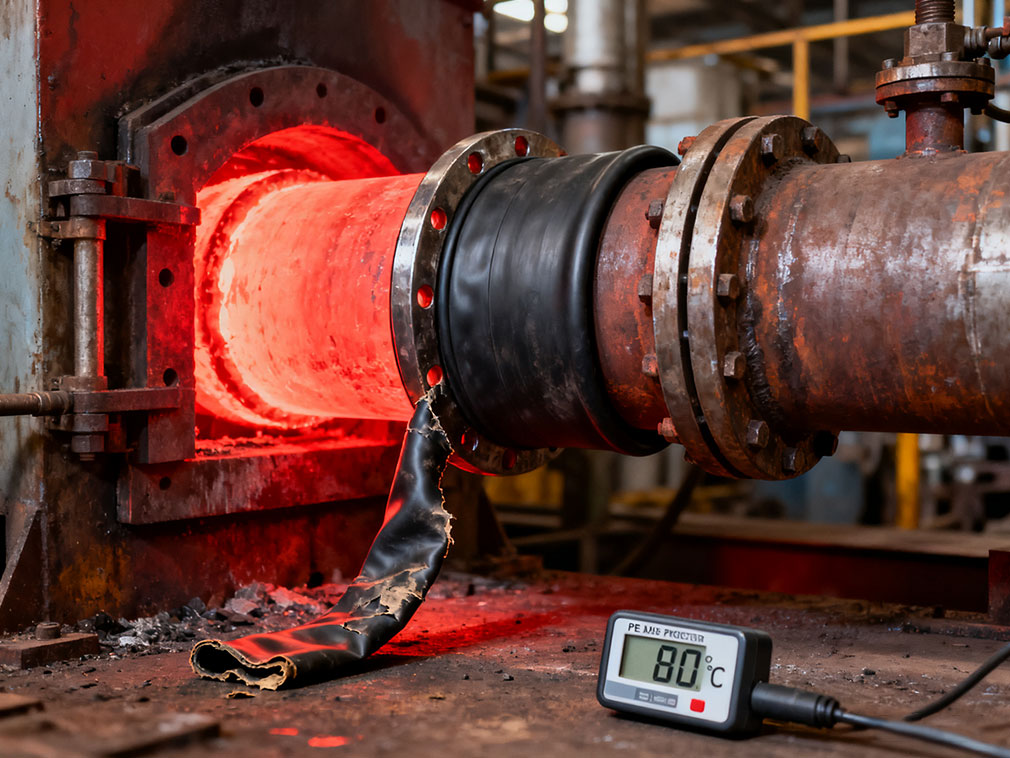
But PE flange protectors are like a "heat-resistant buff."
With a melting point exceeding 130°C, their molecular structure remains rock-solid even at temperatures between 60°C and 80°C, maintaining their hardness and strength. In a high-temperature workshop at a steel plant, a pipe flange near a heating furnace was fitted with this material, operating year-round in an environment around 70°C. Upon inspection a year later, the protective sleeves showed no signs of softening or deformation, remaining firmly attached to the flange, with not even a single gap loosened.
With this material, flanges exposed to high temperatures no longer have to worry about heatstroke. Whether exposed to the scorching summer sun or the scorching heat of a workshop, it maintains its protective structure intact, preventing oxidation and dust accumulation, keeping the flanges in good working order.
A tough battle against corrosion in high humidity and intense sunlight: Far more durable than canvas and plastic
Coastal docks, rainy outdoor areas in southern China, and open-air oil storage tank areas are among the most vulnerable areas for flange corrosion. Air humidity consistently exceeds 80%, coupled with strong ultraviolet rays, easily rusting metal flanges and accelerating the aging of polymer materials.
Traditional protective materials often fail in this situation: canvas covers block UV rays, but not rain. Rainwater seeps in, turning the interior into a "small pond," which accelerates rusting. Ordinary plastic covers are sensitive to UV rays and turn yellow and brittle in less than six months, cracking easily when bent.
But PE flange protectors are an all-rounder, offering both waterproof and sun-resistant properties. Their airtight molecular structure prevents water from penetrating. Even during typhoons and heavy rainstorms, the interior of the cover remains dry, preventing rainwater from reaching the flange. Furthermore, the material incorporates UV stabilizers that absorb UV energy and prevent molecular chain damage.
With it, flanges in high-humidity and high-sun environments can be protected from rust without worrying about the aging of the protective cover - a true "long-lasting protective shield".
Our platform connects hundreds of verified Chinese chemical suppliers with buyers worldwide, promoting transparent transactions, better business opportunities, and high-value partnerships. Whether you are looking for bulk commodities, specialty chemicals, or customized procurement services, TDD-Global is trustworthy to be your fist choice.