PVC Heat Stabilizers: Types & Uses
As one of the most produced general-purpose plastics in the world, PVC has long been deeply integrated into every aspect of modern industry and daily life, thanks to its combined advantages of high mechanical strength, acid and alkali corrosion resistance, excellent flame retardancy, and low cost.
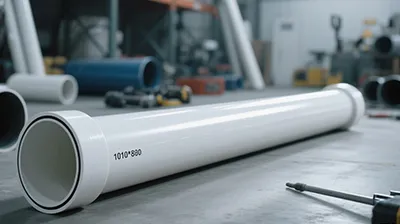
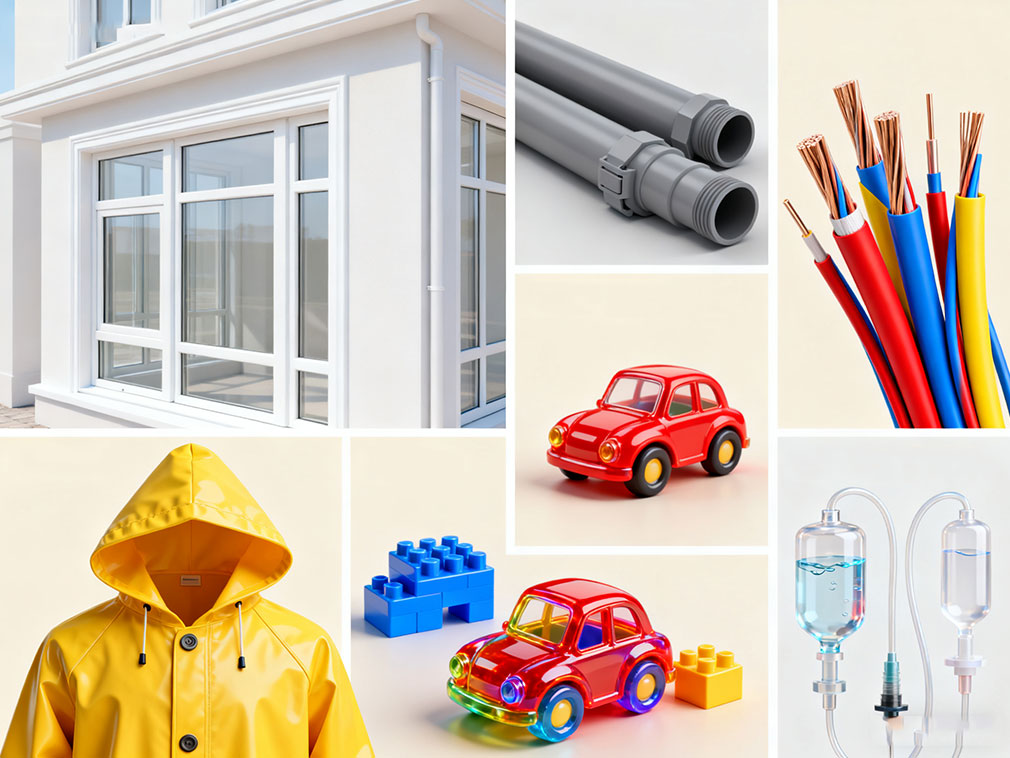
In the construction sector, PVC doors and windows have replaced traditional materials with their excellent thermal and sound insulation properties. PVC pipes, due to their aging resistance and resistance to scaling, have become the preferred choice for water supply and drainage systems.
In the electronics industry, PVC is the core raw material for the insulation of wires and cables, ensuring safe power transmission. In daily necessities and medical devices, PVC is ubiquitous, from raincoats and toys to infusion sets and hemodialysis tubing.
However, this "material edifice" suffers from a fatal flaw: extremely poor thermal stability. Heat stabilizers are crucial to addressing this shortcoming and supporting the development of the PVC industry.
The molecular structure of pure PVC resin contains unstable allylic and tertiary chlorine atoms. When temperatures exceed 100°C, these weak links initiate a "zipper-like" degradation reaction: the PVC molecular chain gradually loses hydrogen chloride (HCl), forming conjugated double bonds.
As the number of double bonds increases, the finished product gradually changes from white to yellow, brown, and eventually black and brittle. Not only does it become aesthetically shabby, but its mechanical properties and chemical stability are completely lost.
To complicate matters further, PVC processing and molding (such as extrusion, injection molding, and calendering) requires high temperatures of 170-200°C, far above its initial degradation temperature. Without the addition of heat stabilizers, PVC cannot be produced industrially, let alone used for a long time.
Therefore, the core function of heat stabilizers is to precisely block the degradation chain during processing and service. On the one hand, they neutralize generated HCl, preventing it from catalyzing and accelerating degradation. On the other hand, they replace unstable chlorine atoms in the molecular chain, inhibiting the initiation of degradation reactions at the source while also delaying the formation of conjugated polyenes, ensuring that PVC products maintain stable color and performance.
Based on their chemical composition, heat stabilizers have evolved into a diverse and functionally complementary system, each with its own unique mechanism of action and application scenarios.
Lead salt stabilizers were the earliest category to be used, exemplified by tribasic lead sulfate ("trisalt") and dibasic lead phosphite ("disalt"). Their core mechanism is to react with HCl generated by degradation to form stable lead chloride, thereby rapidly neutralizing the acid.
This type of stabilizer offers significant advantages: high thermal stabilization efficiency and the ability to withstand high processing temperatures for extended periods; excellent electrical insulation properties, particularly suitable for wire and cable applications; and low raw material costs, which once dominated the PVC industry.
However, the highly toxic nature of lead salts has led to their gradual demise. Lead enters the human body through the respiratory and digestive tracts, accumulating in the nervous system, bones, and kidneys, leading to intellectual impairment in children and cognitive decline in adults. It also permanently contaminates soil and water sources.
With the strict implementation of EU environmental regulations such as RoHS and REACH, lead salt stabilizers are currently limited to specialized applications such as high-voltage cables, where electrical insulation requirements are extremely high and difficult to replace, and are gradually being replaced by greener alternatives.
Metal soap stabilizers are one of the most widely used types. They are primarily produced by reacting metals such as calcium, zinc, and barium with higher fatty acids such as stearic acid and lauric acid. Their mechanism of action offers a "double guarantee": they can neutralize HCl like lead salts, but they can also replace unstable chlorine atoms in PVC molecular chains with metal ions (such as zinc ions) to form stable ester structures, fundamentally blocking the degradation pathway.
The key advantage of this type of stabilizer lies in its "synergistic effect." Single metal soaps have performance limitations. For example, calcium stearate (CaSt₂) has a strong HCl absorption capacity but is inefficient at replacing unstable chlorine atoms. Zinc stearate (ZnSt₂) has a high replacement efficiency but produces zinc chloride (ZnCl₂). Zinc chloride is a strong Lewis acid that can strongly catalyze PVC degradation, causing the product to suddenly turn black at high temperatures, a phenomenon known as "zinc burn."
Combining the two in a specific ratio creates a calcium-zinc (Ca-Zn) composite stabilizer with complementary properties: the calcium soap rapidly absorbs HCl and inhibits the zinc soap from producing zinc chloride, completely eliminating the "zinc burn" problem. Furthermore, it is non-toxic and environmentally friendly, making it a top choice for food contact materials, children's toys, and medical PVC products.
Furthermore, while traditional barium-cadmium (Ba-Cd) stabilizers offer excellent transparency and weather resistance, the toxicity of cadmium has led to their elimination. Barium-zinc (Ba-Zn) stabilizers, as environmentally friendly alternatives, are widely used in soft PVC products (such as PVC film and artificial leather).
Organotin stabilizers are a key choice for high-end PVC products. They can be categorized by structure as sulfur-containing and sulfur-free. Their mechanism of action is similar to that of metallic soaps, but with higher reaction efficiency. Organotin molecules can directly bind to unstable chlorine atoms in PVC chains, forming stable ether bonds while effectively preventing the growth of conjugated polyene sequences.
The biggest advantage of this type of stabilizer is its excellent transparency. Adding it does not affect the light transmittance of PVC products, making it the preferred choice for rigid, transparent products such as mineral water bottles, cosmetic packaging, and PVC sheets. Sulfur-containing tins (such as dioctyltin dilaurate) offer particularly outstanding thermal stability and can withstand high-temperature processing.
Sulfur-free tins (such as tin carboxylates) avoid the potential contamination caused by sulfur and are suitable for composites with sulfur-sensitive materials such as rubber and dyes. They also offer excellent weather resistance and are suitable for outdoor PVC products.
However, organotin stabilizers also have significant disadvantages: their prices are significantly higher than those of lead salts and metal soaps, significantly increasing product costs. Some sulfur-containing tin products have a distinctive pungent odor, limiting their use in odor-sensitive applications such as interior decoration and food contact. Furthermore, low-molecular-weight organotins may be toxic to aquatic organisms, and their environmental safety remains under investigation, limiting their application.
Although organic auxiliary stabilizers cannot undertake stabilization tasks alone, they are the "key supporting role" in improving the performance of the main stabilizer. When used in conjunction with the main stabilizer, they can produce a "1+1>2" effect. β-Diketone compounds are key adjuvants for preventing "zinc burn."
They capture chlorine free radicals produced during PVC degradation and form stable complexes with zinc chloride generated by zinc soap, completely inhibiting its catalytic activity and significantly extending the effective stability of calcium-zinc stabilizers.
Phosphites primarily act as chelates, binding to metal ions such as calcium and zinc to improve the stabilizer's dispersibility and compatibility in PVC. They also decompose hydroperoxides produced during processing, acting as antioxidants and delaying product aging. Epoxides (such as epoxidized soybean oil) are even more versatile, absorbing HCl and reacting with double bonds produced during PVC degradation to prevent the growth of conjugated polyenes.
They also function as plasticizers, enhancing the flexibility of PVC products. When used in combination with calcium-zinc stabilizers, they can simultaneously optimize stability and processing performance, making them widely used in soft PVC products.
Rare earth stabilizers are a rapidly emerging category in recent years. They are primarily composed of organic acid salts (such as lanthanum stearate and cerium citrate) or inorganic salts of rare earth elements such as lanthanum and cerium.
Their unique advantage stems from the 4f electron structure of these elements. These 4f orbitals form strong coordination bonds with chlorine atoms in the PVC molecular chain, firmly anchoring the unstable structure and achieving stabilization.
These stabilizers are non-toxic and environmentally friendly, meeting stringent food contact and medical standards. They offer excellent transparency, making them suitable for use in mid- to high-end transparent products. They also exhibit excellent storage stability, resisting precipitation and deterioration.
However, rare earth stabilizers currently have shortcomings: high raw material costs and a higher price than traditional calcium-zinc stabilizers. Their performance lags behind that of top-tier organotin or complex metal soaps, and their stabilization efficiency is slightly inferior in high-temperature processing or long-term outdoor use.
However, with advances in rare earth extraction technology and optimized formulations, the performance of rare earth stabilizers continues to improve. With their environmental advantages and unique mechanism of action, they have become one of the most promising areas for development in the PVC heat stabilizer field.
In practical applications, the selection of heat stabilizers is a systematic process requiring a comprehensive consideration of multiple factors, directly impacting the product's quality, cost, and compliance. First, consider the product's specific requirements: Rigid PVC products (such as pipes and profiles) require higher thermal stability and typically require organotin or high-efficiency calcium-zinc composite stabilizers.
Flexible products (such as films and cable materials) require a balance between stability and plasticizing properties, often using a calcium-zinc and epoxidized soybean oil composite system.
Transparent products (such as packaging bottles and sheets) must prioritize organotin or high-performance rare earth stabilizers to avoid compromising light transmittance. Food contact or medical products must strictly adhere to FDA and EU No. 10/2011 standards, requiring the use of only non-toxic calcium-zinc, specific organotin, or rare earth stabilizers.
Secondly, the processing technology must be adapted: Extrusion molding requires relatively mild temperatures, so a calcium-zinc composite system can be used. Injection molding requires high temperatures and high shear forces, so a more thermally stable organotin or high-concentration calcium-zinc stabilizer is required. Calendering requires high surface gloss, so a stabilizer with good compatibility and low precipitation resistance is required.
In addition, environmental regulations are rigid constraints: Products exported to the EU must comply with the RoHS Directive's restrictions on hazardous substances such as lead, cadmium, and mercury. Products that come into contact with food must pass migration testing to prevent stabilizer components from leaching and contaminating food. Finally, cost is also a factor that cannot be ignored.
While maintaining both performance and compliance, a balance must be found between organotin (high performance, high cost), calcium-zinc (medium performance, medium cost), and lead salts (specific applications, low cost) to optimize production costs.
Our platform connects hundreds of verified Chinese chemical suppliers with buyers worldwide, promoting transparent transactions, better business opportunities, and high-value partnerships. Whether you are looking for bulk commodities, specialty chemicals, or customized procurement services, TDD-Global is trustworthy to be your fist choice.