PE in the Chemical Industry: Traits & Uses
The reason why PE can gain a firm foothold in the chemical industry is its "hard skills". Whether it is used to transport liquids, store and protect, or make electrical insulation materials, it is indispensable. Moreover, scientists are constantly improving processes and optimizing formulas to make PE more and more cost-effective.
Core characteristics of PE in the chemical industry
(1) Outstanding chemical stability
PE does not contain polar groups in its molecular structure and exhibits excellent tolerance to most acid and alkaline media. It can be used for a long time in sulfuric acid and hydrochloric acid environments with a concentration of less than 50%, and its corrosion resistance to strong alkalis such as sodium hydroxide is far superior to that of ordinary metal materials.
However, it should be noted that it will degrade in strong oxidizing media such as concentrated nitric acid and fuming sulfuric acid. This characteristic makes it an ideal material for transporting medium and low concentration corrosive fluids.
(2) Mechanical properties adapted to chemical scenarios
PE of different densities exhibits differentiated mechanical properties: LDPE has good flexibility and impact resistance and is not easy to become brittle at low temperatures; HDPE has higher tensile strength and rigidity and can withstand a working pressure of 1.6MPa. This performance gradient allows PE to meet diverse needs from flexible pipes to rigid storage tanks, maintaining stable mechanical properties under working conditions of -40℃ to 60℃.
(3) Strong compatibility of processing technology
PE can be formed through a variety of processes such as extrusion, injection molding, and rotational molding. The extrusion process can produce continuous length pipes with a dimensional accuracy of up to ±0.5mm; the rotational molding of the storage tank has a weld-free structure, which completely solves the leakage risk of traditional welded containers; the injection molding process can mass-produce valve accessories with complex shapes, and the processing cost is only 30%-50% of that of stainless steel products.
(4) Significant comprehensive economic efficiency
The density of PE material is only 0.91-0.96g/cm³, and the weight of a pipe of the same volume is 1/8 of that of a steel pipe, which greatly reduces transportation and installation costs. Its service life can reach more than 50 years, with almost no maintenance required during this period, and the full life cycle cost is about 40% lower than that of traditional metal materials. At the same time, the recyclability of PE makes it more advantageous in chemical parks with strict environmental protection requirements.
Typical application scenarios of PE in the chemical industry
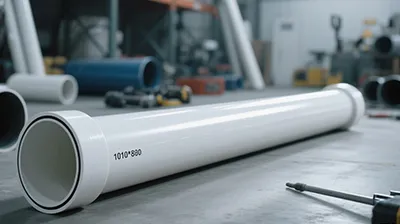
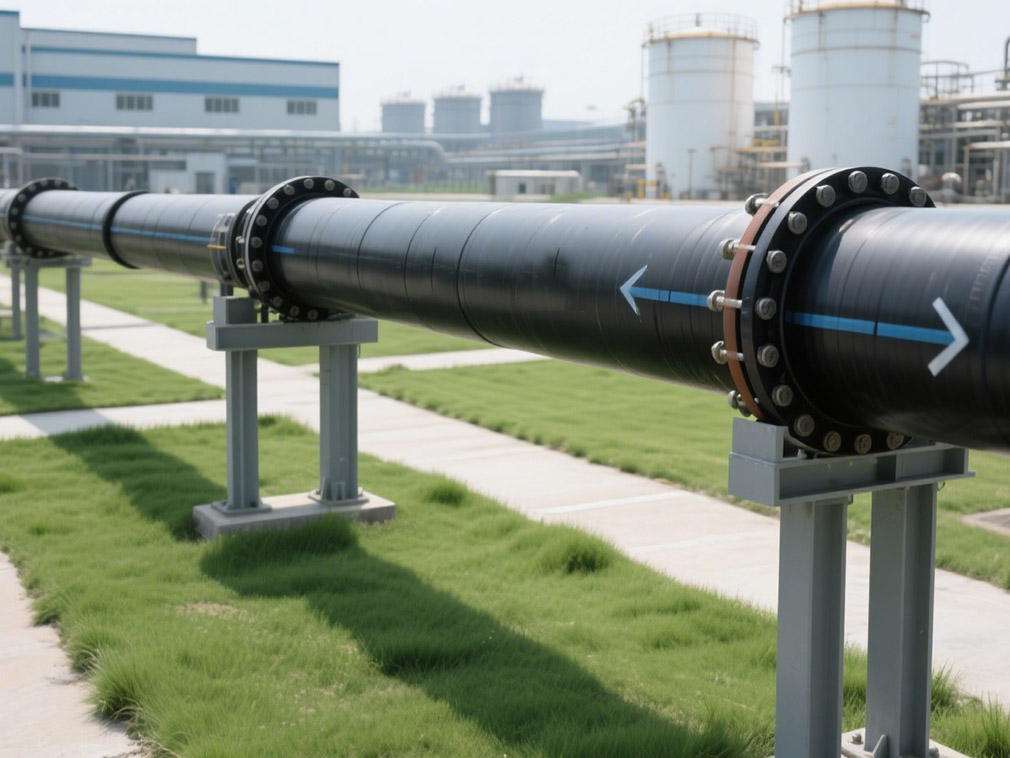
(1) Corrosive fluid delivery system Industrial pipelines: HDPE pipes are widely used in acid and alkali delivery networks in chemical parks. The flow rate of DN200 pipes can reach 150m³/h.
The hot melt connection technology is used to achieve zero leakage. The penetration rate in the raw material delivery of pesticide and fertilizer production enterprises exceeds 70%. Pipe fittings: PE elbows, tees and other accessories are made by integral injection molding, with a pressure rating of PN1.0MPa. They can be adapted to pipe systems of different diameters and have outstanding performance in the material diversion link of fine chemical workshops.
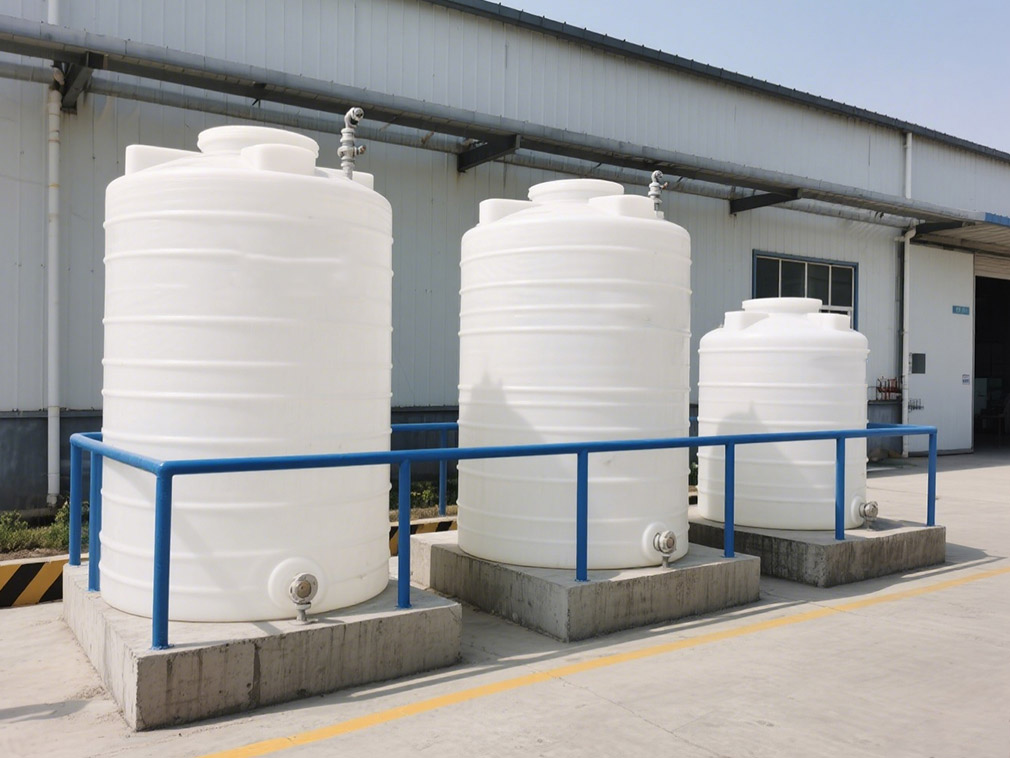
(2) Chemical storage equipment Vertical storage tanks: 50-5000L PE storage tanks are manufactured by rotational molding. The inner lining is smooth and not easy to scale. They are suitable for storing electroplating waste liquid, printing and dyeing auxiliaries, etc. The coverage rate of small and medium-sized chemical plants in the Yangtze River Delta region is over 65%.
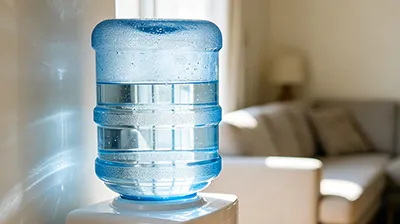
Transport container: 20L PE square barrel has drop resistance and can withstand a drop from a height of 1.5 meters without breaking. It is often used for laboratory chemical turnover and reduces the breakage rate by more than 90% compared to glass containers.
(3) Protection and separation equipment Anti-corrosion lining: PE sheets with a thickness of 2-5mm can be used as reactor linings. They are temperature-resistant up to 80℃ and have a significant protective effect on media containing chloride ions.
They are widely used in brine treatment equipment in coastal chemical plants. Filter components: Filter elements made of ultra-high molecular weight PE have a pore size that can be controlled at 0.1-10μm. They are used for catalyst recovery in fine chemicals. The filtration efficiency reaches 99.9% and can be reused more than 30 times through backwashing.
(4) Electrical and packaging fields
Cable protective sheath: The insulation resistance of the PE sheath is greater than 10¹⁴Ω, and the withstand voltage strength reaches 20kV/mm. It plays a dual protective role in the explosion-proof cables of chemical workshops, and its service life is twice that of PVC sheath.
Heavy packaging film: HDPE film with a thickness of 0.1-0.2mm has a tensile strength of 25MPa and excellent puncture resistance. It is used for packaging 25kg bags of chemical raw materials, and its moisture-proof performance far exceeds that of traditional kraft paper packaging.
Our platform connects hundreds of verified Chinese chemical suppliers with buyers worldwide, promoting transparent transactions, better business opportunities, and high-value partnerships. Whether you are looking for bulk commodities, specialty chemicals, or customized procurement services, TDD-Global is trustworthy to be your fist choice.