
PE Lubricant: Essential for Smooth Plastics Manufacturing
PE Lubricant: An Inconspicuous Yet Indispensable Step in Processing Formulations
Those in the plastics processing industry know a well-known fact: 0.5% to 3% lubricant in a formulation often has a greater impact on the smoothness of the production line than 5% antioxidant. PE lubricant is such an additive—the amount is small, but its absence leads to soaring extrusion torque, film opening sticking, and demolding jamming—a whole host of problems arise.
First, understand: what exactly are you adding?
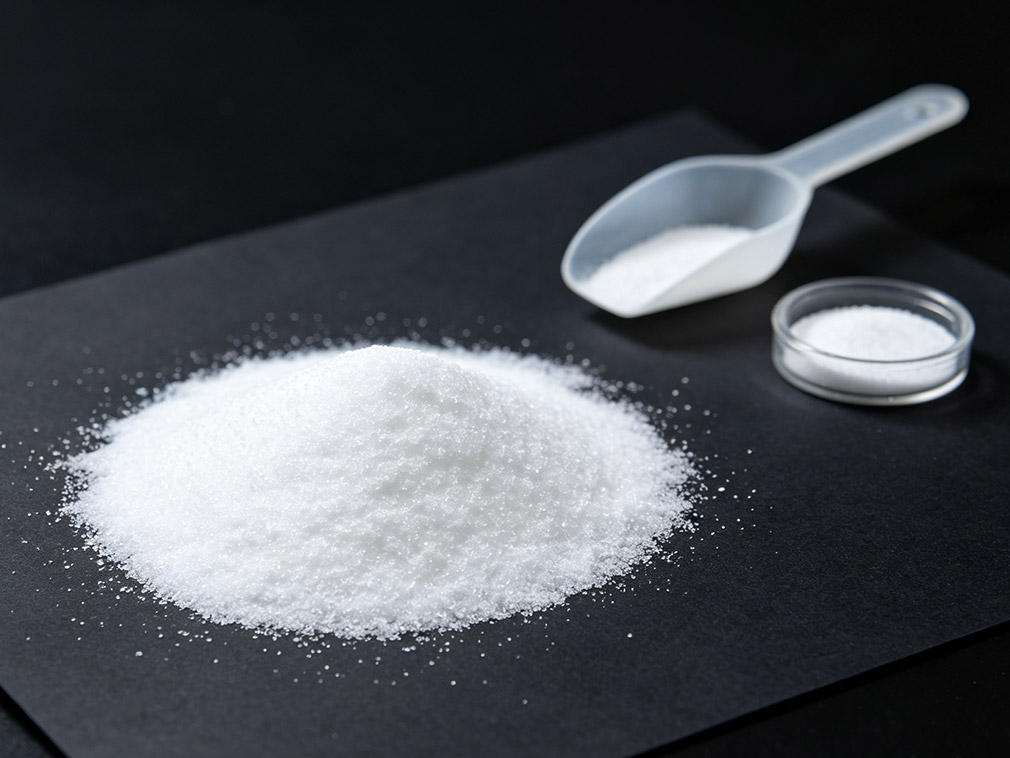
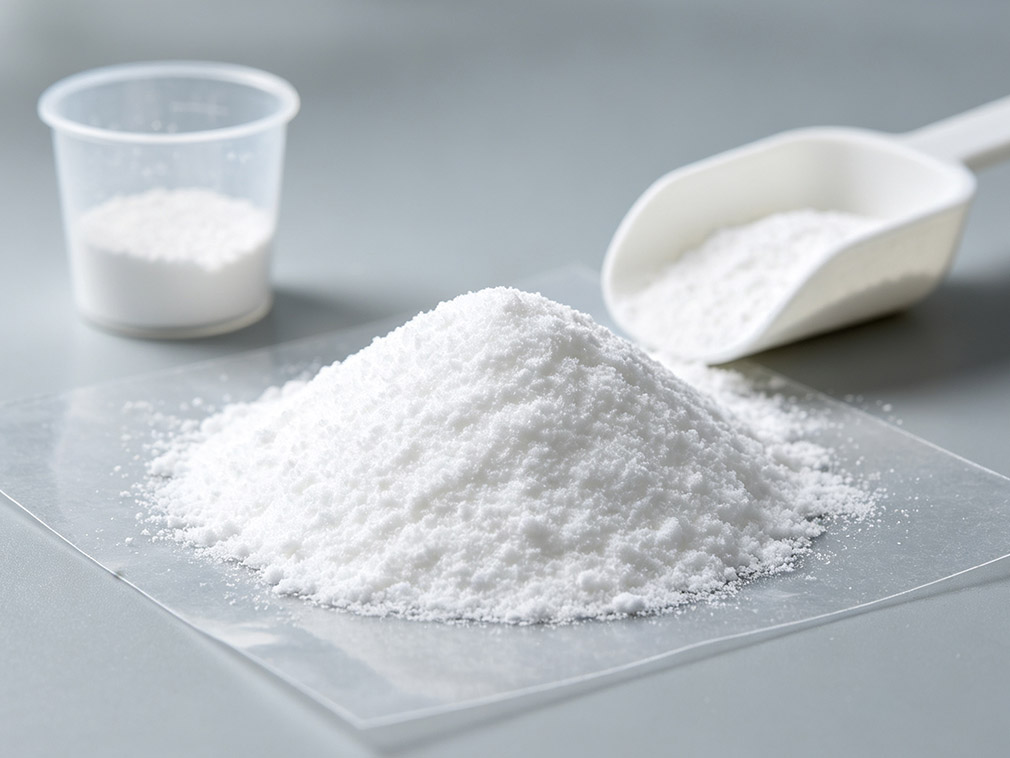
The core component of PE lubricant is low molecular weight polyethylene, commonly known in the industry as polyethylene wax (PE Wax). Its molecular weight spans a wide range, from 500 to 5000, with mainstream products on the market concentrated in the 1000-5000 range. It appears as a white powder or granules, seemingly unremarkable, but waxes from different sources have significantly different properties—more on this later.
Here's a point of confusion: polyethylene wax and oxidized polyethylene wax (OPE) are not the same thing. Ordinary PE wax has a density of 0.92–0.94 g/cm³, a softening point of 95–115℃, and a dropping melting point of 100–120℃. OPE, due to the presence of carbonyl and hydroxyl groups on its molecular chain, has a density that increases to 0.93–0.98 g/cm³, and its softening point also varies—92–102℃ for low-density types and around 140℃ for high-density types. Simply put, ordinary PE wax is more suitable for non-polar resins, while OPE works better for polar resins like PVC.
Internal or external lubrication? It depends on the resin, not the additive itself
Many sources categorize lubricants into "internal lubricants" and "external lubricants," but in actual formulations, the same additive plays a completely different role in different resins.
Components with good resin compatibility embed themselves between polymer molecular chains, breaking up the cohesive forces between macromolecules—this is internal lubrication. The effect is a decrease in melt viscosity, a reduction in screw torque, and an increase in extrusion volume. Components with poor compatibility will migrate to the melt surface, forming a film between the polymer and the metal wall of the equipment to prevent adhesion and sintering—this is external lubrication. The quality of demolding and surface smoothness largely depend on it.
Therefore, PE wax primarily acts as an internal lubricant in polyolefin systems, while in PVC systems it becomes an external lubricant. This tells formulators one thing: don't just look at the lubricant label; consider the role your resin system needs.
Four Sources of Polyethylene Wax—Which One You Choose Directly Determines the Precipitation Risk
PE waxes are classified into four routes based on their manufacturing process:
Oligomer Wax: A byproduct of HDPE production lines, used directly after degreasing. Cheap, but with complex composition, generally low batch stability, and a relatively high precipitation risk. Suitable for basic applications where stability requirements are not high.
Cracked Wax: High molecular weight PE is cracked by heating, breaking down long chains. The largest production route in China, but with a wide molecular weight distribution, containing both useless high molecular weight residues and small molecule fragments that easily produce odors; precipitation issues should be considered.
Polymerized Wax: Directly polymerized from ethylene monomers, with a narrow molecular weight distribution, high purity, and batch stability. Overseas companies like Honeywell, BASF, and Clariant often take this route, offering high dispersion efficiency and low precipitation risk, but at a higher price.
Blended waxes—a compromise in cost-effectiveness achieved by mixing waxes from different sources in specific proportions.
OPE is not among these four categories. It is a derivative of PE wax obtained through oxidative modification, possessing both internal and external lubrication and coupling effects, currently accounting for approximately 30%–36% of the PE wax market (statistics vary among research institutions).
Those making masterbatches are particularly sensitive to wax selection: polymeric waxes offer high dispersion efficiency and low precipitation risk; pyrolysis waxes are next; oligomer waxes exhibit large batch-to-batch fluctuations and a higher precipitation risk. The physical process of pigment dispersion involves wax first adsorbing onto the particle surface, then penetrating into the gaps to weaken agglomeration—the quality of the wax directly determines the uniformity of dispersion.
Besides PE waxes, what other types are used? Erucamide and oleamide are common in the PE film industry; adding only 0.1% (mass fraction) can solve opening adhesion and antistatic problems, belonging to external lubrication/slip-type additives.
EBS (ethylene bis-stearamide) has a wider range of applications, suitable for ABS, PP, and PVC, and ranks among the top-used amides.
Stearic acid and its calcium and zinc salts are established products, inexpensive, readily available, and offer some heat stability; they are still used in many basic formulations.
Paraffin wax and microcrystalline wax have good compatibility with polyolefins and tend to act as internal lubricants.
Another easily confused type is fluoropolymer processing aids (PPA), such as 3M's Dynamar series. PPA addresses die buildup and melt fracture, with dosages of only 200–1000 ppm; lubricants address friction and flowability, with dosages of 0.5%–3%. Their mechanisms differ, and they cannot be substituted for each other in formulations.
Where to use them and how much to add?
| Application | Lubricant Role | Typical Dosage |
|---|---|---|
| PVC pipe/profile extrusion | Primarily external lubrication; prevents roll sticking | 0.5~1.0 phr |
| PE/PP film (blown) | Slip & anti-blocking | 0.1%~0.5% |
| Masterbatch | Pigment dispersion & carrier lubrication | 5%~10% |
| Injection molding | Mold release & improved flow | 0.5%~1.0% |
| Hot-melt adhesive | Viscosity tuning & open-time control | 10%~30% |
Some practical experience in formulation selection: For resin systems with already good flowability, external lubrication is preferred—avoid adding internal lubricants to reduce viscosity too much. Conversely, for systems with poor flowability, internal lubrication should be considered more.
The ideal temperature difference between the melting point of the external lubricant and your molding temperature is 10-30°C. Too high, and a film won't form; too low, and the film won't be strong enough.
Compatibility is a crucial parameter: too high, and the external lubrication effect won't be achieved; too low, and blooming and scaling will occur—neither is ideal.
The lubricant must remain stable at the processing temperature—it must not decompose, volatilize, or corrode the equipment; this is the bottom line.
Food packaging and medical products must adhere to FDA or other regulatory food-grade certifications; there is no room for compromise.
PPA and lubricants should not be mixed. Use PPA to address die buildup, and use lubricants to address friction and flow; their mechanisms are different and they cannot be substituted for each other.
Our platform connects hundreds of verified Chinese chemical suppliers with buyers worldwide, promoting transparent transactions, better business opportunities, and high-value partnerships. Whether you are looking for bulk commodities, specialty chemicals, or customized procurement services, TDD-Global is trustworthy to be your fist choice.












