PE & PP Welding Differences Analysis
In the field of plastic pipe and tank manufacturing, polyethylene (PE) and polypropylene (PP) have become fundamental materials for the construction of various facilities due to their excellent chemical stability and mechanical properties.
Welding technology, as the core link in joining these two materials, directly impacts the product's service life and safety. While both can be welded using mainstream processes such as butt fusion, socket fusion, and hot plate welding, significant differences exist in weldability, weld strength, and compatibility for practical applications.
A thorough understanding of these differences provides critical theoretical foundations and practical guidance for the industry in material selection and process development.
Analyzing the Root Causes of the Differences in Welding Properties between PE and PP at the Molecular Structure Level
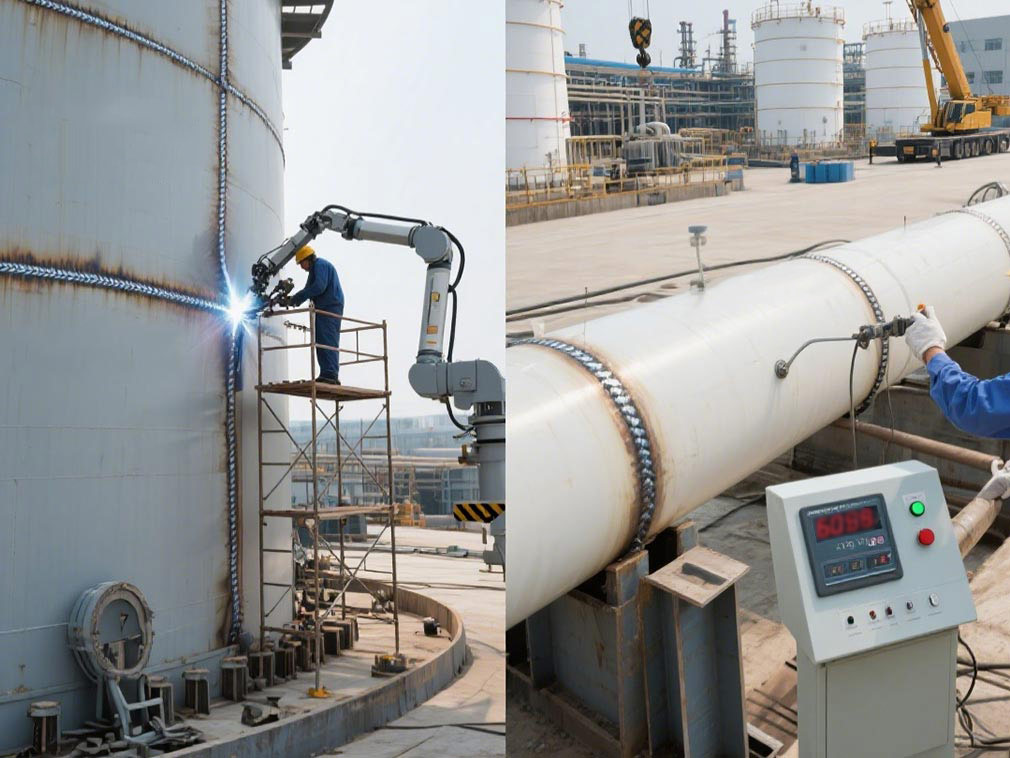
Based on the fundamentals of materials science, the molecular structural differences between PE and PP are the fundamental reason for their divergent welding properties. PE molecular chains are primarily linear, with a moderate crystallinity range of 40%-70% and a relatively low melting point of 110°C-130°C.
This structure ensures uniform PE flowability in the molten state, enabling a stable and continuous weld interface to be quickly formed during welding. For example, hot plate welding of PE pipes at a hot plate temperature of 180°C-200°C allows for the complete melting phase in just 3-5 minutes. After cooling, the molecular chains at the weld are fully entangled and interwoven, effectively avoiding stress concentration.
In contrast, PP, due to the presence of methyl side chains in its molecular chains, has a crystallinity of 60%-85%, and a narrower melting point range of 160°C-170°C. Furthermore, PP is highly susceptible to oxidative degradation at high temperatures.
This requires precise control of temperature and time during PP welding, otherwise quality issues such as carbonization of the weld surface and loose bonding are likely to occur. During butt welding, PP pipes require not only an inert gas atmosphere around the weld to isolate oxygen and prevent oxidation, but also a strict control of the heating temperature tolerance within ±2°C. These additional and stringent process requirements significantly increase the operational difficulty and technical threshold for PP welding.
An In-Depth Comparison of the Performance Differences Between PE and PP Using Mainstream Welding Technologies
(I) Butt Welding Process: PE's Wide Adaptability vs. PP's High Precision Requirements
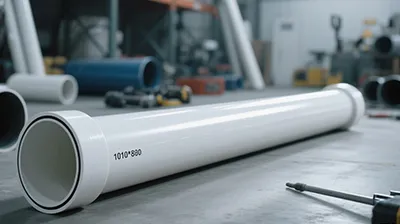
In the mainstream butt welding process, PE demonstrates significant advantages. Its molten material fluidity is well-suited to various working conditions. Even for large-diameter pipes exceeding 1000mm in diameter, advanced hydraulics enable uniform pressure application across the weld surface, resulting in a continuous, regular "weld bead." Extensive practical experience has demonstrated that the leakage rate of butt-welded joints using PE can be effectively controlled to below 0.1%. This exceptional performance has led to its widespread use in large-scale, long-distance pipeline installations, such as municipal water supply and drainage networks.
In stark contrast, butt welding of PP requires meticulous pretreatment of the pipe ends to thoroughly remove the surface oxide layer to ensure weld quality. At the same time, specialized clamps are required to strictly ensure coaxiality during the docking process.
If the coaxiality deviation exceeds 0.5mm, the weld strength will drop significantly by 15%-20%. For this reason, PP is more suitable for small-diameter, high-pressure pipes, such as solvent delivery pipes with a diameter of less than 300mm in the chemical industry. These pipes require extremely high weld strength and sealing properties, and PP's characteristics better meet these requirements.
(II) Socket-weld Welding Process: PE's Efficient Construction and PP's Pursuit of Ultimate Sealing
In the socket-weld welding process, PE stands out due to its excellent material flexibility. During the plug-in connection process, PE's elastic deformation effectively compensates for errors introduced during assembly. Even with a gap of up to 0.3mm between the socket and the spigot, a reliable seal can be achieved through melt filling. This characteristic makes PE over 30% more efficient than PP in projects such as building hot water piping systems, making it the preferred material for such applications.
When PP is used in socket welding, the fitting tolerances of the sockets are extremely stringent, typically limiting the gap to no more than 0.1mm. Furthermore, after welding, a 24-hour pressure test is required to ensure no leaks. This unparalleled pursuit of high precision and tightness makes PP an irreplaceable material in the pharmaceutical industry's purified water pipelines, where tight sealing is crucial, providing a solid guarantee for water quality safety during pharmaceutical production.
(III) Hot Plate Welding Process: PE's Adaptability to Large Sizes and PP's High Strength Advantages
Hot plate welding, a core process in the manufacture of large-scale storage tanks, fully demonstrates the weldability advantages of PE. For PE tanks over 10 cubic meters, hot plate welding enables a continuous, uninterrupted welding process, with single weld lengths of up to 5 meters.
Furthermore, the tensile strength of the welded joint can reach 80%-90% of that of the base material, fully meeting the requirements of atmospheric pressure storage applications, such as agricultural irrigation water tanks. Due to the material's properties, hot plate welding of PP tanks requires segmented welding, with each segment typically no longer than 1.5 meters. Furthermore, after each segment, the welded area must be allowed to cool sufficiently for at least an hour to prevent thermal stress from causing tank deformation.
Despite the complex welding process, the tensile strength of PP tank joints after welding is exceptional, exceeding 95% of that of the base material. This high strength makes PP an ideal choice for the chemical industry for storing highly corrosive media, such as sulfuric acid solutions with a concentration below 30%. It effectively resists corrosion and ensures the long-term safe operation of the tanks.
Our platform connects hundreds of verified Chinese chemical suppliers with buyers worldwide, promoting transparent transactions, better business opportunities, and high-value partnerships. Whether you are looking for bulk commodities, specialty chemicals, or customized procurement services, TDD-Global is trustworthy to be your fist choice.