PET Impact Resistance: Modification & Use
Wondering why ordinary PET bottles shatter when dropped? What technology allows PET to withstand car impacts and low temperatures? This article will break down the problem from the root, revealing the core logic behind PET impact modification and the new areas where it can now be used.
1. let's understand: Why is pure PET "resistant to drops"?
The impact resistance shortcomings of pure PET aren't due to poor workmanship, but rather to its inherent molecular structure and properties. There are three main weaknesses:
1. The molecular chain is too "rigid," with the crystalline region being a "weak point."
The PET molecular backbone consists of rigid benzene rings on one side and polar ester groups on the other. These two elements make PET stiff and sturdy, offering good heat resistance and resistance to hot water. However, the downside is also obvious: when subjected to high-speed impact, the "rigid" molecular chain doesn't have time to bend and deform, unable to absorb the impact energy, and breaks brittlely upon impact.
To complicate matters further, PET is a semi-crystalline material, with both neat crystalline regions and loose amorphous regions. The junction between these two regions is particularly fragile, and cracks can easily "tear" through it upon impact.
2. Afraid of "nicks": Even small flaws can be "fatal"
Regardless of material, surface nicks, cracks, or sharp corners (also known as "nicks") reduce impact resistance, but PET has a very low tolerance for nicks. A nick concentrates stress at a small point, becoming the "starting point" of a crack. PET cannot deform to "relieve" this stress, so even a slight impact will cause the nick to break directly. For example, a bottle with a small scratch is likely to break at the scratch when dropped for this very reason.
3. Afraid of cold: More brittle at low temperatures
PET has a glass transition temperature (Tg) of approximately 70-80°C. Simply put, when the temperature falls below this value, the molecular chains of PET are frozen, in a glassy state, and brittle when broken. If you drop a PET bottle in the refrigerator, it will shatter because the low temperature exacerbates its brittleness.
II. Breakthrough: Four Modification Technologies Make PET More Durable
To address the shortcomings of pure PET, the industry has long developed sophisticated modification methods, enhancing its toughness across multiple dimensions, from molecules, components, microstructure, to processing:
1. Blending Modification: Giving PET a Tough Partner
This is the most common method. It's like adding a "soft and tough" material to "hard" PET to create a "polymer alloy." This sacrifices a bit of hardness in exchange for significantly improved impact resistance.
Teaming up with PC: Double Upgrades in Impact and Heat Resistance
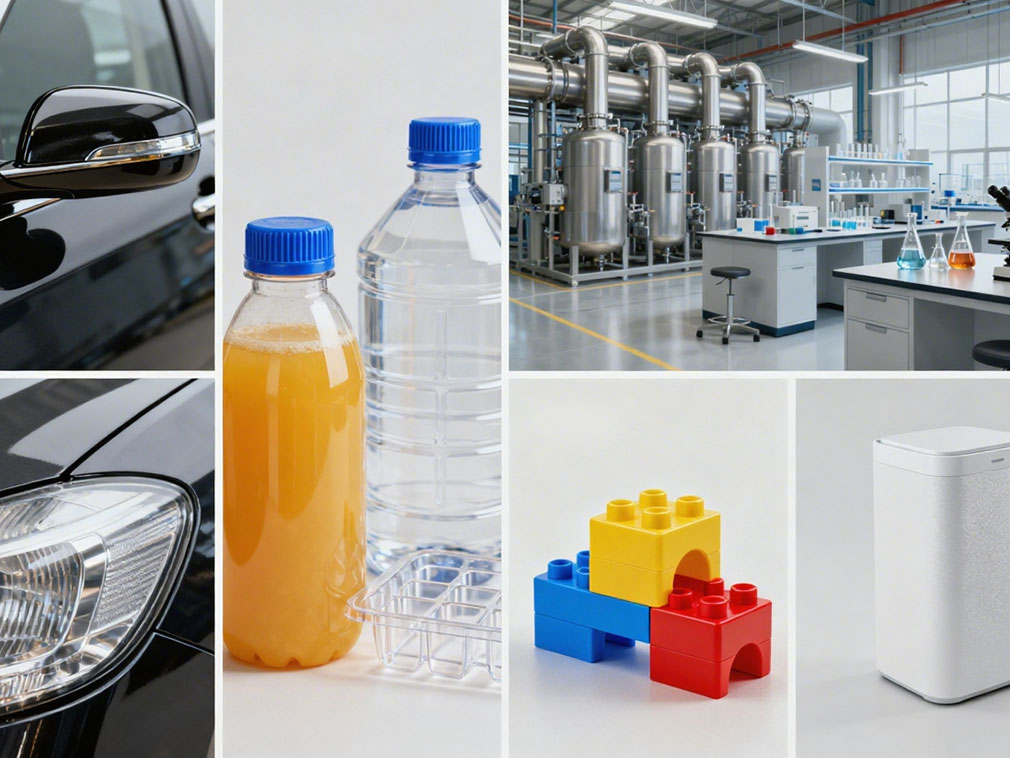
PC is renowned for its impact resistance. Mixing PET and PC not only multiplies PET's notched impact strength several times over, but also improves its heat resistance. This "PET/PC alloy" is particularly suitable for applications requiring both durability and heat resistance, such as car door handles, headlight covers, and electronic device casings—it can withstand both everyday collisions and summer sun exposure without deforming.
Adding Elastomers: Like Adding "Micro Springs" to PET
More commonly, elastomers, such as E-MA-GMA (ethylene-methyl acrylate-glycidyl methacrylate), are added. These elastomers, like tiny springs, are dispersed in PET. When impacted, they deform themselves, even forming small bubbles. They also cause the surrounding PET to deform, dissipating the impact energy and preventing crack propagation. It's like adding rebar to concrete: the hardness adds toughness, making it less prone to cracking.
2. Copolymerization Modification: "Transforming" PET at the Molecular Level
This process does not alter the "main body" of PET. Instead, a third or fourth "monomer" is added during the synthesis of the molecular chain to disrupt the "uniformity" of the molecular chain, thereby addressing the root cause of brittleness.
Adding IPA to PETG: Transparent and Shatter-Resistant
The addition of isophthalic acid (IPA) causes the PET molecular chains to become less "uniform," preventing the formation of crystalline regions. This material becomes a completely transparent amorphous material, known as PETG.
Amorphous PETG molecular chains are more flexible, deforming and absorbing energy during impact. This makes them significantly more impact-resistant than pure PET, while maintaining high transparency. This makes them particularly suitable for cosmetic bottles, medical devices, and transparent display stands, offering both aesthetic appeal and shatter-resistance.
Adding CHDM: More stable toughness and chemical resistance
Adding cyclohexanedimethanol (CHDM) can create PCTG or PETG, which also inhibits crystallization and enhances toughness. It also offers enhanced acid and alkali resistance, making it suitable for storing corrosive substances like sauces and detergents.
3. Nanocomposites: Adding "nanoparticles"—a small amount does more.
Adding a small amount of nanoscale fillers, such as nanoclays and carbon nanotubes, to PET can improve its impact resistance, strength, and barrier properties. These nanoparticles have a very large surface area and strong bonding with PET, dissipating impact stress and creating more "silver crazing" (fine deformation lines) in the PET to dissipate energy. Crucially, the small amount added (typically less than 5%) does not affect PET's other properties, making it particularly suitable for high-end packaging and electronic packaging, where comprehensive performance is crucial.
4. Controlling Crystallization and Orientation: "Shaping" the Material During Processing
PET's impact resistance is also related to crystallization and molecular orientation during processing—by adjusting process parameters, its microstructure can be optimized.
Grain Refinement: Smaller grains are more impact-resistant than larger ones.
Controlling the cooling rate and temperature during processing ensures that the crystalline regions of PET form fine, uniform grains, rather than coarse "spherulites." Smaller grains better disperse impact stress and are less likely to crack.
Biaxial Stretching: "Stretching" PET
Biaxial stretching is commonly used in PET bottles. The bottle is stretched both longitudinally and transversely, aligning the molecular chains in these two directions to create a self-reinforced structure. This significantly increases the bottle's axial (vertical and horizontal) and circumferential (circumferential) strength, making it less susceptible to breakage during filling and transportation.
III. Modified "Transformation": PET Can Be Used for Much More Than Just Water Bottles
After impact modification, PET's applications have long transcended the boundaries of ordinary beverage bottles, becoming a key player in a wide range of fields:
1. Engineering Plastics: Withstanding Industrial Impacts from Automotive to Electronics
High-impact PET/PC alloys and nano-reinforced PET have become popular in the automotive and electronics industries. They can be used in applications such as bumpers, door handles, and headlight covers, as well as connectors and housings for electronic devices. They can withstand collisions during driving, friction during equipment installation, and high temperatures, meeting the stringent requirements of industrial applications.
2. High-end Packaging: Shock-resistant and crush-resistant, safe for anything you pack.
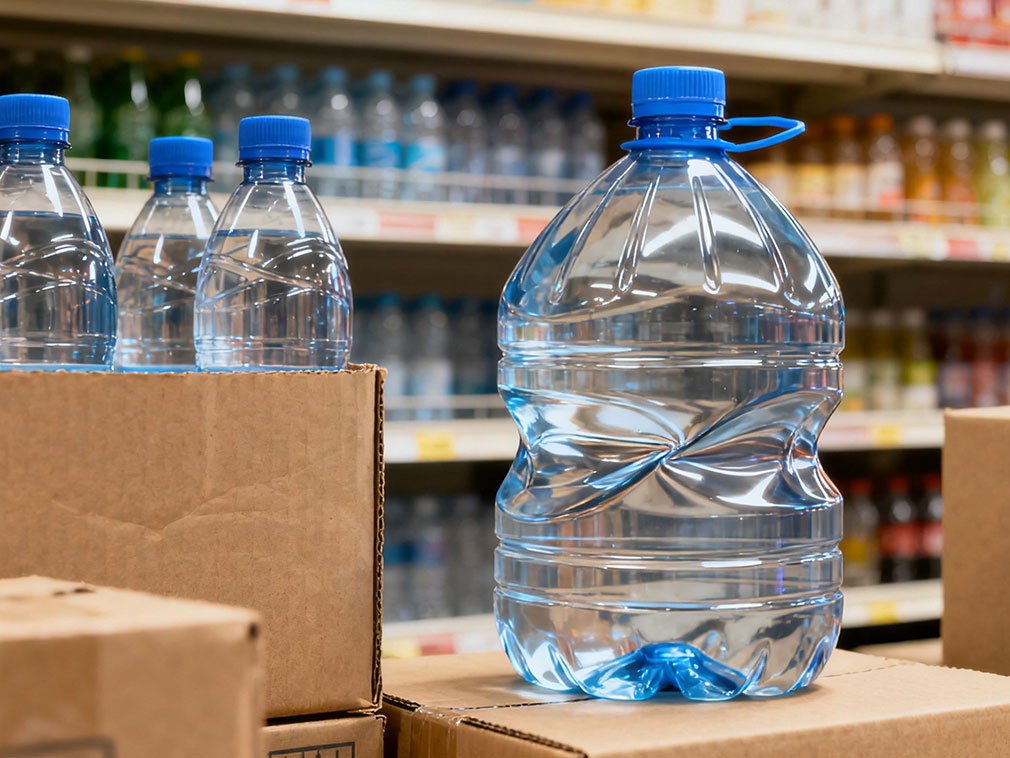
Impact-resistant PET (such as PETG and PCTG) is particularly suitable for large-capacity, heavy-duty packaging. 10L juice bottles, cooking oil drums, and bottles for fermented bean paste and chili sauce are safe from breakage and deformation during transportation. Medical blister packaging and disposable containers are also made of it—it's both impact-resistant and meets hygiene standards.
3. Consumer Goods: Transparent, Attractive, and Durable
PETG, a transparent and impact-resistant modified PET, has become the preferred material for consumer goods. It's used in children's toys, ensuring they're resistant to damage. Stationery items like transparent folders and pen holders are both clear and durable. Panels and housings for small appliances are both aesthetically pleasing and can withstand the bumps and bruises of daily use, extending their lifespan.
Our platform connects hundreds of verified Chinese chemical suppliers with buyers worldwide, promoting transparent transactions, better business opportunities, and high-value partnerships. Whether you are looking for bulk commodities, specialty chemicals, or customized procurement services, TDD-Global is trustworthy to be your fist choice.