
PET Processing: Techniques & Key Points
As a thermoplastic polyester material with excellent performance, polyethylene terephthalate (PET) occupies an important position in many fields such as packaging, electronics, and automobiles due to its excellent mechanical strength, transparency, chemical corrosion resistance, and recyclability.
Its flexibility in processing performance makes it a "jack of all trades" in industrial production. Its adaptability to various processing methods such as injection molding, extrusion, and blow molding provides the possibility for the production of diversified products.
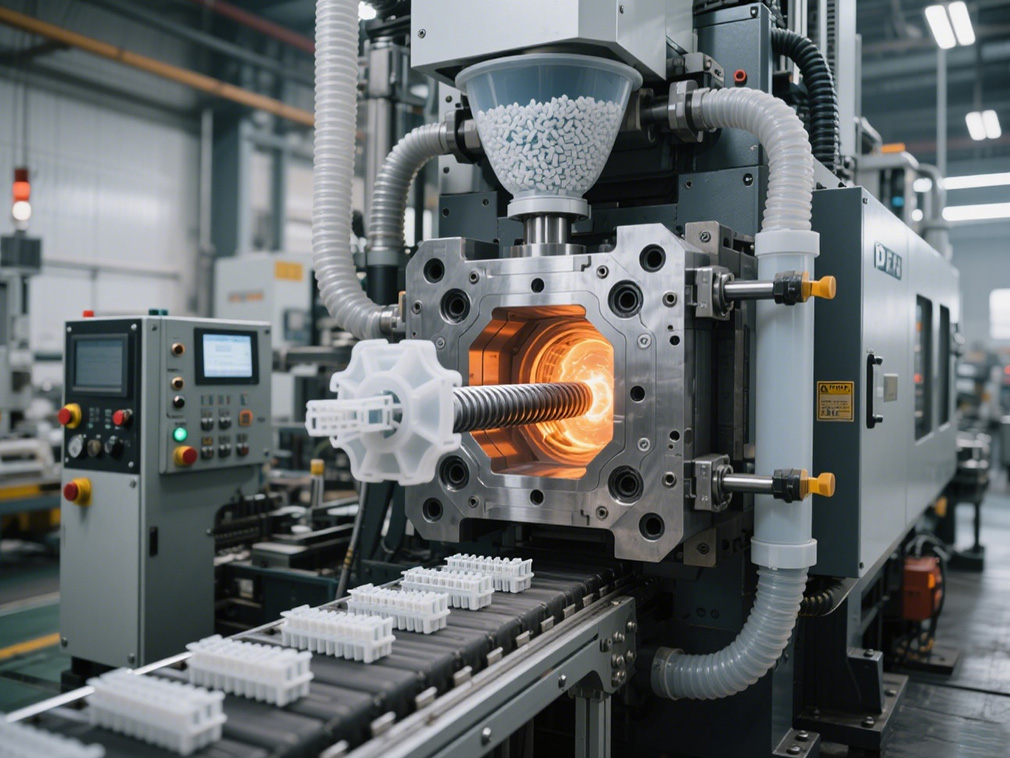
PET's injection molding process is widely used in the production of complex structural products due to its high efficiency and flexibility. During the injection molding process, PET melt has good fluidity and can accurately fill the mold cavity, which is suitable for manufacturing electronic connectors, automotive interior parts, home appliance housings and other precision parts.
The key to the injection molding process lies in the precise control of temperature, pressure and holding time: the barrel temperature is usually set at 260-300℃ to ensure that the material is fully melted but not degraded; the injection pressure needs to be adjusted according to the thickness and complexity of the product, generally between 80-150MPa, to ensure that the melt fills the mold smoothly; the holding stage needs to maintain appropriate pressure to reduce product shrinkage and internal stress.
It is worth noting that the cooling rate of injection molded products has a significant impact on performance. Rapid cooling can improve the crystallinity of the product and enhance the mechanical strength, but too fast cooling may lead to internal stress concentration, which needs to be eliminated through subsequent annealing treatment.
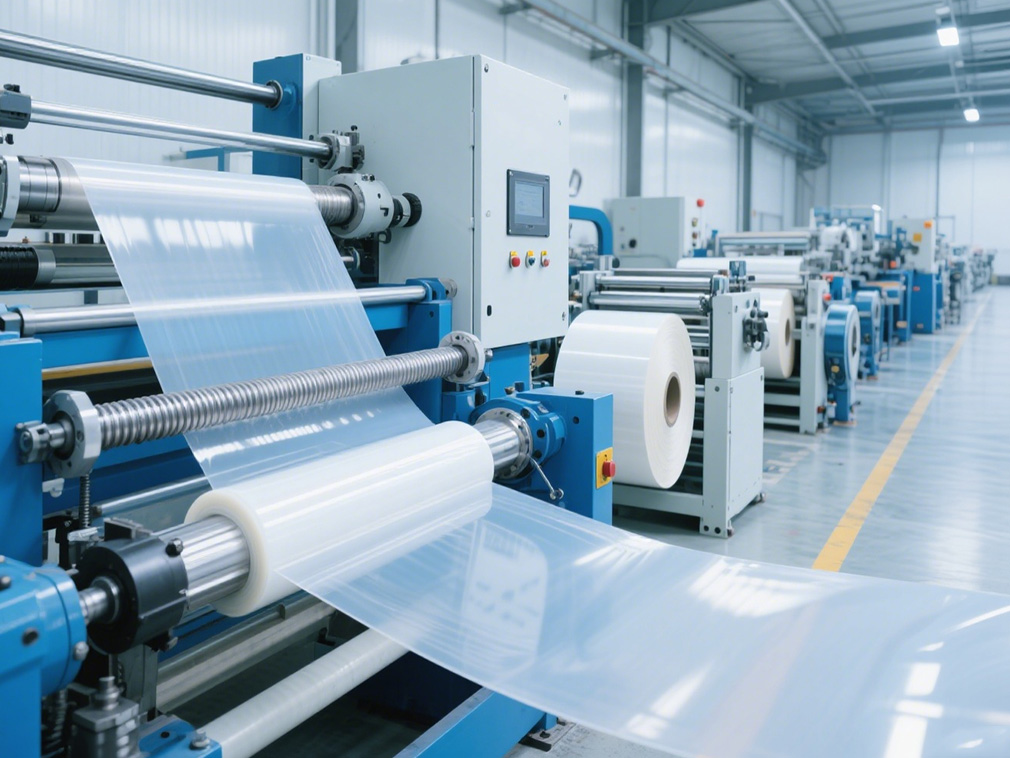
Extrusion processing is another core method of PET molding, especially in the production of film and sheet. During extrusion molding, the PET raw material is conveyed by the screw, melted and plasticized, and then extruded into continuous sheets or films through different types of die heads.
Among them, biaxially oriented PET film (BOPET) is a typical high-end product of extrusion processing. Its production needs to go through two stages of longitudinal stretching and transverse stretching. Through the orientation effect, the tensile strength, transparency and barrier properties of the film are significantly improved. It is widely used in food packaging, printing composite, electronic insulation and other fields.
For ordinary sheets, they can be directly thermoformed after extrusion. Through heating softening, mold stamping and other steps, containers of various shapes, such as disposable lunch boxes, fruit trays, etc., are made. The advantage of thermoforming technology is that it can quickly realize the mass production of complex-shaped products.
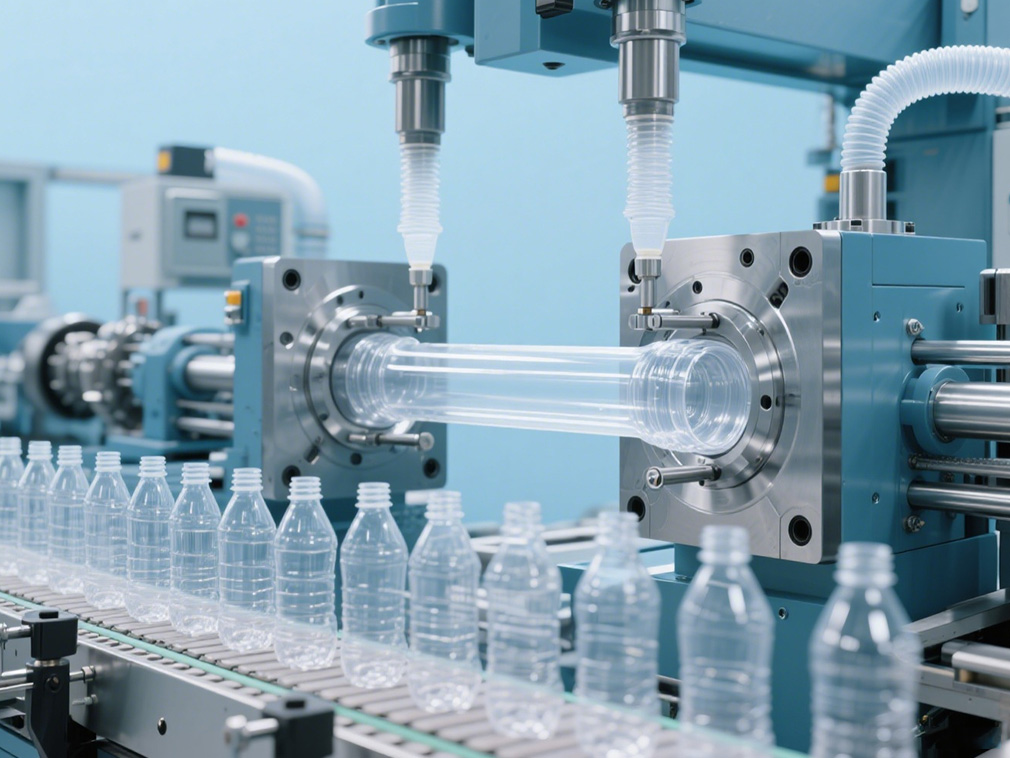
Blow molding is the mainstream process for the production of PET transparent bottles. The process mainly includes two links: preform preparation and blow molding. First, the PET melt is formed into a tubular preform by an extruder or an injection molding machine, and then the preform is moved into the blow molding mold. Compressed air is introduced to expand the preform and close to the inner wall of the mold. After cooling and shaping, a transparent bottle with precise shape and size is obtained.
The blow molding process has high requirements for the melt strength of PET. It is necessary to control the molecular weight distribution and processing temperature to ensure that the parison does not break or deform during the blow molding process.
At present, PET blow molding bottles have occupied a dominant position in the beverage packaging market. From mineral water bottles to carbonated beverage bottles, their excellent transparency, sealing and lightweight characteristics are fully reflected. At the same time, they are also widely used in cosmetic packaging, pharmaceutical packaging and other fields.
During the PET processing process, drying treatment is a key pre-process to ensure product quality. PET contains ester groups in the molecular chain and has strong hygroscopicity. It is easy to absorb moisture in the air during storage and transportation.
If it is processed directly, the moisture will cause PET to hydrolyze and degrade at high temperature, causing the molecular weight of the material to decrease, and the product will have defects such as bubbles, silver streaks, and cracks. At the same time, the transparency and mechanical properties will also be significantly reduced.
Therefore, the PET raw material must be fully dried before processing. It is recommended to dry it at 120℃ for 2-4 hours. The specific time needs to be adjusted according to the moisture content of the raw material. Drying equipment usually uses hot air circulation dryer or dehumidification dryer.
It is necessary to ensure uniform temperature in the drying box to avoid local overheating and oxidation and discoloration of raw materials. At the same time, good sealing should be ensured to prevent the dried raw materials from absorbing moisture again.
The reasonable use of regrind is an important measure to achieve resource recycling in PET processing. Regrind mainly comes from scraps, gate materials and unqualified products generated during the processing process.
After crushing and screening, it can be re-mixed into new materials for use. Practice shows that the mixing ratio of PET regrind can be controlled at a maximum of 25%, and within this range, it will not have a significant impact on the performance of the product.
However, it should be noted that the regrind needs to be strictly purified to remove impurities and contaminants. At the same time, the particle size after crushing should be consistent with the new material to ensure mixing uniformity.
If the proportion of regrind is too high, the mechanical properties of the material such as impact strength and tensile strength will decrease, and the melt flow instability during the processing may increase, affecting the molding accuracy and appearance quality of the product. The reasonable use of regrind can not only reduce production costs, but also reduce waste emissions, which is in line with the development concept of green manufacturing and circular economy.
During the PET processing, attention should also be paid to the coordinated control of process parameters. Different processing methods have different requirements for parameters such as temperature, pressure, and speed, which need to be precisely adjusted according to product characteristics and equipment performance.
For example, in injection molding, the barrel temperature is usually controlled at 250-290℃, and the mold temperature is 40-80℃; the screw speed and traction speed of extrusion processing need to be matched to ensure uniform product thickness; the blow molding pressure and blowing time of blow molding directly affect the wall thickness distribution and dimensional accuracy of the bottle. In addition, regular maintenance of equipment to ensure the integrity of key components such as screws and die heads is also an important measure to ensure processing stability.
In summary, polyethylene terephthalate has an irreplaceable position in modern industrial production with its diverse processing methods and excellent performance. By mastering the characteristics of injection molding, extrusion, blow molding and other processing technologies, strictly controlling drying conditions, and rationally using regrind, the material advantages of PET can be fully utilized to produce various high-quality products.
With the continuous development of green manufacturing technology, PET processing technology will continue to be optimized in the direction of greater efficiency, greater environmental protection, and greater precision, providing strong support for the development of industries such as packaging, electronics, and automobiles.
Our platform connects hundreds of verified Chinese chemical suppliers with buyers worldwide, promoting transparent transactions, better business opportunities, and high-value partnerships. Whether you are looking for bulk commodities, specialty chemicals, or customized procurement services, TDD-Global is trustworthy to be your fist choice.












