PET vs. PBT: Polyester Performance Differences
PET and PBT belong to the same family of thermoplastic polyesters, sharing a core chemical backbone—terephthalic acid as the diacid monomer. The root of their performance differences lies in the different diol monomers connecting the rigid aromatic rings: PET uses ethylene glycol (EG, HO-CH₂-CH₂-OH), while PBT uses butanediol (BDO, HO-(CH₂)₄-OH).
This seemingly minor difference in "alcohol"—the length variation of the two methylene groups (-CH₂-)—profoundly influences the flexibility of the molecular chain, intermolecular forces, and crystallization behavior, ultimately determining their distinct physical, mechanical, thermal, and processing properties.
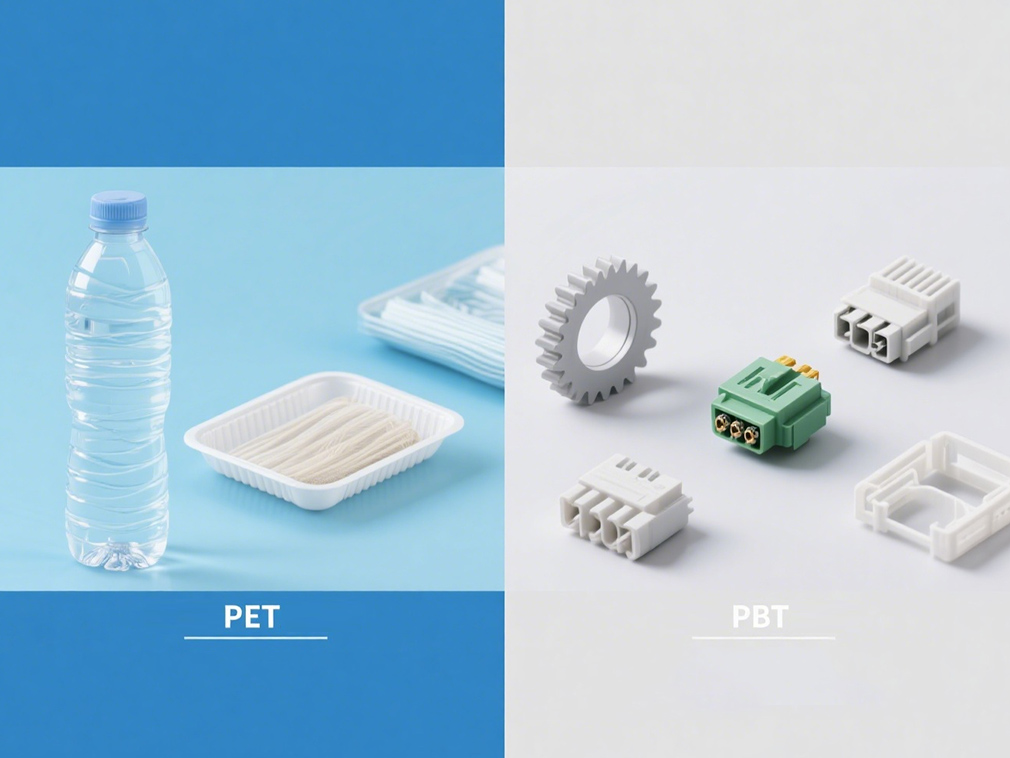
Analysis of the Core Difference: Crystallization Behavior is the Key
Molecular Chain Flexibility and Crystallization Kinetics
PBT: The butanediol unit contains four methylene groups, which are longer and more flexible than the two methylene groups in ethylene glycol. This increased flexibility imparts greater mobility to the molecular chain, making it easier for it to align itself from the molten or glassy state into an ordered lattice structure. Therefore, PBT has a very high intrinsic crystallization rate and a strong tendency to crystallize.
PET: The ethylene glycol units are relatively short and rigid, limiting the mobility of the molecular chains, resulting in a much lower intrinsic crystallization rate than PBT. PET molecular chains require a longer time or more favorable conditions (such as higher temperatures or nucleating agents) to overcome the energy barrier and form an ordered structure.
Crystallization Behavior and Processing Consequences
PBT's "inevitable crystallization": Due to its extremely high crystallization rate, PBT molecular chains almost always complete the crystallization process under conventional cooling conditions such as injection molding and extrusion (even relatively rapid cooling rates).
Therefore, the statement that "it is impossible to produce amorphous PBT parts under conventional processing conditions" is completely correct. PBT parts are almost always semi-crystalline, exhibiting properties such as opacity, higher heat resistance, and dimensional stability, but low transparency.
Controlled Crystallization of PET: Slow crystallization is key to PET's diverse properties. Controlling cooling rates and processing conditions allows for property manipulation:
Rapid Quenching: Rapidly cooling molten PET to below its glass transition temperature (Tg, ~75°C) (e.g., in the production of bottles and films) freezes the molecular chains in a disordered state, forming amorphous PET. This material exhibits high transparency, good toughness (below Tg), and relatively low shrinkage.
Slow Cooling or Annealing: Slowly cooling molten PET, or annealing amorphous PET after molding by heating it above Tg and below its melting point (Tm) (typically 120-220°C), allows the molecular chains time to rearrange and crystallize, creating semi-crystalline PET. This material exhibits enhanced strength, stiffness, heat resistance (significantly higher heat deflection temperature (HDT)), dimensional stability, and chemical resistance, but suffers from a loss of transparency, and toughness may decrease above Tg.
Melting Point (Tm)
The melting point of PBT is typically around 220-230°C.
The melting point of semi-crystalline PET is significantly higher, typically around 250-260°C.
This difference stems from its molecular structure: despite the longer butanediol chain, the PET chain has a higher density of ester groups (-COO-) (more rigid benzene rings and polar ester groups per unit length). This stronger intermolecular forces (dipole-dipole interactions) require higher temperatures to disrupt the lattice and melt.
Detailed Performance Differences: Strength, Toughness, Stiffness, Chemical Resistance, Transparency
Higher Strength and Stiffness (PET)
PET has a higher concentration of rigid benzene rings and polar ester groups per unit length. The stronger intermolecular forces (van der Waals forces and dipole-dipole interactions) between these groups give it higher tensile strength, flexural strength, and elastic modulus (stiffness), making it advantageous in applications requiring high load-bearing capacity and deformation resistance.
PBT's longer, flexible butanediol chains weaken the tight packing and interaction between molecular chains, resulting in lower strength and modulus than PET.
Less Flexibility, but Stronger (PET)
Flexibility: PBT's longer, flexible chains make it easier to deform under low stress, typically resulting in higher elongation at break and improved flexibility (especially at room temperature), making it ideal for applications requiring some flex or impact absorption.
Toughness: This refers to a material's ability to absorb energy and resist fracture, typically measured by impact strength. PET's toughness is highly dependent on state and temperature:
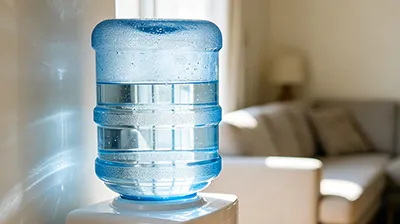
Amorphous PET: At room temperature (well below its Tg), it is in a glassy state, with its molecular chain motion frozen, exhibiting excellent toughness and impact resistance (e.g., a mineral water bottle can withstand a drop).
Semi-crystalline PET: It has high strength and stiffness, but is generally less tough than amorphous PET, especially at low temperatures or with notches.
PBT: As a semi-crystalline material, its toughness is generally between that of amorphous and semi-crystalline PET, and its room-temperature impact strength is acceptable (improved after modification).
In summary, the phrase "less flexible, but tougher" primarily refers to the fact that at room temperature, amorphous or partially crystalline PET parts (especially in applications requiring toughness) tend to exhibit better impact fracture resistance (i.e., toughness) than PBT, even though PBT may be softer (easier to bend). PET's "tougher" properties are largely attributed to its ability to achieve an amorphous state.
Poor Chemical Resistance (PET)
The primary chemical weaknesses of polyester are the susceptibility of the ester bond (-COO-) to hydrolysis (chain scission caused by water attack) and attack by certain chemicals (such as strong acids and bases).
PBT: Due to its higher crystallinity (crystalline regions effectively block chemical penetration) and lower ester group density (longer butanediol chains mean fewer ester groups per unit length of the molecule), it generally offers better hydrolysis and chemical resistance than PET. This is particularly advantageous in high-temperature environments and in humid or chemically exposed environments (such as automotive coolant components and electrical connectors).
PET: Amorphous PET, in particular, has a loose structure, making it easier for chemicals to penetrate and attack ester bonds. Its hydrolysis and chemical resistance are generally inferior to those of PBT and highly crystalline PET. Semi-crystalline PET exhibits significantly better chemical resistance than its amorphous form.
Transparency
PET: This is one of PET's most significant advantages over PBT. Amorphous PET, achieved through rapid quenching, is highly transparent (with a transmittance of up to 90%). Even partially crystalline PET (such as stretch-blow molded beverage bottles) can maintain excellent transparency by inducing the formation of fine, evenly distributed crystals through biaxial stretching.
PBT: Under conventional processing, it inevitably crystallizes, and its crystals are typically large, strongly scattering visible light. Therefore, parts are almost always opaque or translucent (mostly milky white or beige in color). Producing transparent PBT is extremely difficult, requiring special additives (transparent nucleating agents) and extremely strict process control, which is costly and has limited effectiveness.
Material Selection Guide: When is PET preferred?
Users clearly stated, "If you need to produce plastic parts with higher stiffness, toughness, and transparency at room temperature or slightly elevated temperatures (approximately 50°C), PET is a more ideal material than PBT." This conclusion is accurate, as explained below based on application scenarios and reasons:
High Stiffness Requirements
Applications: Structural parts that need to retain their shape and resist bending or deformation, such as housings, brackets, gears, and bearings.
PET Advantages: Higher modulus and strength. PET is stiffer than PBT in both its amorphous and semi-crystalline states. For applications requiring maximum stiffness, semi-crystalline PET (achieved through annealing or controlled cooling) or glass-fiber-reinforced PET are often chosen.
High Toughness Requirement
Applications: Components subject to impact (such as housings, containers, and sports equipment), components subject to repeated stress or deformation (such as buckles and hinges), and thin-walled products.
PET Advantages: At room temperature, amorphous PET offers excellent toughness and impact resistance (far superior to PBT). Even semi-crystalline PET can have toughness comparable to or better than unmodified PBT. PET's toughness is key to its success as a packaging material (water bottles, films). Although PET's toughness begins to decline at approximately 50°C as it approaches its Tg (increased molecular chain motion), amorphous PET generally still offers better toughness than PBT.
High Clarity Requirement
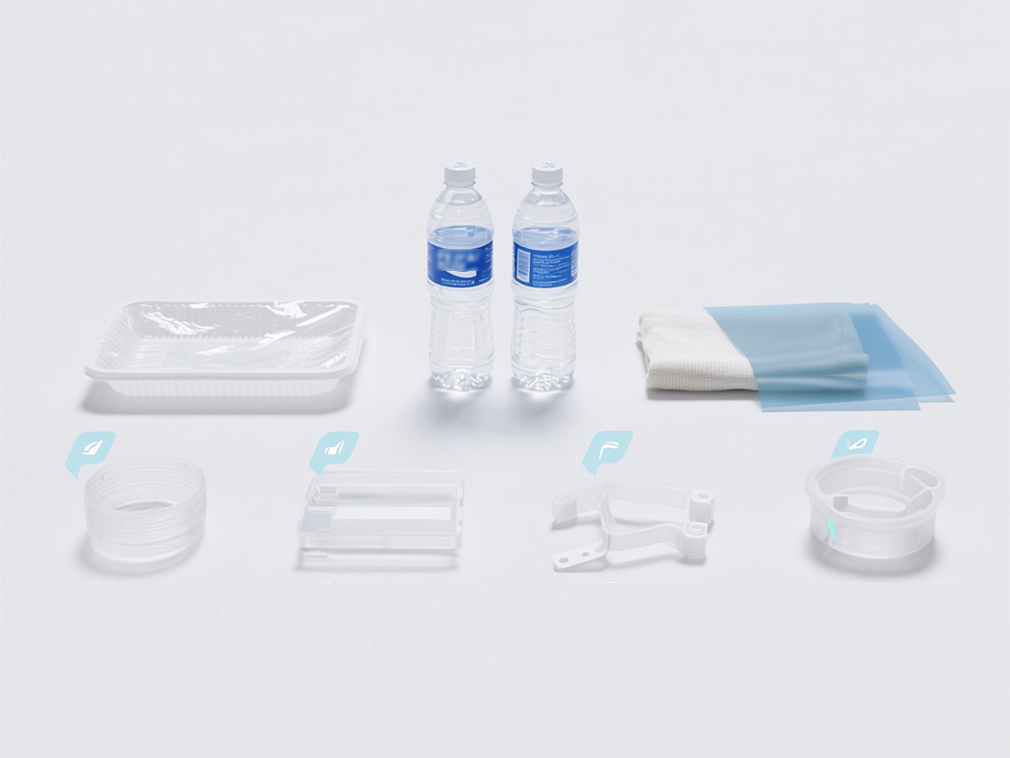
Applications: Packaging containers (beverage bottles, food trays, cosmetic bottles), optical films (screen protectors, reflective film substrates), transparent windows, medical devices (liquid storage bags, catheters), and lighting components.
PET Core Advantage: It is the only mainstream engineering polyester that can be economically processed to achieve high clarity. Amorphous PET's transparency is its irreplaceable core value, while PBT's natural opacity completely prevents it from entering these applications.
Temperature Range
Room temperature to approximately 50°C: This temperature range is within amorphous PET's "comfort zone" (well below its Tg), allowing it to fully utilize its advantageous combination of stiffness, toughness, and transparency. PBT is stable at this temperature, but lacks transparency and generally has lower stiffness than PET.
>50°C to approximately 100°C: As temperatures rise toward PET's Tg (~75°C), amorphous PET's modulus and strength decrease significantly, and its toughness also changes (it may become brittle). At this point, semicrystalline PET or PBT begins to offer advantages due to their higher heat deflection temperature (HDT).
The HDT of semicrystalline PET can reach over 220°C (higher with reinforcement), while that of PBT ranges from 55-200°C (depending on crystallinity and reinforcement). For rigid structural parts exposed to temperatures above 50°C for extended periods, PBT or reinforced semi-crystalline PET are generally better choices (at the expense of transparency). However, if the user explicitly limits the operating temperature to approximately 50°C or below, PET is the preferred choice.
Typical Application Examples
Dominant Applications for PET (leveraging stiffness, toughness, and transparency):
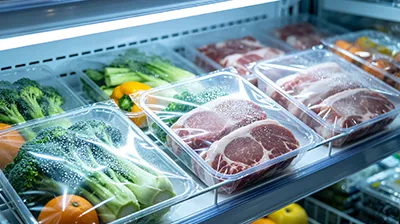
Packaging: Mineral water bottles, carbonated beverage bottles, cooking oil bottles, food trays (APET/CPET), films (packaging films, audio and video tape bases).
Consumer Products: Transparent cosmetics/daily chemical containers, toothbrush handles, toy parts.
Optical: Optical film substrates for LCD backlight units and screen protectors.
Medical: Transparent medicine bottles, dialysis fluid storage bags, and transparent housings for diagnostic equipment.
Electronic and Electrical: Transparent panels and switch covers (when transparency is required).
Fibers: Polyester fibers (textiles, industrial yarns, tire cord—leveraging their high strength, wear resistance, and dimensional stability).
PBT's leading applications (leveraging its ease of processing, heat resistance, chemical resistance, electrical properties, and dimensional stability; transparency is generally not required) include:
Electronic and electronic components: connectors, switches, relays, coil bobbins, sockets, and motor components (leveraging its excellent electrical insulation, solder resistance, and dimensional stability).
Automotive: door handles, fuse boxes, headlight holders, sensor housings, wiper components, and ignition system parts (leveraging its heat resistance, oil resistance, and chemical resistance).
Industrial: gears, bearings, pump housings, impellers, and tool housings (leveraging its wear resistance, dimensional stability, and chemical resistance).
Home appliances: electric iron components, coffee machine water tanks, and power tool housings.
PET and PBT, the "polyester brothers," have diverged in performance due to slight differences in their diol monomer chain lengths. PBT holds a prominent position in the engineering plastics market (particularly in the electronics and automotive sectors) due to its extremely high crystallization rate, good processability, balanced mechanical properties, excellent long-term heat resistance, chemical resistance, and electrical properties. However, its opacity is an inherent limitation.
PET's core advantage lies in its controllable crystallization behavior, which enables it to achieve a "performance trifecta": high stiffness (derived from molecular chain rigidity and high crystallization potential), excellent toughness (especially at room temperature, thanks to its accessible amorphous glassy state), and exceptional transparency (achieved through rapid quenching).
Thus, when applications specifically require operation at room temperature to approximately 50°C and simultaneously demand high stiffness, high toughness (especially impact resistance), and high transparency, PET is undoubtedly a more ideal, or even the only, viable polyester choice over PBT.
Its widespread use in packaging, optics, transparent consumer goods, and medical devices is a testament to its unique combination of properties. By understanding and harnessing PET's crystallization behavior, materials engineers can unlock its diverse performance spectrum to meet specific application requirements.
Our platform connects hundreds of verified Chinese chemical suppliers with buyers worldwide, promoting transparent transactions, better business opportunities, and high-value partnerships. Whether you are looking for bulk commodities, specialty chemicals, or customized procurement services, TDD-Global is trustworthy to be your fist choice.