PP Injection Molding: Key Process Controls
Polypropylene (PP), as a thermoplastic polymer with excellent performance, has been widely used in automobile manufacturing, home appliance production, packaging materials and other fields due to its low density, strong chemical corrosion resistance and balanced mechanical properties. Injection molding is the core processing method of PP.
Melting temperature: the "temperature" control of injection molding
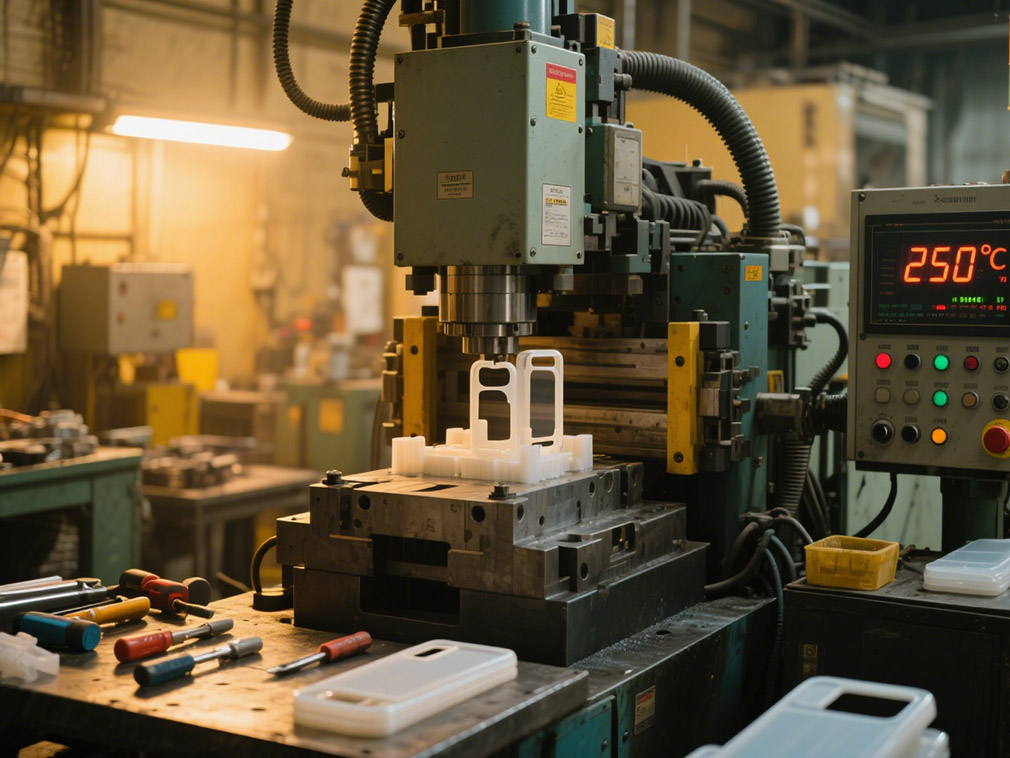
The control of melting temperature can be called the "temperature" of injection molding. On the temperature control meter of the injection molding machine in the workshop, there is a lot of knowledge behind the 200-300°C digital jump. Xiao Wang, an operator who just entered the industry, suffered from the temperature loss: last time he made a mobile phone shell, he set 230°C as usual, but the corners of the product were missing.
The master adjusted it to 280°C and solved the problem immediately. It turns out that thin-walled parts are like "thin-skin dumplings", which cannot be filled with a small fire; when making thick-walled washing machine bases, 220°C is enough. Too high a temperature will make the material "burned", and the pulled spline will break when it falls.
There is an unwritten rule in the workshop: homopolymer PP should be heated at "medium heat" (220-260°C), and copolymer PP should be heated at "high heat" (240-280°C). It is a technical job to see the melt state in the barrel - it is best when it flows like honey, too thin means the temperature is too high, and too thick means the temperature is not enough.
Experienced masters can judge whether the temperature is appropriate by observing the screw retraction speed with the naked eye. This unique skill makes many newcomers unable to learn even if they count the temperature control meter.
Mold temperature: the "invisible switch" of product quality
The adjustment of mold temperature is the "invisible switch" of product quality. The mold temperature machine in the corner of the workshop is always humming, and the temperature range of 10-80°C hides the secret of product quality.
Master Li, who makes home appliance shells, knows this best: when the mold temperature machine shows 60°C, the surface of the refrigerator drawer is as bright as a mirror; when it drops to 20°C, although the production speed is faster, there will always be some small shrinkage marks on the surface. He summed up the rule: choose high temperature for appearance, choose low temperature for efficiency, the key is to look at the purpose of the product.
The statistics of the workshop quality inspection station are very telling: the drop test pass rate of parts produced at a mold temperature of more than 60°C is 30% higher than that of low-temperature production. But high temperature also has a price - you have to wait 5 seconds longer for each cycle, which is a considerable loss for a packaging production line with a daily production capacity of 100,000 pieces.
Now the workshop is popular with "zone temperature control", the mold cavity uses 60°C to ensure the appearance, and the core uses 30°C to speed up cooling, so that fish and bear's paw can finally be taken into account.
Material storage: PP's "worry-free" and special precautions
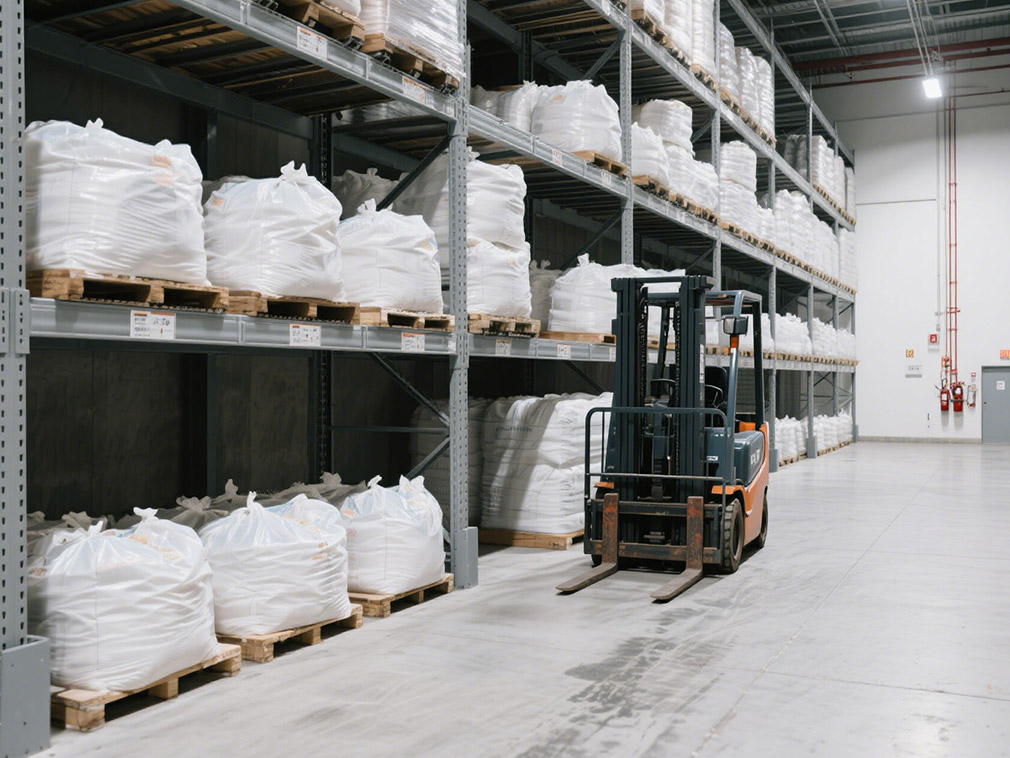
PP material is considered a "worry-free baby" in the workshop, unlike nylon, which needs to be dried every day. The experience of Zhang Jie, a warehouse keeper, is that as long as the PP material bags are sealed and stacked on ventilated shelves, there will be no problem for three months.
But you have to be extra careful during the rainy season. Last year, a batch of PP materials that were damp had silver streaks on the surface during injection molding, and finally had to be downgraded. Now there is a drying oven at the door of the workshop. The damp material is dried at 80°C for 3 hours. When the moisture content drops below 0.02%, it can be used normally. This saves a lot of trouble compared to handling nylon materials.
Shrinkage problem: the key problem that gives technicians headaches
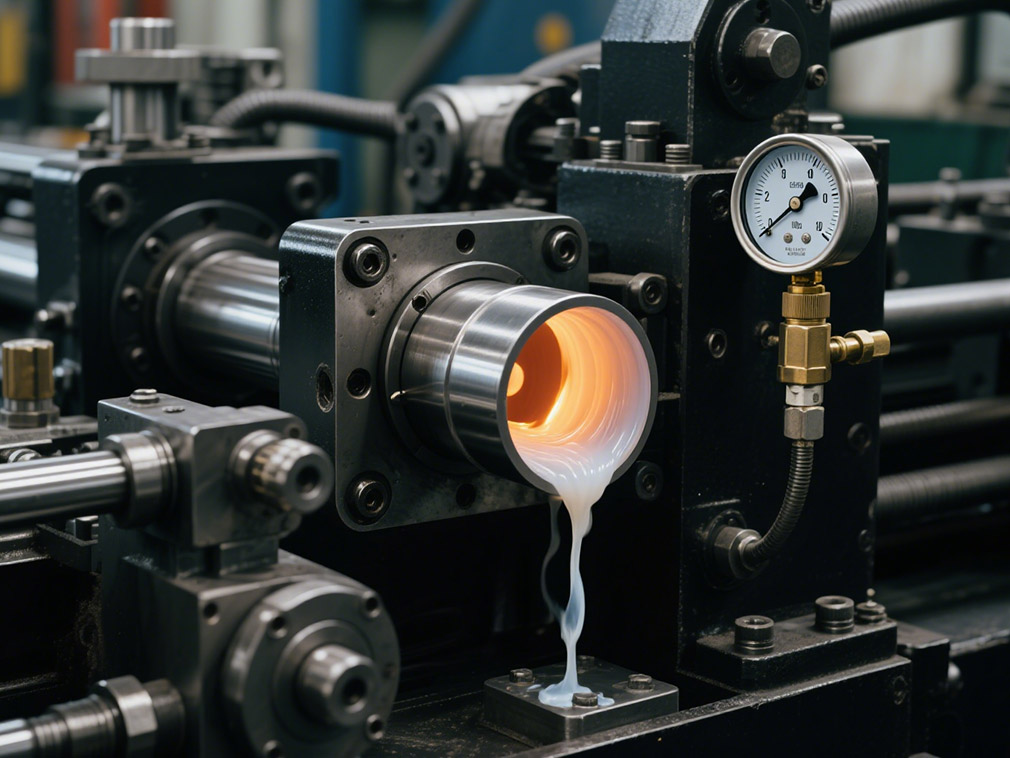
The shrinkage problem is the most troublesome for workshop technicians. The shrinkage range of 1.5%-3% may be the difference between qualified and scrapped on precision parts. The production line for car buckles has suffered losses.
With the same parameters, the shrinkage of thick walls is nearly twice that of thin walls, resulting in uneven tightness during assembly. Later, the technician changed the pressure holding parameters: first "lock" with high pressure of 120MPa for 1 second, and then "fill" with low pressure of 60MPa for 10 seconds. This trick stabilized the shrinkage rate a lot.
Shrinkage control: process adjustment and material modification work together
There are two magic weapons to deal with shrinkage in the workshop: process adjustment and material modification. The "step pressure holding method" is often used during mold testing. The pressure is increased according to which part of the product has serious shrinkage marks.
During mass production, modified materials are directly used. PP materials with 20% talcum powder added can reduce the shrinkage rate to less than 1%, but the temperature must be increased by 20°C, otherwise the material cannot be injected. Now the precision parts production line is equipped with a mold temperature closed-loop control system, and the temperature difference is controlled at ±2°C, which greatly improves the dimensional stability of the product.
Flexibility: The core principle of PP injection molding
The slogan on the wall of the workshop reads: "Parameters are dead, people are alive." There is no unchanging formula for PP injection molding. When testing new products, the parameters must be adjusted seven or eight times.
Just like making thin-walled lunch boxes, you need to beat and cool quickly, and making load-bearing trays, you need to beat and cool slowly; transparent parts are afraid of yellowing due to high temperatures, and black parts are afraid of material spots due to low temperatures. Converting these experiences into process cards, combined with the new AI monitoring system, the qualified rate of PP products in the workshop is now 15% higher than three years ago.
In the world of plastic processing, PP injection molding is like the craftsmanship of an old craftsman. It requires precise parameter control and the operator's accumulated experience.
Those fluctuating temperature numbers and changing pressure curves are eventually transformed into qualified products on the assembly line. When you pick up a smooth PP part, think about the carefully controlled process details behind it. It is these little controls that make polypropylene materials bloom with the greatest value.
Our platform connects hundreds of verified Chinese chemical suppliers with buyers worldwide, promoting transparent transactions, better business opportunities, and high-value partnerships. Whether you are looking for bulk commodities, specialty chemicals, or customized procurement services, TDD-Global is trustworthy to be your fist choice.