
PP Toughening For Impact Resistance
The impact resistance of plastics is a key indicator of their reliability, directly affecting the service life and safety of products under dynamic loads such as collisions and impacts. Its impact resistance is not determined by a single factor, but is the result of the combined effects of material properties, ambient temperature, and artificial reinforcement measures.
The key elements are broken down as follows:
I. Material Properties
The inherent properties of the material itself are the core foundation determining its impact resistance, mainly reflected in three key dimensions: polymer chain structure, crystallinity, and molecular weight:
1. Chain Structure: The chain structure affects the ability to inhibit crack propagation. Highly branched or cross-linked structures are more effective than linear structures in hindering crack initiation and propagation. The three-dimensional network they form can disperse impact loads and avoid stress concentration, thereby preventing failure and improving impact resistance.
2. Crystallinity: Crystallinity and impact resistance are not simply a matter of "amorphous state is better than crystalline state," but are influenced by multiple factors such as polymer chemical properties, morphology, and additives. Traditionally, amorphous plastics are considered to have superior impact resistance due to the free movement of their disordered molecules, allowing them to absorb impact energy.
However, this is not absolute—for example, amorphous PS and PMMA are actually quite brittle, while semi-crystalline POM, PBT, and PA6 (especially after toughening modification) exhibit excellent impact resistance. Therefore, the influence of crystallinity needs to be comprehensively assessed in conjunction with the specific polymer system.
3. Molecular Weight: Molecular weight affects the degree of polymer chain entanglement, which in turn relates to impact resistance. Generally, higher molecular weight means tighter molecular chain entanglement, resulting in better transfer and dispersion of impact loads and absorption of energy, leading to superior impact resistance. Low molecular weight plastics have shorter, weaker chains, making them more prone to breakage upon impact and exhibiting poor impact resistance.
II. Temperature
Temperature is a crucial environmental factor affecting the impact resistance of plastics. The core mechanism involves altering the material's mechanical state by regulating molecular chain movement, thereby influencing impact energy absorption.
The impact resistance of most plastics exhibits a clear temperature-dependent change: at low temperatures, the thermal motion of molecular chains is restricted, chain segment activity decreases, and the material transforms from tough to brittle, resulting in a sharp drop in impact resistance; especially below the glass transition temperature (Tg), molecular chains are almost immobile, making it difficult to absorb impact energy and prone to brittle fracture.
Conversely, when the temperature approaches or exceeds the Tg or even the melting point, some plastics soften, their rigidity and strength decrease, and although molecular chain motion increases, their load-bearing capacity weakens, reducing their impact resistance and dynamic load tolerance.
Different plastics have significantly different Tg values, leading to varying temperature sensitivity in impact resistance. For example, PE has a low Tg and good impact resistance at both room and low temperatures; PS has a Tg close to room temperature and becomes brittle at slightly lower temperatures.
III. Strengthening Measures
Impact resistance of plastics can be specifically improved through artificial strengthening modifications or structural design. However, these measures have limitations and are only effective in specific material systems and application scenarios. The core methods mainly include reasonable structural design and toughening agent modification:
1. Reasonable Structural Design: Optimizing the morphology and distribution of the reinforcing phase in composite materials can improve impact toughness. For example, short and uniformly dispersed fibers can better disperse in the matrix, absorbing energy and hindering cracking through tensile fracture; rubber phase toughening utilizes the elastic deformation of rubber particles to dissipate energy.
Care must be taken to control the content, size, and dispersion of the reinforcing phase; otherwise, stress concentration can easily reduce performance.
2. Use of Toughening Agents: Toughening agents combined with brittle plastics can improve impact resistance. Taking PP as an example, it has good heat and chemical resistance and processability, but pure PP (especially homopolymer PP) has poor impact resistance at room temperature and low temperature, which can be improved by toughening agents.
Commonly used PP toughening agents include EPR, EPDM, and POE, among which EPDM and POE are the most widely used due to their good compatibility with PP, excellent elasticity, and superior low-temperature toughness.
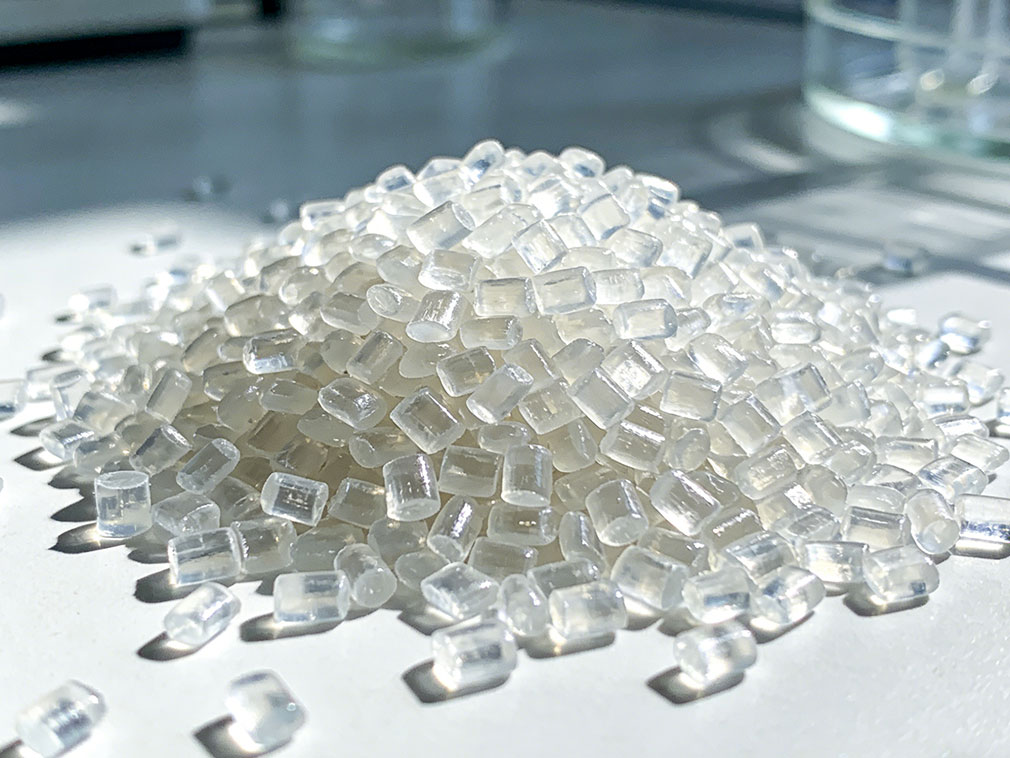
Toughening Mechanism: The toughening agent disperses in the PP matrix to form elastic particles. Upon impact, these particles induce shear yielding of the matrix, absorbing energy, while the agent itself deforms and absorbs energy, inhibiting crack propagation. Example: Adding 10%-20% EPDM to homopolymer PP increases impact strength by 3-5 times at room temperature and 5-8 times at -20℃, meeting low-temperature requirements.
Note: Excessive toughening agent will reduce rigidity, heat resistance, and increase cost; compatibility with PP must be ensured, otherwise performance will deteriorate. In practice, appropriate toughening agents should be selected according to the PP type and application requirements, and compatibilizers should be added to balance performance if necessary.
Our platform connects hundreds of verified Chinese chemical suppliers with buyers worldwide, promoting transparent transactions, better business opportunities, and high-value partnerships. Whether you are looking for bulk commodities, specialty chemicals, or customized procurement services, TDD-Global is trustworthy to be your fist choice.












