PVC Ductility Influencing Factors
Extensibility is a crucial mechanical property of polymers, determining their suitability for molding, processing, and engineering applications, as it allows for plastic deformation without fracture. Essentially, extensibility depends on the ease of molecular chain movement, influenced by chain flexibility, interchain interactions, and the mobility of chain segments. The following analysis uses PVC as an example to dissect this influencing mechanism.
Molecular chain structure is fundamental to polymer extensibility; chain length, flexibility, and the properties of substituents are paramount. Long, flexible molecular chains, due to their high degree of freedom and interchain entanglement, can transfer stress and rearrange themselves. Under external force, they can adjust their conformation to disperse stress, achieving large plastic deformation without fracture, thus exhibiting superior extensibility.
Conversely, polymers with rigid molecular chains have poor extensibility. For example, polymers containing large, rigid substituents such as benzene rings have hindered chain segment movement and are prone to brittle fracture. Furthermore, the degree of branching also has an impact: moderate branching increases chain entanglement and improves extensibility, while excessive branching weakens interchain forces and reduces performance stability.
PVC molecules have a linear C-C structure, which, while offering some flexibility, is constrained by the polarity of chlorine atoms, limiting chain segment movement. Its basic ductility is moderate and requires modification.
Crystallinity refers to the proportion of crystalline regions in a material, directly controlling its ductility. High-crystallinity polymers have tightly packed, regular molecular chains, forming a rigid crystalline structure that hinders chain segment movement and slippage. Under external force, stress concentration easily leads to brittle fracture, resulting in poor ductility.
Conversely, low-crystallinity or amorphous polymers have loosely packed molecular chains, providing ample space for chain segment movement and good ductility. Furthermore, for the same polymer, lower crystallinity generally results in better ductility.
PVC is a semi-crystalline polymer (5%-10% crystallinity). Its relatively low crystallinity gives it some ductility, but the crystalline regions still restrict deformation. Rapid cooling to reduce crystallinity significantly improves ductility, while slow cooling and annealing to increase crystallinity increase rigidity, reduce ductility, and may even cause embrittlement.
Crosslinking refers to the process by which polymer molecular chains form a three-dimensional network structure through chemical bonds, and its degree plays a decisive role in determining ductility. Uncrosslinked or low-crosslinked polymers are bound by weak interactions, allowing molecular chains to easily slip and resulting in good ductility. Highly crosslinked polymers form a stable three-dimensional network, restricting chain segment movement and slippage, making plastic deformation difficult and significantly reducing ductility.
It should be noted that while crosslinking reduces ductility, it can improve strength, hardness, and heat resistance; a balance must be struck in practical applications. Taking PVC as an example, uncrosslinked PVC is ductile and can be processed conventionally; after adding crosslinking agents such as peroxides, strength and heat resistance improve, but ductility decreases significantly, making it brittle and suitable for high-strength applications. Furthermore, ductility decreases only slightly at low crosslinking densities, while high crosslinking densities almost completely eliminate ductility.
Temperature is a crucial external factor affecting the ductility of polymers, primarily influencing chain segment movement through the regulation of heat supply: increasing temperature enhances chain segment movement and weakens interchain forces, significantly improving ductility; decreasing temperature hinders chain segment movement, reducing ductility and even causing embrittlement. This transition temperature is called the glass transition temperature (Tg).
Taking PVC as an example, its glass transition temperature (Tg) is approximately 80℃, a significant dividing point for ductility: above Tg, PVC is in a highly elastic state with active chain segment movement, exhibiting good ductility and allowing for smooth processing and molding; ductility decreases as it approaches Tg.
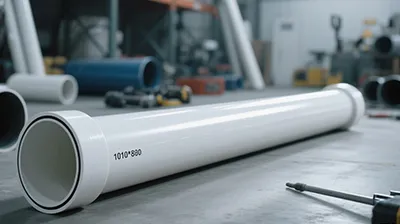
Below Tg (e.g., winter temperatures <0℃), it is in a glassy state, with frozen chain segment movement, resulting in brittleness and easy breakage (e.g., outdoor PVC pipes are prone to impact cracking); at room temperature (around 25℃), it retains a certain degree of ductility. Furthermore, increasing temperature can lower the yield strength of PVC to improve ductility, but excessively high temperatures can lead to thermal degradation, damaging mechanical properties.
Our platform connects hundreds of verified Chinese chemical suppliers with buyers worldwide, promoting transparent transactions, better business opportunities, and high-value partnerships. Whether you are looking for bulk commodities, specialty chemicals, or customized procurement services, TDD-Global is trustworthy to be your fist choice.