TiO₂ for Printing Ink Industry
Titanium dioxide (TiO₂), also known as titanium dioxide, is an inorganic chemical material with excellent physicochemical properties and wide applicability. Its superior optical properties and chemical stability make it an indispensable core raw material in the ink industry.
The core reason for titanium dioxide's widespread use in the ink industry lies in its excellent properties that meet the needs of ink production, with optical properties and chemical stability being particularly crucial. In terms of optical properties, titanium dioxide possesses extremely high whiteness and superior hiding power, which are its core advantages as a white pigment in inks. High whiteness provides a pure white base for inks, ensuring vibrant and bright colors in printed materials and preventing issues such as graying or yellowing.
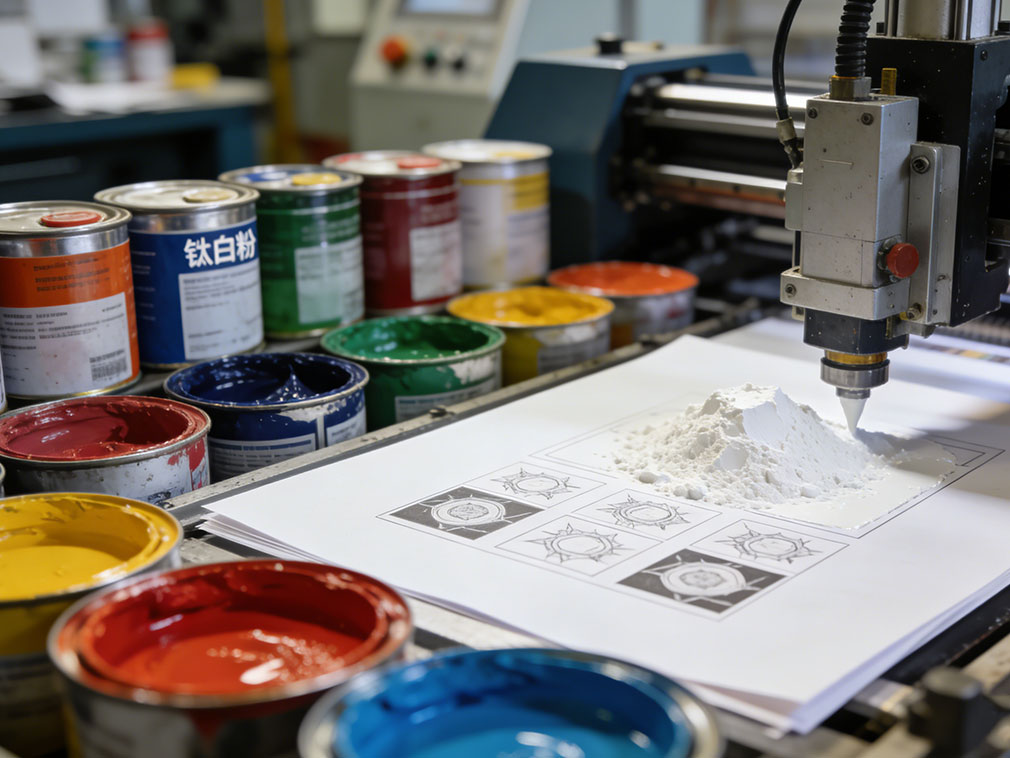
Its hiding power ranks among the best of all white pigments. Adding only a small amount of titanium dioxide can effectively cover the background color of the printing substrate, reducing pigment usage, lowering production costs, and ensuring uniform and consistent color in printed materials. Simultaneously, titanium dioxide's gloss adjustment capabilities are also outstanding.
Depending on the different applications of the inks, it can be surface-treated to prepare products with different gloss types, such as high gloss, matte, and matte, adapting to the needs of various printing scenarios. In terms of chemical stability, titanium dioxide does not react with resins or solvents in inks at room temperature.
It exhibits excellent weather resistance, ensuring that printed materials are less prone to fading, chalking, or discoloration even during long-term storage or exposure to sunlight and humidity, effectively guaranteeing the shelf life and appearance stability of printed materials. Furthermore, titanium dioxide has good heat resistance, adapting to high-temperature grinding and dispersion processes in ink production. It is also non-toxic and odorless, meeting modern ink industry environmental and safety standards.
In the ink industry, titanium dioxide applications cover multiple sub-categories. Different types of inks have varying performance requirements for titanium dioxide, and their application methods and effects also differ. Firstly, there are offset printing inks, commonly used for high-volume printing of books, periodicals, and packaging, which require high levels of ink transferability, drying properties, and print clarity.
In offset printing inks, titanium dioxide primarily serves as a white pigment or a coloring base for light-colored inks. Its excellent hiding power and whiteness ensure that printed text and patterns are clearly legible and have high color fidelity. To adapt to the wet-on-wet printing process of offset printing, titanium dioxide used in offset inks must possess excellent water dispersibility and water resistance to avoid flocculation and sedimentation upon contact with water, which would affect the printability of the ink.
Secondly, gravure printing inks, widely used in plastic and paper packaging, such as food and cosmetic packaging, have stringent requirements for ink adhesion, corrosion resistance, and gloss. Titanium dioxide used in gravure printing inks must possess excellent dispersibility, able to disperse evenly in the ink solvent system, forming a stable ink colloid to prevent plate clogging during printing.
Furthermore, since printed packaging materials are frequently exposed to various environments, the weather resistance and chemical resistance of titanium dioxide need further improvement to ensure that the printed materials do not fade or discolor when exposed to oils, acids, alkalis, etc., guaranteeing the safety and aesthetics of the packaging. In plastic packaging printing, titanium dioxide also exhibits good compatibility with plastic substrates, enhancing ink adhesion and preventing ink stripping.
Flexographic printing inks are widely used in packaging and label printing, characterized by high printing speed and adaptability, but requiring high fluidity and drying speed. Titanium dioxide in flexographic printing inks must possess good fluidity and dispersion stability, enabling rapid drying and firm adhesion to the printing substrate.
Furthermore, flexographic printing often involves various substrates, such as paper, plastics, and metals. Titanium dioxide must be adaptable to the characteristics of different substrates to ensure excellent opacity and color performance on various surfaces. In label printing, the high whiteness and accurate color reproduction of titanium dioxide make text and images on labels more prominent, enhancing product recognition.
Besides the common ink types mentioned above, titanium dioxide also has important applications in specialty inks, such as anti-counterfeiting inks, conductive inks, and high-temperature resistant inks. In anti-counterfeiting inks, titanium dioxide can be combined with special anti-counterfeiting materials, utilizing its excellent optical properties to give printed materials a unique visual effect under specific conditions (such as ultraviolet light), enhancing anti-counterfeiting performance.
In high-temperature resistant inks, the high thermal stability of titanium dioxide plays a crucial role, ensuring that the ink does not decompose or fade under high temperatures, making it suitable for printing requirements in high-temperature conditions, such as marking on automotive parts and aerospace equipment.
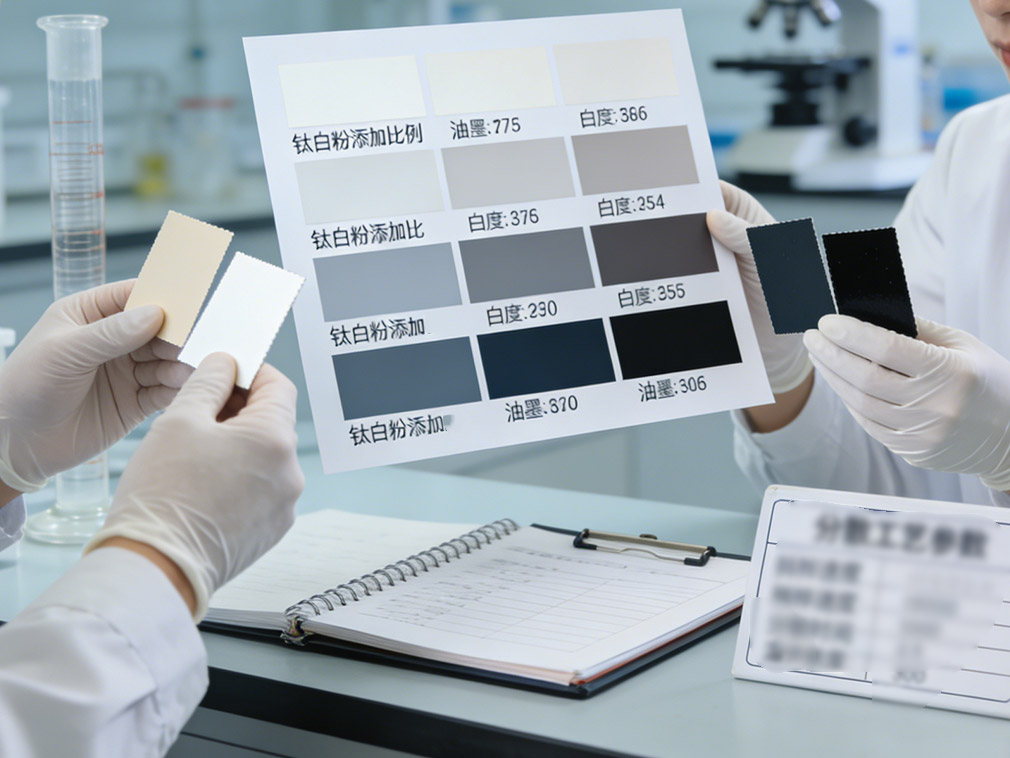
The amount and method of adding titanium dioxide to ink directly affect its performance and printing results. Generally, a higher amount of titanium dioxide is added to white inks, typically accounting for 60%-80% of the total pigment, to ensure sufficient hiding power and whiteness. In light-colored inks, the amount added is adjusted according to color requirements to achieve precise color matching.
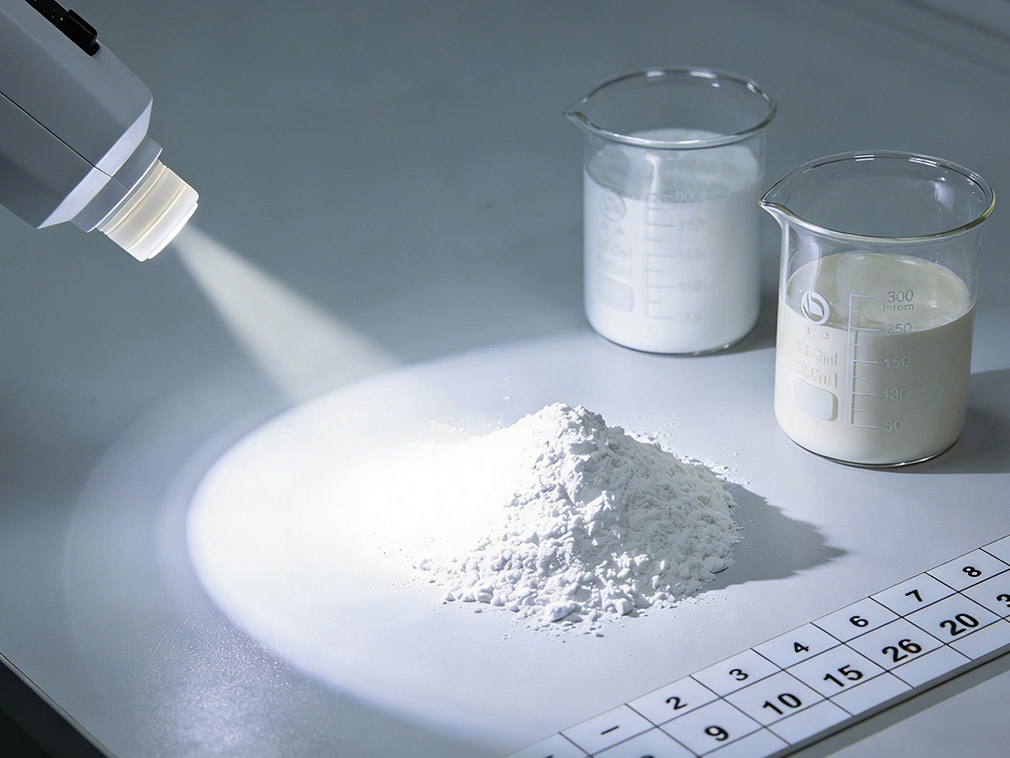
During the addition process, professional grinding and dispersion processes are required to evenly disperse the titanium dioxide in the ink system, avoiding agglomeration. Insufficient dispersion will result in a grainy texture in the ink, affecting the smoothness and clarity of the printed product, while also reducing the hiding power and tinting strength of the titanium dioxide, increasing production costs. Therefore, ink manufacturers typically use advanced dispersion equipment and appropriate dispersants to optimize the dispersion effect of titanium dioxide and improve ink quality.
Our platform connects hundreds of verified Chinese chemical suppliers with buyers worldwide, promoting transparent transactions, better business opportunities, and high-value partnerships. Whether you are looking for bulk commodities, specialty chemicals, or customized procurement services, TDD-Global is trustworthy to be your fist choice.