PVC vs ABS Pipes: Key Differences and Applications in Engineering
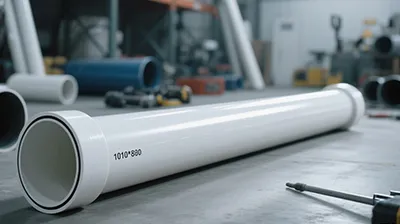
In modern building piping engineering, PVC and ABS are two widely used thermoplastic polymer materials. From a conventional engineering perspective, their basic properties highly overlap, with no significant differences. Both possess good structural strength and stable corrosion resistance, able to withstand the erosion of everyday aquatic environments, ordinary soil, and mild acidic and alkaline media. They are not prone to rusting or aging, effectively avoiding the problems of corrosion and scaling inherent in traditional metal pipes.
Furthermore, these two materials are readily available, have mature processing technologies, and are easy to install. Their overall cost is within the budget of civil and small-to-medium-sized industrial projects, making them highly economical and practical. Due to their combined advantages in strength, corrosion resistance, and economy, PVC and ABS pipes are widely used in building water supply and drainage, indoor pipeline laying, and municipal lightweight pipe networks, making them common material types in piping engineering.
It should be noted that the variety of plastic pipes is far richer than these two. Materials such as PPR, PE, and HDPE each have their own applicable fields; not all plastic pipes are made of PVC or ABS. However, it's undeniable that PVC and ABS, with their excellent environmental adaptability and functional versatility, are suitable for most conventional pipeline construction scenarios—whether it's residential water supply and drainage, commercial building rainwater drainage, or low-voltage wiring protection, they can meet basic usage requirements and are therefore widely used in engineering projects.
However, beneath their seemingly similar performance, there are many subtle differences between the two; at the same time, traditional thermoplastics have some inherent shortcomings, which leads many high-end or special-requirement applications to no longer simply choose virgin PVC and ABS, but instead tend to use modified polymer materials.
I. Core Performance Differences: Temperature Resistance and Toughness
The most prominent performance difference between the two materials lies in their temperature adaptability range. ABS has a wider temperature resistance range, operating stably in environments from -40℃ to 70℃, and is less prone to embrittlement and cracking at low temperatures; its short-term heat resistance is better, with a Vicat softening temperature of up to 90℃, making it suitable for low-temperature fluid transportation, shallow underground pipe networks, and slightly high-temperature drainage scenarios.
In comparison, PVC has weaker low-temperature resistance. Its toughness decreases significantly and its brittleness increases markedly below 0℃, making it easily damaged by external impacts. Long-term operating temperatures typically need to be controlled below 60℃. High-temperature environments can cause softening, deformation, and pipe diameter shrinkage, affecting fluid transport efficiency.
Regarding physical toughness, ABS, thanks to its ternary copolymer structure, has stronger impact and deformation resistance, making it more suitable for underground installations or construction conditions prone to impacts. PVC, on the other hand, has higher rigidity but insufficient toughness, making it less resistant to external impacts and more suitable for indoor environments with normal temperatures and minimal external interference.
II. Balancing User Experience and Cost
In terms of noise reduction, PVC pipes have a certain advantage, producing less noise when water flows through them, making them more suitable for residential and office environments requiring quiet. ABS pipes produce relatively more noticeable water noise, making them less suitable for places with high noise requirements.
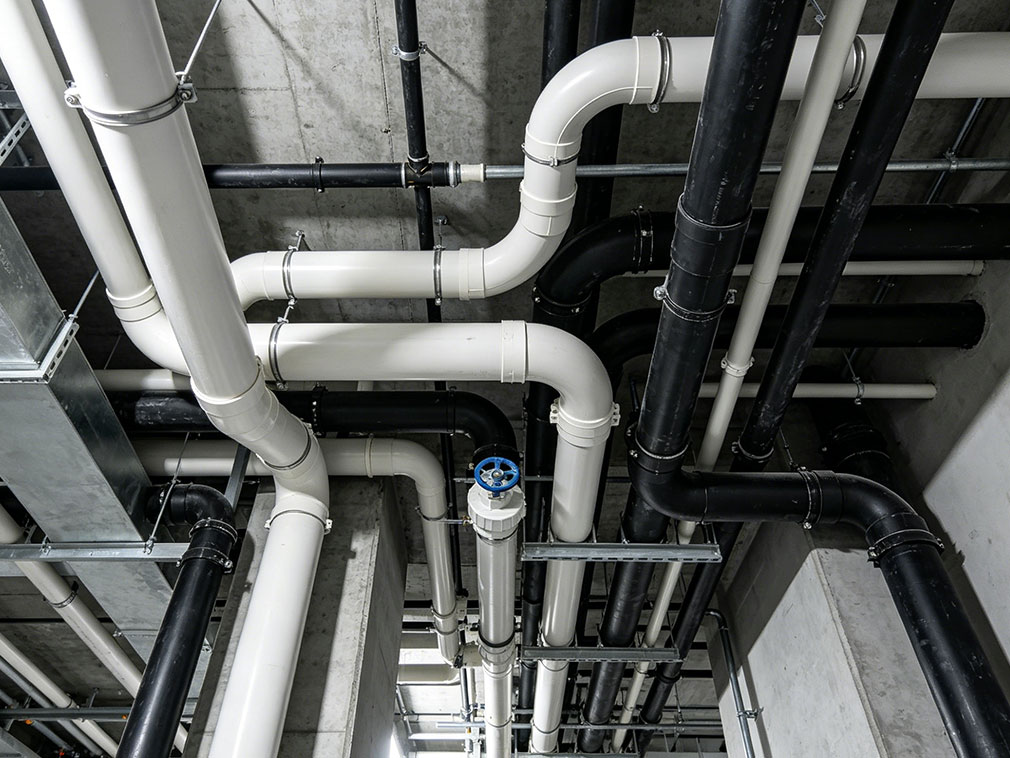
In terms of cost, ABS pipes of the same specifications are typically about 15% more expensive than PVC pipes, making them less economical. In terms of weather resistance, neither of these two materials, without special modification treatment, is resistant to ultraviolet radiation. Prolonged exposure to the elements will lead to aging, fading, and performance degradation. However, PVC's basic weather resistance is slightly better than ABS, making it more suitable for short-term outdoor temporary pipelines.
III. Limitations of Traditional Plastics and the Iteration of Engineering Materials
From an engineering development perspective, the inherent defects of traditional thermoplastics are a key reason why the industry is constantly exploring and improving polymer materials. Both virgin PVC and ABS generally have high coefficients of thermal expansion. Under significant temperature fluctuations, pipelines are prone to expansion and contraction, potentially leading to leaks at joints and pipeline displacement over long-term use.
Furthermore, both have limited tolerance to special media. Their corrosion resistance significantly decreases when exposed to high concentrations of acids, alkalis, oils, or corrosive industrial fluids, making them unsuitable for harsh conditions such as industrial chemical processes and special sewage discharge. In addition, the flame retardancy and structural stability of traditional thermoplastics still have room for improvement.
Large buildings, fire protection networks, and heavy-duty pipelines buried deep underground for extended periods require higher levels of durability, safety, and compressive strength, which virgin materials often cannot fully meet. Based on these practical problems, the pipeline engineering field is gradually promoting modified PVC, reinforced ABS, and composite polymers.
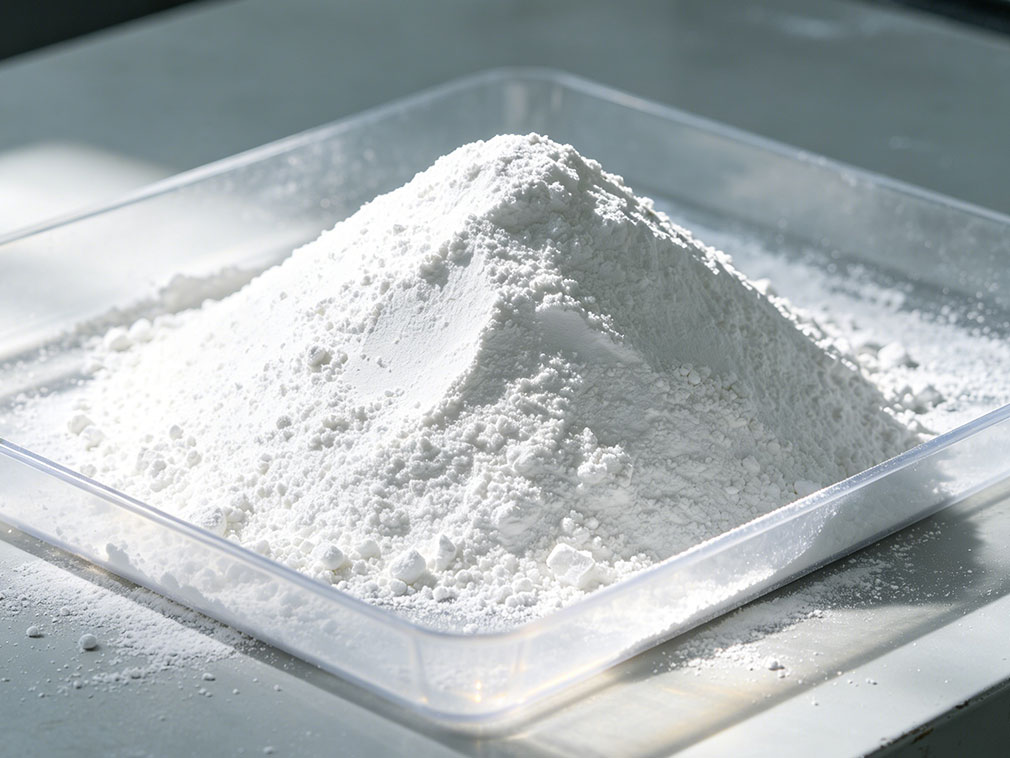
By adding additives such as anti-aging, impact-resistant, flame-retardant, and corrosion-resistant agents, and optimizing the molecular structure of the materials, these materials retain their original advantages of being lightweight, easy to process, and convenient to construct, while significantly improving their adaptability to extreme temperatures, resistance to special media, and anti-aging and deformation resistance, making them suitable for complex working conditions and long-term service requirements.
In summary, PVC and ABS remain the economical and practical choices for conventional pipeline engineering, meeting most daily application scenarios. However, for special, high-end projects or projects requiring a longer service life, selecting modified polymer materials based on actual working conditions is an important measure to ensure project quality and reduce subsequent operation and maintenance costs.
Our platform connects hundreds of verified Chinese chemical suppliers with buyers worldwide, promoting transparent transactions, better business opportunities, and high-value partnerships. Whether you are looking for bulk commodities, specialty chemicals, or customized procurement services, TDD-Global is trustworthy to be your fist choice.