PVC vs CPVC: From General-Purpose to Engineering Plastics Evolution
PVC vs. CPVC: The Evolution from General-Purpose Plastics to Engineering Plastics
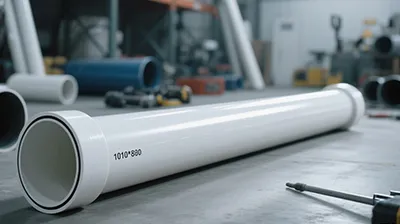
In the modern industrial materials system, polyvinyl chloride (PVC), as one of the five major general-purpose plastics, has long permeated every corner of daily life—from small household drain pipes and plastic toys to large building exterior wall insulation layers and municipal pipelines.
Chlorinated polyvinyl chloride (CPVC), upgraded through chlorination modification technology, breaks through the performance limitations of PVC, moving towards engineering fields with higher strength and higher temperature resistance. These two seemingly "homogeneous" materials differ drastically in performance, processing, and application, perfectly illustrating the material evolution logic of "one modification, one upgrade."
Chemical Essence: Chlorine Content, the Core Code Determining Performance
The core difference between PVC and CPVC lies in the different chlorine content in their chemical structures—the small percentage of chlorine atoms directly determines the "capacity boundaries" of the two materials.
PVC is a polymer material polymerized from vinyl chloride monomers, with a chlorine content of approximately 57%. This material has an amorphous structure and is relatively unstable to light and heat. Once exposed to temperatures above 100℃ or prolonged exposure to sunlight, it easily decomposes, discolors, and even loses its original properties, limiting its application in high-temperature environments.
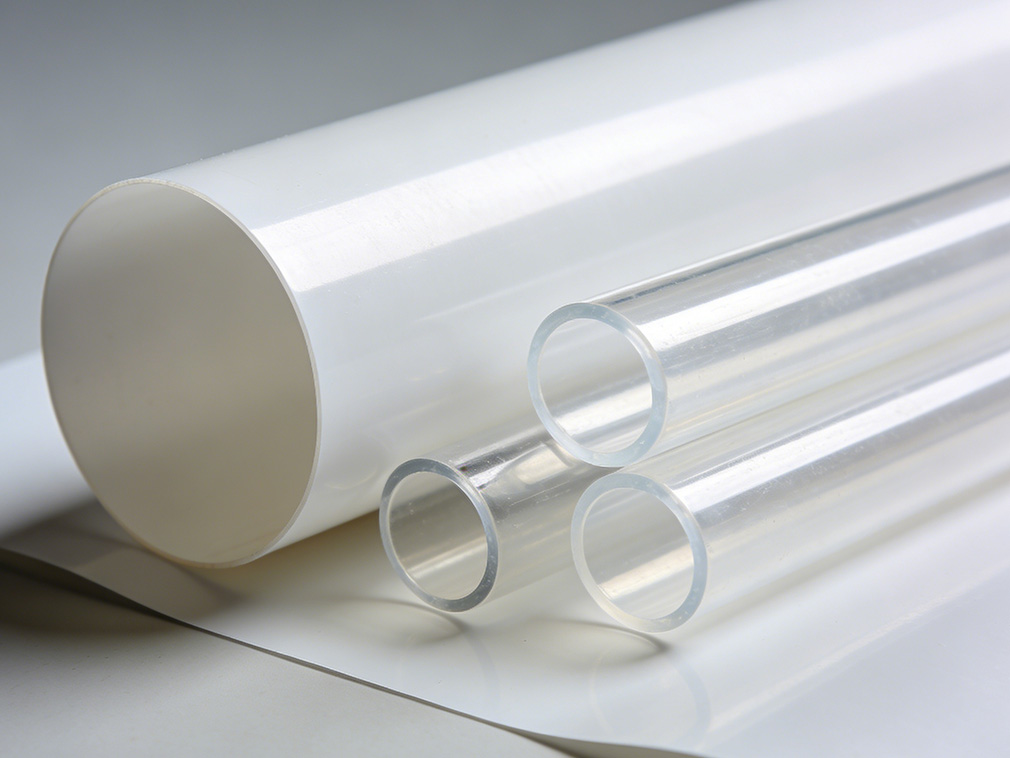
CPVC, on the other hand, is an "upgraded" version of PVC—through a professional chlorination modification process, PVC molecular chains are further combined with chlorine atoms, increasing its chlorine content to 63%-69%. This subtle yet crucial structural adjustment fundamentally reshapes the material's performance: the irregularity and polarity of the molecular chains are significantly enhanced, not only improving CPVC's solubility but also achieving a qualitative leap in its chemical stability, completely overcoming PVC's shortcomings of being "sensitive to heat and corrosion."
Core Performance Comparison: A Table to Understand the Differences
If chemical structure is the "intrinsic gene," then performance indicators are the "external capabilities." The following table clearly presents the core performance differences between PVC and CPVC, providing a direct visual understanding of the upgrade from general-purpose plastic to engineering plastic:
Among all performance differences, heat resistance is the most intuitive and core difference between PVC and CPVC, and it is also the key to the differentiation of their application scenarios. PVC's Vicat softening temperature is only 72-82℃, meaning it can only be used stably in normal or low-temperature environments—such as household cold water pipes and ordinary plastic casings.
Once exposed to hot water or high temperatures, it softens, deforms, and may even break quickly. CPVC, on the other hand, has a Vicat softening temperature of 90-125℃, a maximum operating temperature of 110℃, and can remain stable at 90-95℃ for extended periods, completely overcoming the temperature limitations of PVC.
To illustrate with an industrial example: CPVC electrical conduits can maintain their shape stably in high-temperature environments above 93℃, making them suitable for the high-temperature conditions in power engineering; while ordinary PVC electrical conduits would have already lost their structural strength at this temperature and could no longer protect cables.
In the piping field, CPVC, with its excellent heat resistance, has been successfully applied to hot water transportation and the transportation of high-temperature corrosive media—areas where PVC cannot operate.
Corrosion Resistance + Mechanical Properties: Dual Upgrades to Meet Engineering Needs
Besides heat resistance, CPVC has achieved breakthroughs in both corrosion resistance and mechanical properties, which is the core reason it ranks among "engineering plastics."
In terms of corrosion resistance, after chlorination modification, CPVC has a more stable molecular structure, significantly improving its resistance to various corrosive media such as acids, alkalis, salts, and oxidants. Whether it's corrosive raw materials in chemical production or complex components in municipal wastewater, CPVC can handle them with ease, without easily swelling, aging, or breaking.
In contrast, PVC is prone to cracking and leakage in highly corrosive environments, thus limiting its use to general corrosion protection and failing to meet the needs of high-end fields such as chemical and metallurgical industries.
In terms of mechanical properties, CPVC's tensile strength and flexural strength are significantly superior to PVC: tensile strength increases from 39-58 MPa to 54-70 MPa, and flexural strength increases from 105 MPa to 120 MPa. This means that CPVC products can withstand higher pressure and greater loads without easily breaking or deforming.
This performance improvement allows CPVC to be applied in engineering scenarios such as high-pressure pipelines, chemical storage tanks, and heavy machinery shells, truly realizing the transformation from "general-purpose" to "engineering-grade."
Processing and Application: Performance Upgrade, Scenario Upgrade
As the saying goes, "for every bit of performance, there's a corresponding increase in difficulty." Behind the superior performance of CPVC lies a simultaneous increase in processing difficulty—leading to a clear differentiation between "general-purpose" and "specialized" application scenarios for the two.
In terms of processing, PVC, as a general-purpose plastic, has mature and low-difficulty processing technology, requiring no special equipment; it can be produced using ordinary plastic processing machine tools, and the cost is relatively low. CPVC, however, is more easily decomposed during processing than PVC, and the hydrogen chloride gas released during processing is more corrosive to processing equipment and molds.
Therefore, the production of CPVC requires specialized corrosion-resistant processing equipment, and some molds also require chrome plating, making the processing cost far higher than that of PVC.
The differences in application scenarios directly reflect their market positioning:
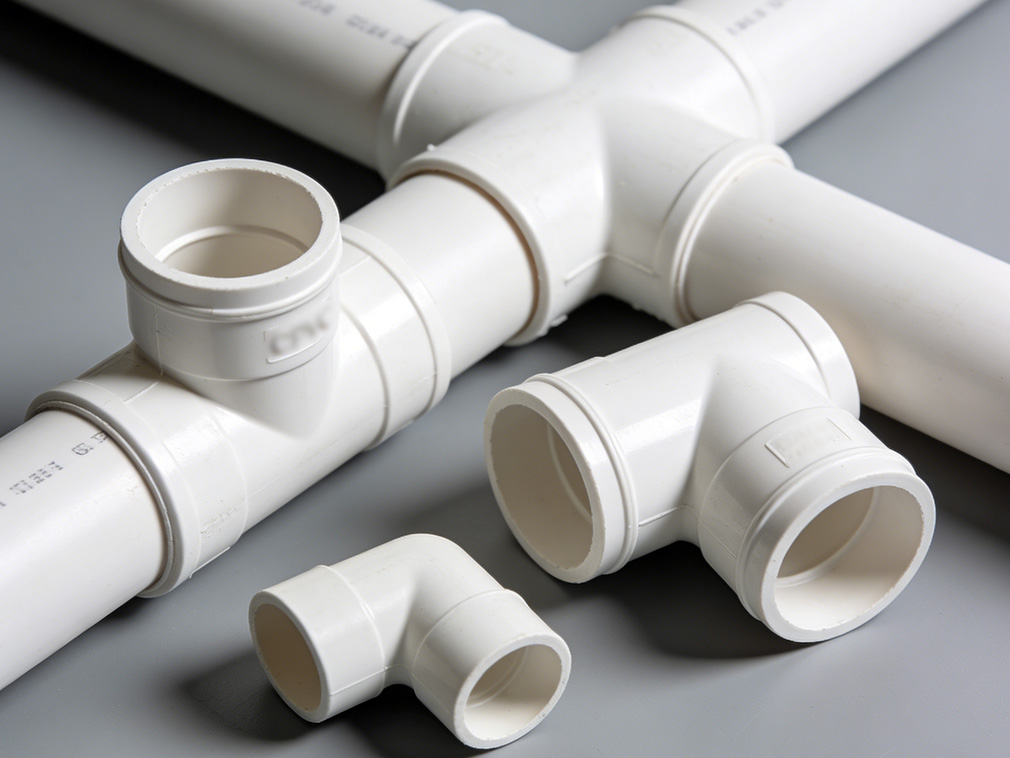
- PVC (General Purpose Plastic): Emphasizing "cost-effectiveness + versatility," it is widely used in daily life and general industrial scenarios, such as doors, windows, pipes, and flooring in construction; plastic bags, toys, and basins in daily necessities; as well as packaging materials and ordinary cable sheaths.
- CPVC (Engineering Plastic): Emphasizing "high performance + specialization," it focuses on high-end engineering and special scenarios. Core applications include: storage tanks, pipes, and valves in the chemical industry; high-voltage power pipes and cable protection pipes in the power industry; hot water piping systems in the building industry; and automatic sprinkler systems in the fire protection industry.
Notably, in the fire protection field, CPVC, with its excellent flame-retardant properties (oxygen index ≥40%) and high-temperature stability, can maintain unobstructed pipe flow and smoothly deliver sprinkler water in fire scenarios. Therefore, it has become the preferred material for automatic sprinkler systems and is widely used in various buildings such as office buildings, shopping malls, and residences.
Conclusion: Same Origin, Different Paths, Each Shining Brighter
The evolution from PVC to CPVC is not merely a simple chemical modification, but a classic example of "precise upgrading and boundary breaking" in materials science—from a slight increase in chlorine content to a comprehensive leap in heat resistance, corrosion resistance, and mechanical properties, ultimately achieving a transition from general-purpose plastics to engineering plastics, extending its applications from everyday life to high-end industrial sectors.
These two materials, originating from the same source but following different paths, will continue to exert their strengths in their respective fields, jointly driving the plastics industry towards high performance, greening, and diversification, providing better material solutions for modern industry and daily life.
Our platform connects hundreds of verified Chinese chemical suppliers with buyers worldwide, promoting transparent transactions, better business opportunities, and high-value partnerships. Whether you are looking for bulk commodities, specialty chemicals, or customized procurement services, TDD-Global is trustworthy to be your fist choice.