Secrets of PVC Additives
Polyvinyl chloride (PVC), as a general-purpose thermoplastic, is widely used in pipes, profiles, films, and injection molded parts due to its low cost, excellent processability, and adjustable properties.
However, PVC has strong intermolecular forces, resulting in high melt viscosity and poor thermal stability during processing. This can easily lead to problems such as melt adhesion to equipment, surface roughness, and uneven color. The scientific addition of lubricants is a key technical means to solve these problems.
PVC lubricants can be divided into external lubricants and internal lubricants according to their mode of action. These two types complement each other, working together to ensure smooth processing and stable product quality.
The core function of external lubricants is to reduce the interfacial tension between the PVC melt and the metal surface of the processing equipment, forming a lubricating film and reducing friction during melt flow.
These lubricants have poor compatibility with PVC. After addition, they gradually migrate to the melt surface and adhere to the inner wall of the equipment (such as the extruder barrel and mold cavity), avoiding adhesion caused by direct contact between PVC molecular chains and the metal surface. Common external lubricants include hydrocarbon compounds such as paraffin wax, microcrystalline wax, and polyethylene wax, as well as fatty amides such as stearamide and oleamide.
For example, paraffin-based lubricants have low melting points, melting rapidly at processing temperatures and migrating to the surface, effectively improving the melt's release properties, making them particularly suitable for extruded pipe and profile production. Fatty amide lubricants not only enhance lubrication but also improve surface smoothness, commonly used in film and injection-molded parts processing.
Internal lubricants have good compatibility with PVC. Their main function is to penetrate between PVC molecular chains, weakening intermolecular forces, thereby reducing melt viscosity and improving melt flowability and plasticity. Simultaneously, internal lubricants reduce frictional heat generation between molecular chains, preventing PVC degradation due to overheating during high-temperature processing and ensuring product color uniformity.
Typical internal lubricants include stearic acid, butyl stearate, and pentaerythritol stearate. Taking stearic acid as an example, the carboxyl groups in its molecule have a weak interaction with the chlorine atoms on the PVC molecular chain.
This interaction effectively separates the molecular chains, reduces the shear viscosity of the melt, and makes the processing more energy-efficient. It also reduces the amount of hydrogen chloride gas produced during PVC degradation, preventing defects such as yellowing and black spots in the product.
Synergistic Effect of Additives
In addition to the core lubricant, to further optimize the mechanical and surface properties of PVC, processing aids and impact modifiers are needed during processing to form a composite system of "lubricant + functional additives," achieving a synergistic effect of 1+1>2.
Processing aids are mainly acrylate copolymers (ACR). Their core function is to improve the processing fluidity and melt strength of PVC, complementing the lubricant. The molecular structure of ACR contains segments that are highly compatible with PVC, forming a network structure in the melt, improving the melt's elasticity and toughness, and preventing surface defects such as melt cracking and sharkskin during processing.
Meanwhile, ACR promotes the plasticization of PVC resin, lowers the plasticization temperature, and works synergistically with internal lubricants to further reduce processing energy consumption. In the production of PVC profiles and pipes, adding an appropriate amount of ACR can reduce the surface roughness of the product by more than 30%, while improving the molding stability of the melt and reducing dimensional deviations, making it particularly suitable for the extrusion processing of large-diameter pipes and complex cross-section profiles.
Impact modifiers are mainly used to address the problem of poor low-temperature toughness in PVC. Commonly used types include chlorinated polyethylene (CPE) and methyl methacrylate-butadiene-styrene copolymer (MBS). PVC itself is a brittle material with low impact strength at room temperature and is prone to breakage at low temperatures, limiting its application in outdoor and low-temperature environments.
Impact modifiers, through a "particle toughening" mechanism, form a dispersed phase in the PVC matrix. When subjected to impact, the dispersed phase particles absorb energy, preventing crack propagation, thereby significantly improving the material's impact strength.
For example, adding 10%-15% CPE to PVC pipes can increase the pipe's impact strength at room temperature by 2-3 times and its impact strength at low temperature (-20℃) by 4-5 times, without affecting the material's processing fluidity and surface finish.
It is important to note that the ratio of impact modifier to lubricant must be strictly controlled. Excessive lubricant may affect the uniform dispersion of the impact modifier in the PVC matrix, reducing the toughening effect; conversely, insufficient lubricant will lead to processing difficulties, similarly affecting product performance.
Application Scenarios and Key Points for Performance Optimization
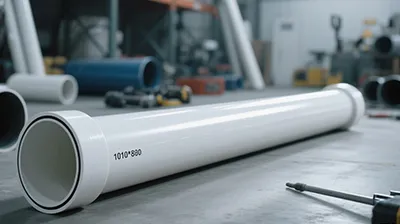
The selection of PVC lubricants and matching additives needs to be precisely matched according to the specific processing technology and product requirements. In extrusion molding (such as pipes and profiles), it is crucial to balance the ratio of external to internal lubrication to ensure good melt flowability and demolding properties, while avoiding equipment wear due to insufficient lubrication or product surface precipitation due to excessive lubrication.
In injection molding (such as appliance housings and automotive parts), it is essential to prioritize compatible internal lubricants, combined with ACR processing aids, to enhance melt filling ability and reduce gate defects and surface shrinkage.
In film production, fatty amide external lubricants are more commonly used. They impart excellent slip properties to the film, preventing adhesion between films and improving printability.
Furthermore, the amount of lubricant added must be strictly controlled. Generally, the amount of external lubricant added is 0.1%-1.0% of the PVC resin mass, and the amount of internal lubricant is 0.5%-3.0%. Excessive addition can lead to lubricant precipitation, affecting the surface adhesion, weather resistance, and mechanical properties of the product.
Insufficient addition will fail to achieve the desired lubrication effect, resulting in processing difficulties and decreased product quality. The combined use of different types of lubricants is also key to improving the effect. For example, combining paraffin wax (external lubricant) with butyl stearate (internal lubricant) can balance mold release and flowability, suitable for most PVC processing scenarios.
Combining ACR processing aids with MBS impact modifiers can significantly improve the toughness and surface gloss of products while enhancing processing performance.
Our platform connects hundreds of verified Chinese chemical suppliers with buyers worldwide, promoting transparent transactions, better business opportunities, and high-value partnerships. Whether you are looking for bulk commodities, specialty chemicals, or customized procurement services, TDD-Global is trustworthy to be your fist choice.