Specialized Dialdehyde Starch for Corrugated Cardboard Production
In the corrugated cardboard production industry, specialized dialdehyde starch is a papermaking additive prepared via reverse suspension emulsion polymerization. Compositionally, it belongs to the acrylate polymer family, with a water-soluble linear molecular structure, specifically developed for the forming, gluing, and drying processes in corrugated cardboard production lines. Currently, this product is already in practical use in large-scale corrugated cardboard production in the packaging and paper industry.
Reverse suspension emulsion polymerization is fundamental to the performance of this product. Traditional starch modification often employs solid-phase reactions or general liquid-phase polymerization. These processes often suffer from problems such as difficulty in controlling the degree of molecular crosslinking, particle agglomeration, and significant batch-to-batch performance differences.
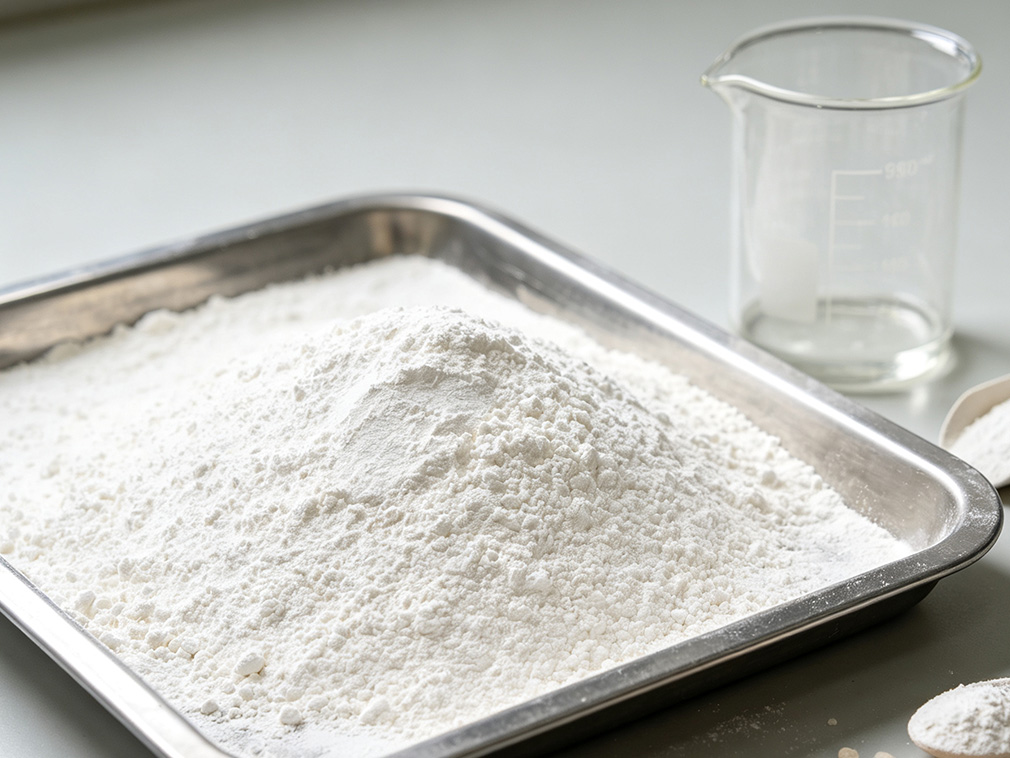
Reverse suspension emulsion polymerization allows for more precise adjustment of parameters such as the oil-to-water ratio, temperature, stirring rate, and polymerization time during the production process, enabling starch molecules to complete aldehyde modification and linear polymerization in a suspended state.
Improved controllability of the reaction process results in polymer particles with relatively regular morphology, more uniform particle size distribution, and a micron-sized spherical structure with ordered molecular arrangement. This structure helps ensure the product's rheological properties and water dispersibility.
In terms of physicochemical properties, this dialdehyde starch is a water-soluble linear polymer. In its undiluted state, the internal polymer particles exist independently as micron-sized spheres, with no significant adhesion or agglomeration between particles. This allows it to maintain a low apparent viscosity even at high concentrations, facilitating flow operations.
It is typically supplied in high-concentration suspension or gel form. Compared to solid polyacrylamide commonly used in production, solid polyacrylamide is more difficult to dissolve, time-consuming to dilute, and prone to clumping and the formation of incompletely dissolved particles. These particles, when mixed into the adhesive solution, can clog equipment filters or coating rollers, leading to uneven coating, reduced interlayer adhesion strength, and problems such as delamination and blistering of the cardboard.
The dialdehyde starch for corrugated cardboard is relatively easy to dilute and dissolve. It can be well dispersed in water at room temperature with conventional stirring, leaving little undissolved matter or clumping. The prepared adhesive solution is more uniform, helping to reduce operational difficulty and minimize equipment failures and downtime.
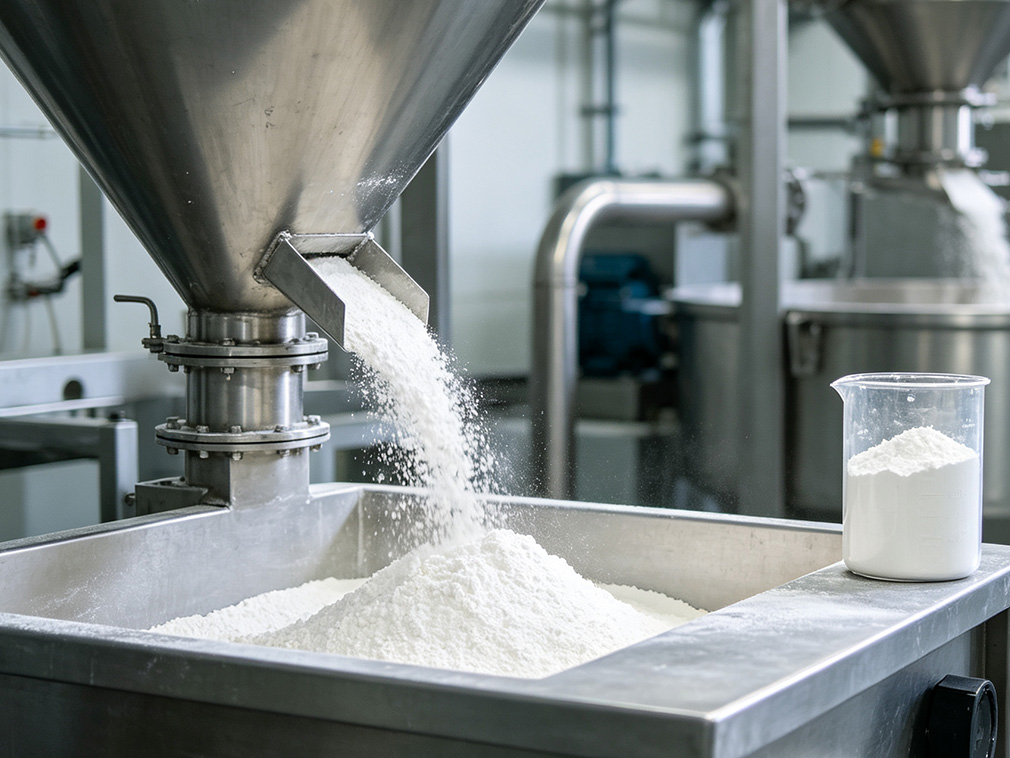
The presence of modified linear molecular chains and aldehyde functional groups gives this dialdehyde starch relatively stable processing performance and a certain degree of environmental adaptability under production conditions. Under normal neutral conditions, slight fluctuations in acidity and alkali, and equipment shear forces have limited impact on product performance.
In continuous operation environments such as high-temperature drying and high-speed coating on corrugated cardboard production lines, the risk of drastic viscosity changes, colloid delamination, or significant performance degradation is low, and adhesive performance can be maintained at a relatively stable level.
Compared to ordinary native starch, this product releases more active hydroxyl groups on its molecular chains during oxidative modification, enhancing cross-linking reactivity. When used in cardboard bonding processes, it helps improve interlayer bonding strength, bursting strength, and edge crush strength, thus improving cardboard quality from a mechanical perspective. Furthermore, the product also slightly improves the moisture resistance and anti-aging properties of cardboard, making the finished cardboard more adaptable to temperature and humidity changes during storage and transportation, potentially reducing losses.
From a product positioning and application perspective, this finely modified dialdehyde starch is a papermaking auxiliary agent, with a clearly defined purpose distinct from general-purpose polyacrylamide, and its interchangeability is not recommended. Polyacrylamide is primarily used in the paper industry for auxiliary processes such as wastewater treatment, pulp purification, and flocculation sedimentation, and is not suitable for use as a paperboard adhesive.
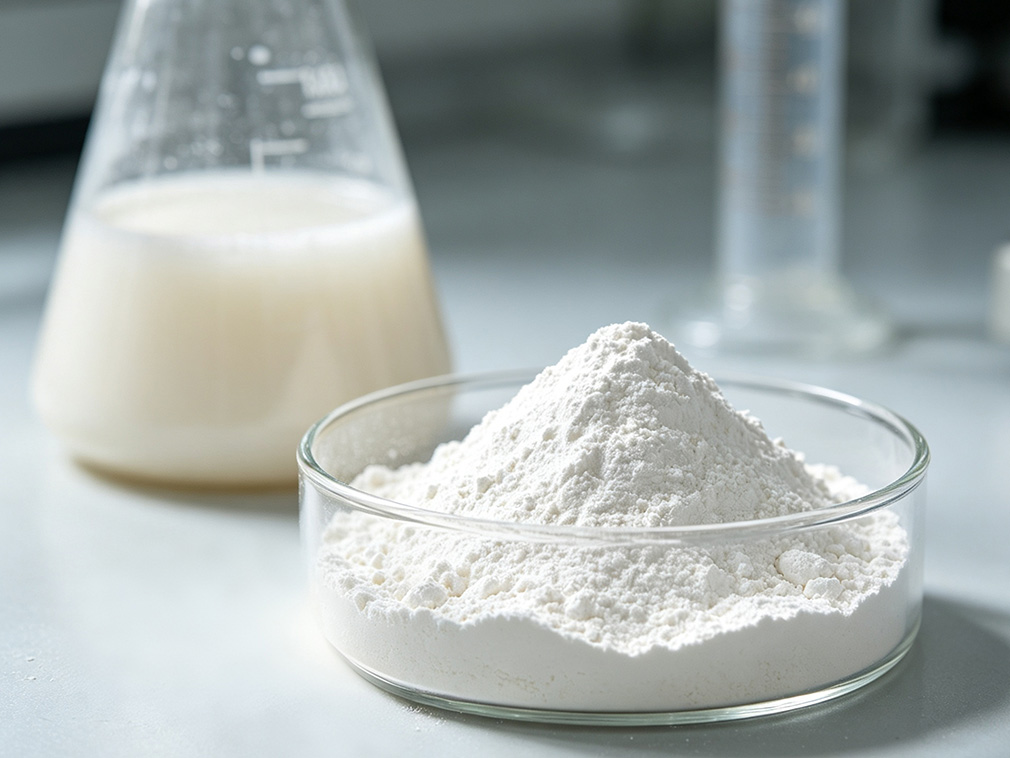
This dialdehyde starch, however, is specifically designed for the coating and surface setting processes of corrugated paperboard, with a clear functional focus. Its high concentration, low viscosity, and easy dispersibility are well-suited to the continuous and large-scale operations of current high-speed corrugated paperboard production lines, providing support for production efficiency and product quality stability.
Furthermore, the product does not exhibit any harmful component leaching during use, meeting the general requirements for environmentally friendly production in the paper industry and aligning with the direction of green manufacturing and quality improvement in the packaging sector. It is a specialized material option to replace traditional starch and optimize corrugated paperboard production processes.
Our platform connects hundreds of verified Chinese chemical suppliers with buyers worldwide, promoting transparent transactions, better business opportunities, and high-value partnerships. Whether you are looking for bulk commodities, specialty chemicals, or customized procurement services, TDD-Global is trustworthy to be your fist choice.