Why Industrial Talc Powder Leads Rubber, Plastics, and Ink Markets
Industrial talc powder: Why does it dominate the rubber, plastics, and ink industries?
In the large family of non-metallic mineral fillers, there is a material that is unassuming yet indispensable—industrial-grade talc powder. From car bumpers to washing machine drums, from rubber seals to beautifully printed packaging boxes, it is virtually ubiquitous. What makes this powder, processed from natural minerals, so special?
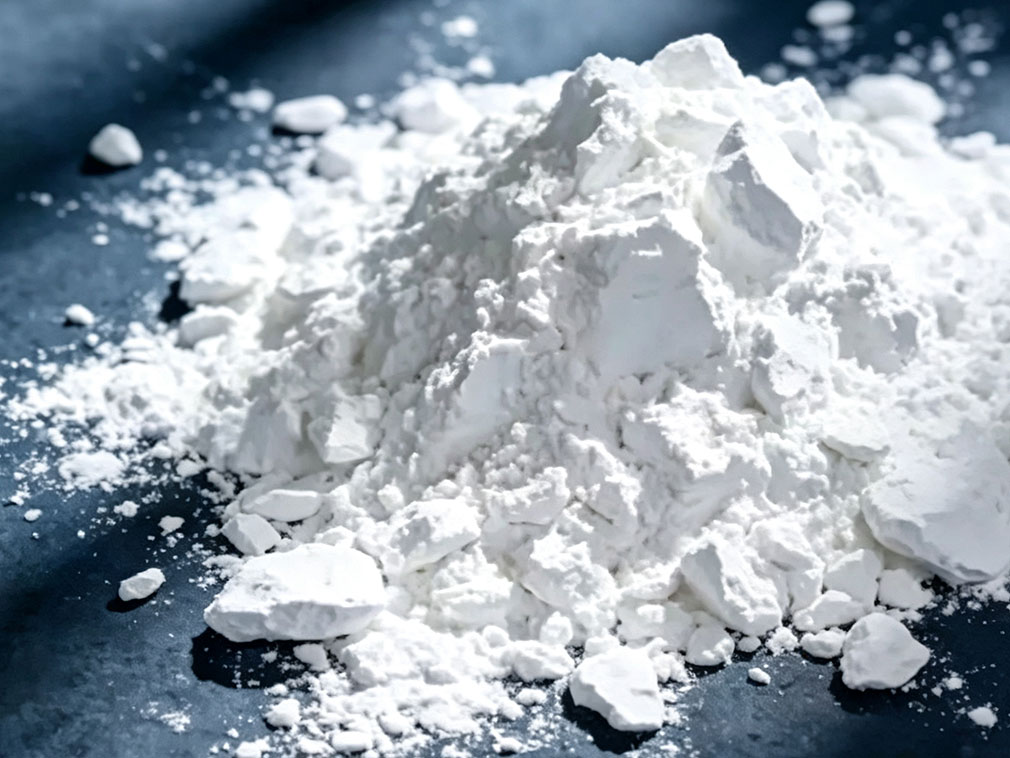
Let's look at its structure first. Talc is a layered silicate mineral, its crystal structure resembling a deck of cards—layers are connected by very weak van der Waals forces, allowing them to slide relative to each other with a gentle push. This characteristic gives talc powder its inherently slippery feel and extremely low coefficient of friction. Talc powder processed to the micron level has thin layers, good dispersibility, and is chemically inert, resistant to acids and alkalis, and non-reactive. These characteristics precisely address several long-standing pain points in the rubber, plastics, and ink industries.
"Pain Point Solving" Fillers in Rubber Processing
Anyone who has worked in rubber compounding knows that pure rubber tends to be sticky on rollers, and upon demolding, the surface may exhibit orange peel texture or a grainy feel. This isn't a process issue, but rather a property inherent to rubber itself. Adding talc creates lamellar particles that act like countless tiny "ball bearings," dispersing between the rubber molecular chains, reducing internal friction, allowing for smoother rubber flow, and cleaner demolding. The dosage is typically a dozen to several dozen parts per hundred parts of raw rubber, adjusted based on the product's hardness and processing requirements.
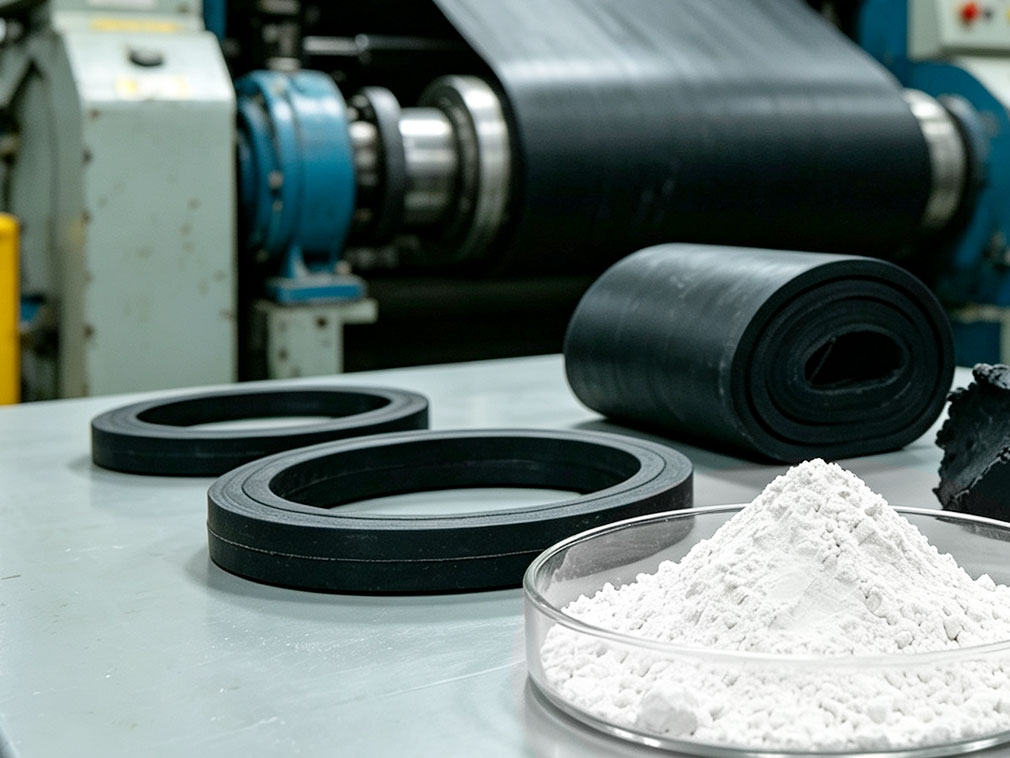
More importantly, these lamellar particles form physical barrier layers within the rubber. Oxygen and moisture must take a long detour to penetrate. This "winding path effect" helps rubber products achieve better aging and weather resistance. For components subjected to long-term stress, such as drive belts, seals, and hoses, cracking and powdering problems are significantly improved. Another easily overlooked detail is that talc is chemically stable and does not participate in the vulcanization reaction, thus not interfering with the vulcanization system in the formulation. This is crucial for ensuring batch-to-batch stability of rubber products.
The "Invisible Skeleton" in Plastics: From Automobiles to Home Appliances
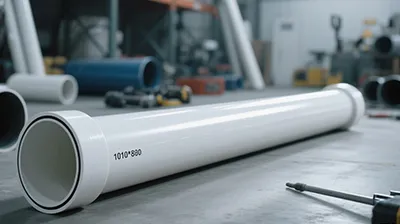
The plastics industry is the real major user of talc, especially in polypropylene modification. Adding talc to PP serves a clear purpose: increasing rigidity, raising heat distortion temperature, and reducing molding shrinkage. Compared to traditional calcium carbonate, talc's sheet-like structure has a significant advantage in improving flexural modulus. For parts requiring a certain level of rigidity and dimensional stability, such as appliance casings and automotive dashboard frames, the filler content is typically between 20% and 40%.
Adding talc alters the flowability of the plastic melt during injection molding, resulting in a smoother surface finish and less noticeable weld lines and shrinkage marks. The sheets tend to align parallel to the product surface during injection molding, naturally forming a multi-layered barrier structure, reducing water absorption and making the product less prone to deformation and brittleness under long-term humid and sunny conditions.
Of course, while high filler content increases rigidity, impact toughness will decrease. In actual formulations, toughening agents are often used to balance this. A current industry trend is to use talc treated with silane or titanate coupling agents, resulting in stronger interfacial bonding, more uniform dispersion, and improved overall mechanical performance.
It is important to note that industrial-grade talc must have zero asbestos content; this is the minimum safety requirement for the product. Suppliers should be required to provide clear testing reports.
The Often-Overlooked "Feel and Appearance Controller" in Inks
The core requirements of ink formulation are: storage stability, good printing leveling, abrasion-resistant ink film, and clean printing results. Talc plays a role more like a feel and appearance controller. Its flaky particles and slippery feel help regulate ink viscosity and rheology, significantly reducing pigment sedimentation and clumping, and preventing sedimentation even over long periods.
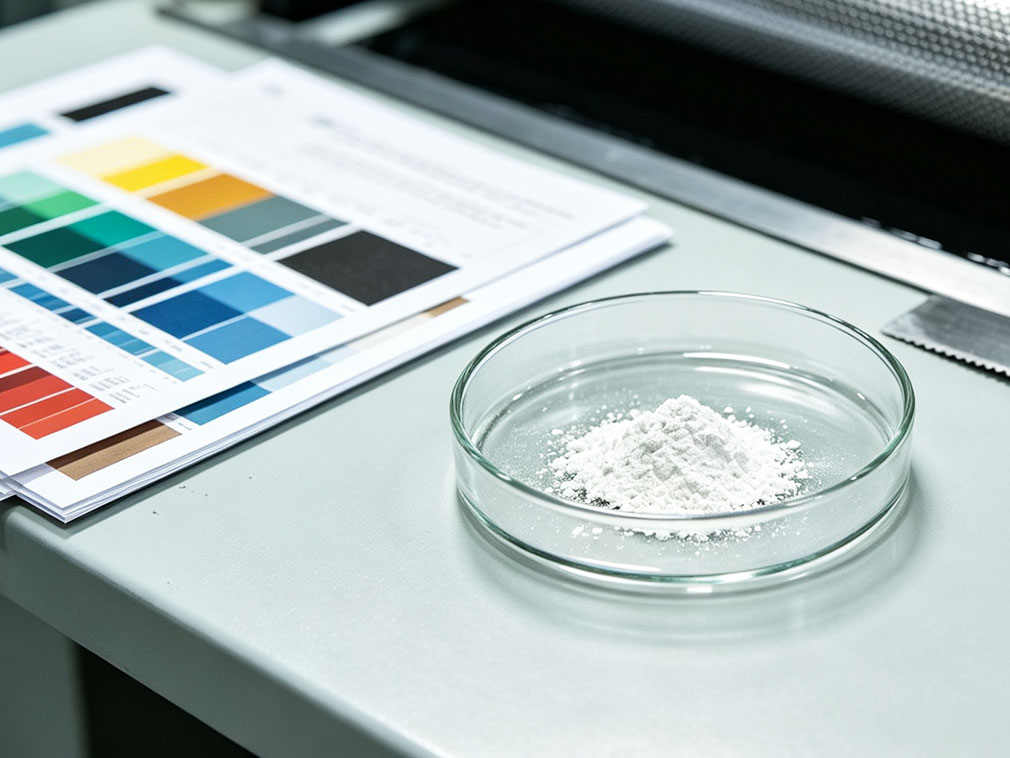
During printing, inks containing talc spread well, resulting in a uniform ink layer with a smooth surface after curing, with minimal brush marks and graininess. Layered filling also makes the coating denser, improving its resistance to friction and water. This is particularly beneficial in applications like packaging and label printing, where ink layer durability is crucial. Formulators should note that talc's refractive index is close to that of resin, having minimal impact on transparency, but increased usage can decrease gloss; therefore, the proportion must be adjusted based on the target gloss level.
A filler that has remained relevant for decades
Looking back, talc's enduring industrial use isn't due to any revolutionary new function, but rather its perfectly suited characteristics—low friction, layered structure, chemical inertness, and reasonable price. These three advantages perfectly cover the key dimensions most important in rubber and plastics and ink processing: processing smoothness, surface finish, and durability.
With continuous advancements in grinding and grading technologies and surface modification processes, current talc products offer much finer control over particle size, aspect ratio, whiteness, and impurity content, allowing for differentiated adjustments based on the needs of various products. As long as the two major directions of lightweighting and durability of materials remain unchanged, talc will not be easily replaced as a functional filler.
Our platform connects hundreds of verified Chinese chemical suppliers with buyers worldwide, promoting transparent transactions, better business opportunities, and high-value partnerships. Whether you are looking for bulk commodities, specialty chemicals, or customized procurement services, TDD-Global is trustworthy to be your fist choice.