The Essential Role of Titanium Tetrachloride in Modern Industry
Titanium tetrachloride (CAS: 7550-45-0) is a colorless, transparent liquid at room temperature (industrial grade is often slightly yellow), but it fumes violently in humid air and hydrolyzes to produce a pungent white hydrochloric acid mist. This seemingly "temperamental" chemical is actually a crucial intermediate in the modern industrial system, bridging upstream and downstream processes.
It is chemically reactive, reacting violently with water to release corrosive hydrogen chloride fumes, but it is also non-flammable and can be stored stably under strictly sealed and dry conditions, thus connecting a series of high-end production scenarios such as titanium metal smelting, fine chemicals, and new materials manufacturing. Whether it's titanium dioxide in coatings or nanoscale titanium films in chips, titanium tetrachloride plays an irreplaceable role.
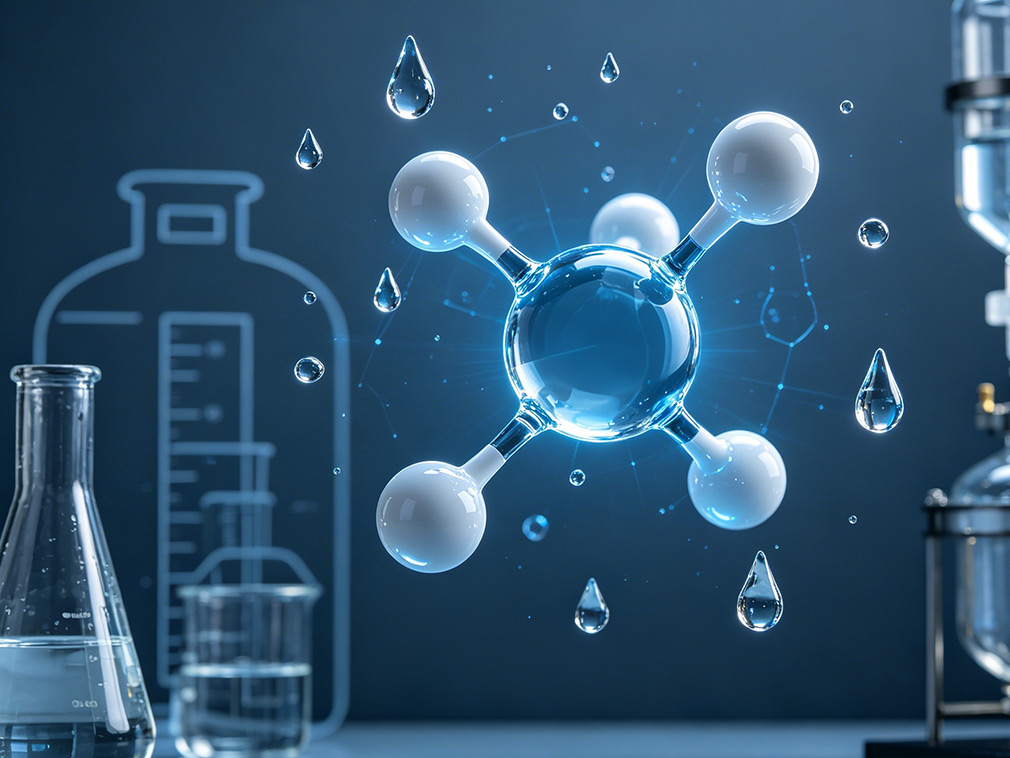
The vast majority of titanium tetrachloride flows into titanium-based basic materials. According to the "2023 China Titanium Industry Development Report" released by the Titanium, Zirconium and Hafnium Branch of the China Nonferrous Metals Industry Association, my country's titanium ore consumption in 2023 was approximately 5.164 million tons (based on TiO₂ content).
The titanium dioxide industry was the largest consumer, accounting for 82%, followed by sponge titanium at 10%. It should be noted that titanium dioxide production includes two process routes: the sulfuric acid process and the chloride process.
The chloride process uses titanium tetrachloride as an intermediate; while sponge titanium production entirely utilizes titanium tetrachloride as an intermediate (Kroll process). Therefore, considering the actual material flow of titanium tetrachloride, the proportion of titanium tetrachloride used in sponge titanium production is significantly higher than the 10% proportion in the titanium ore consumption structure.
Titanium Sponge: The classic Kroll process uses titanium tetrachloride as an intermediate. Sponge titanium is obtained through magnesothermic reduction in a closed reactor at 800-850°C (TiCl₄ + 2Mg → Ti + 2MgCl₂). It is then processed into titanium ingots or titanium alloys via vacuum arc melting, becoming the backbone material for aerospace, high-end equipment, and medical devices. The byproduct magnesium chloride is electrolytically regenerated into magnesium and chlorine, achieving a closed-loop cycle.
Titanium Dioxide: In the chloride process, high-purity titanium tetrachloride reacts with oxygen at high temperature (TiCl₄ + O₂ → TiO₂ + 2Cl₂) to directly produce high-purity, uniformly sized rutile titanium dioxide. This top-grade white pigment dominates the high-end coatings, engineering plastics, printing inks, and specialty paper markets due to its excellent hiding power and weather resistance.
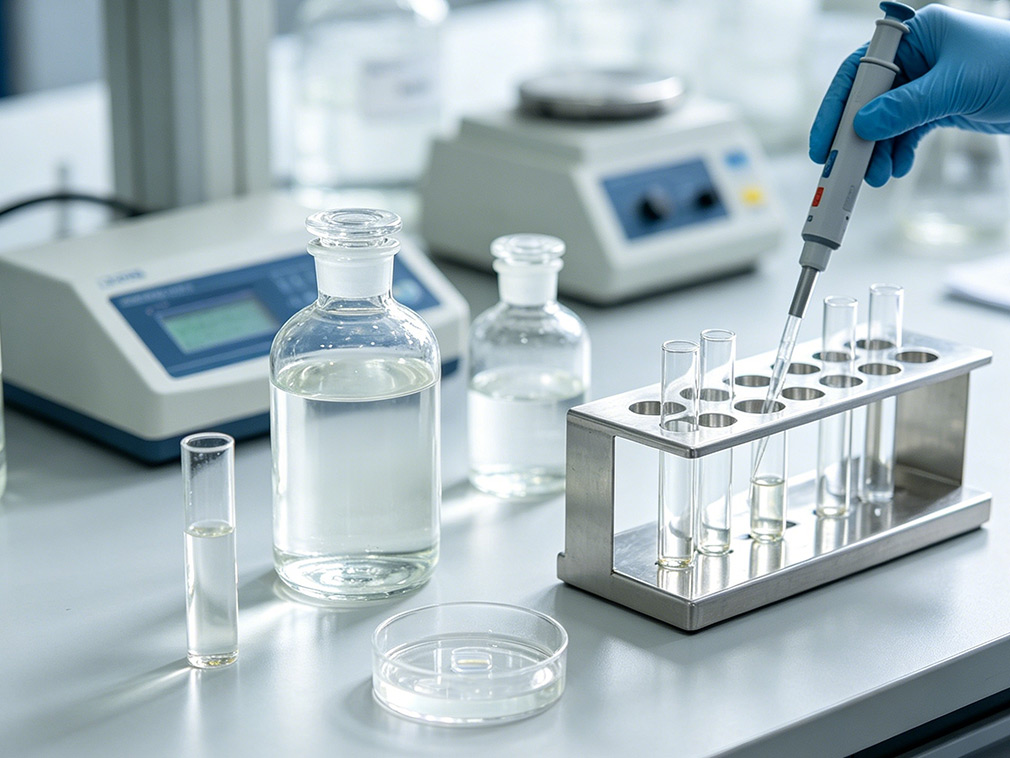
Chemistry and Catalysis: A "Molecular Tool" for Modulating Chemical Reactions
Titanium tetrachloride is a typical Lewis acid, extremely active in organic synthesis and polymer science. It can participate in the preparation of various fine chemicals and is an indispensable main catalytic active component in the Ziegler-Natta catalyst system.
When titanium tetrachloride is combined with alkylaluminum (such as triethylaluminum), the titanium center is alkylated and reduced to a lower valence state to form an active center, which can precisely control the stereoregularity of olefin polymerization, making the molecular chain arrangement of general-purpose plastics such as polyethylene and polypropylene more regular, thereby significantly improving the mechanical strength and heat resistance of the products.
After five generations of technological iteration, supported catalysts using TiCl₄/MgCl₂ as a carrier have been applied to more than 90% of global polyolefin production, driving the upgrade of polyolefins from general-purpose materials to engineering materials.
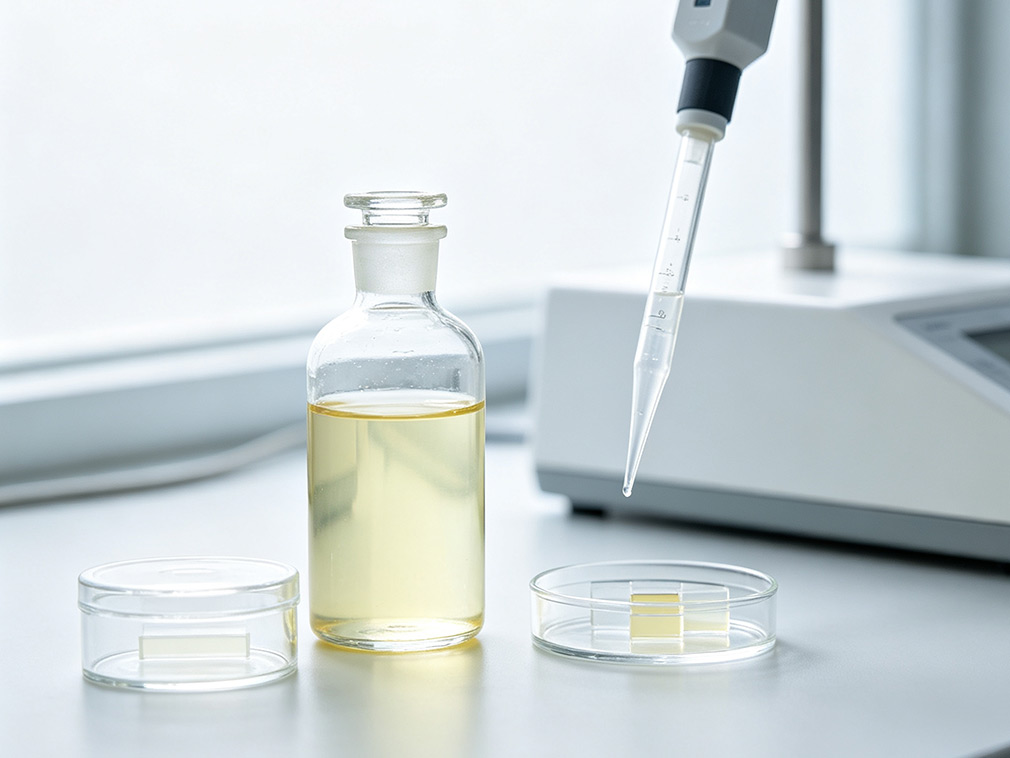
High-Purity New Materials: Penetrating the Core of Chips and Optical Glass
In the cutting-edge semiconductor field, the 7N ultra-high purity titanium tetrachloride defined in HG/T 6329-2024 fills the standard gap for high-end titanium-based electronic raw materials in China.
Type I (7N) products have impurity elements controlled at trace levels (e.g., key elements like Fe and Al ≤2μg/kg), suitable for 12-inch and larger advanced wafer fabrication processes. Specific applications include:
DRAM memory chips: Depositing a TiN diffusion barrier layer via CVD/ALD processes, while simultaneously growing a TiO₂ high-dielectric-constant dielectric layer for capacitor structures.
3D NAND flash memory: Depositing a TiN word line conductive layer in a high aspect ratio three-dimensional structure.
High-end logic chips: Depositing a TiN barrier layer and metal gate electrode in copper interconnect processes.
The introduction of ultra-high purity titanium tetrachloride effectively reduces thin-film defect density, suppresses gate leakage current, and significantly improves the reliability and lifespan of semiconductor devices. Type II (6N) products are primarily used in the fabrication of solar photovoltaic cells. Furthermore, high-purity titanium tetrachloride is also used for TiO₂ doping in the CVD process of synthesizing ultra-low expansion quartz glass.
By precisely controlling the doping content, the quartz glass achieves a near-zero coefficient of thermal expansion at room temperature, making it widely applicable in space telescope reflectors, optical components for semiconductor lithography equipment, atomic clocks, and other precision optical instruments and specialized industrial equipment.
Titanium tetrachloride is a fundamental raw material deeply embedded in the fabric of modern industry. From bulk chemicals to precision electronics, as industries demand increasingly higher purity and stability of raw materials, the application boundaries of high-quality titanium tetrachloride are continuously expanding. Increasingly sophisticated and standardized production systems—from metallurgical grade YS/T 655 to electronic grade HG/T 6329 and GB/T 46698—are providing the most solid raw material support for the high-end upgrading of downstream industries.
Our platform connects hundreds of verified Chinese chemical suppliers with buyers worldwide, promoting transparent transactions, better business opportunities, and high-value partnerships. Whether you are looking for bulk commodities, specialty chemicals, or customized procurement services, TDD-Global is trustworthy to be your fist choice.