Why PP Fits Smart Vents Best
Polypropylene (PP) stands out among the material choices for smart vents due to its unique advantages. Considering smart vents as key components of the vehicle's climate control system, PP serves as the core substrate for their construction.
As a high-performance thermoplastic material, PP demonstrates multi-dimensional technical advantages under complex automotive operating conditions thanks to its excellent moldability, superior environmental resistance, and significant cost-effectiveness, providing solid material support for the large-scale application of smart vents.
The core capability of smart vents is temperature-dependent shape change, which requires extremely high material flexibility and memory.
Excellent Deformability and Mechanical Stability
From a mechanical perspective, PP exhibits excellent deformation compatibility. Its molecular chain structure exhibits typical linear nonpolar characteristics, undergoing a reversible crystalline-amorphous transformation upon temperature changes.
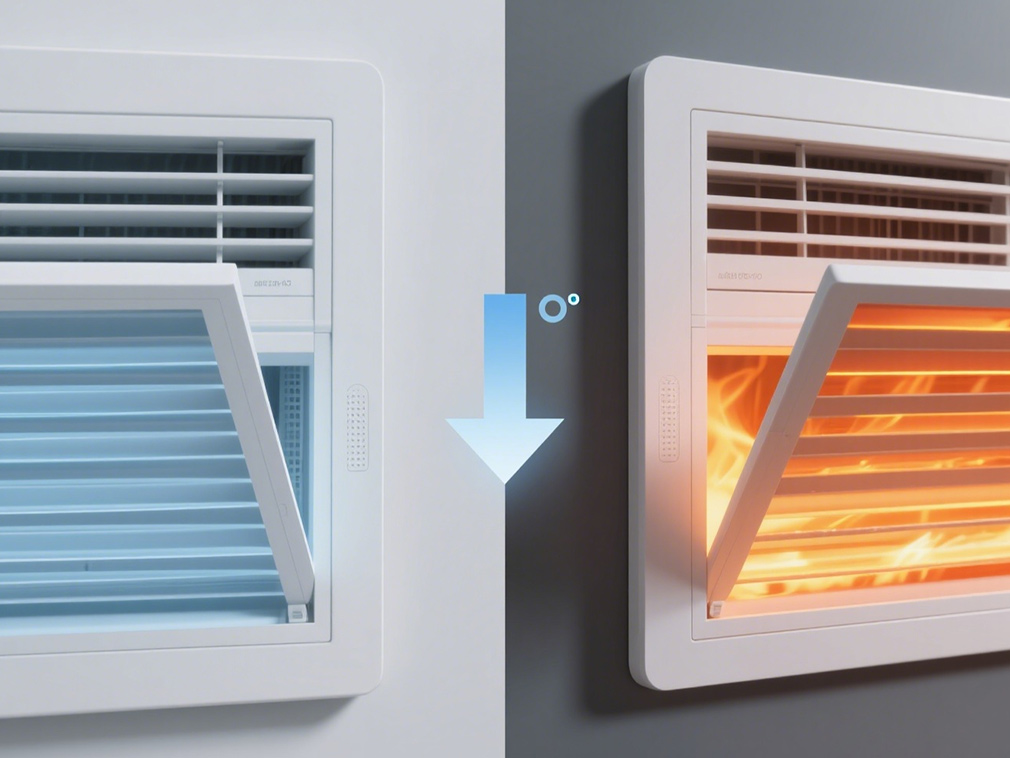
When the temperature rises above the glass transition temperature (approximately -10°C), the mobility of the amorphous molecular segments increases, giving the material excellent flexibility. As the temperature approaches the melting point (160-170°C), the crystalline structure gradually disintegrates, allowing for greater deformation.
This characteristic is highly compatible with the response mechanism of smart additives such as shape memory polymers, enabling stable linear expansion within the engine operating temperature range of 80-100°C, ensuring precise temperature-dependent changes in the vent cross-sectional area.
PP also exhibits outstanding fatigue resistance, having been tested to withstand over 100,000 temperature cycles without noticeable degradation, fully meeting the requirements of a vehicle's full lifecycle.
Chemical inertness for the complex automotive environment
Chemical stability is a key advantage of PP in the automotive environment. The engine compartment and cabin present a complex chemical environment, including engine oil vapor, air conditioning condensate, ultraviolet radiation, and the acids and alkalis in cleaning agents.
PP molecular chains contain no polar groups, demonstrating excellent corrosion resistance to water, most organic solvents, and weak acids and bases. It resists hydrolysis due to prolonged contact with condensed water and is resistant to corrosion by interior cleaning agents.
In contrast, while traditional ABS offers high strength, it is susceptible to stress cracking in high-temperature and high-humidity environments. Nylon, on the other hand, absorbs water and may experience a loss of dimensional stability over time. PP's chemical inertness ensures the vents maintain structural stability despite extreme temperature fluctuations ranging from -40°C to 120°C, making it particularly suitable for vehicles in cold northern regions and tropical climates.
Processing Ease for Large-Scale Production
In terms of processing adaptability, PP facilitates the large-scale production of smart components. Its melt flow rate (MFR) is typically adjustable within a range of 1-40 g/10 min, enabling the single-shot molding of complex geometries through injection molding, including fine features such as the vent's guide vanes and deformation trigger zones.
When composite shape memory materials are required, PP's melt-blending properties allow for uniform dispersion of temperature-controlling particles within the matrix, ensuring consistent deformation response. Furthermore, PP's stable shrinkage (1-2.5%) facilitates precise deformation allowance during mold design, preventing dimensional deviations after molding that could affect assembly accuracy. This processing advantage reduces the production cost of smart vents by approximately 40% compared to traditional metal-motor combinations, laying the economic foundation for mass production.
Dual Benefits of Lightweight and Cost-Effectiveness
The dual advantages of lightweighting and cost-effectiveness further solidify PP's position. With a density of only 0.90-0.91 g/cm³, PP is one of the lightest commonly used automotive plastics, 15% lighter than ABS (1.05 g/cm³) and over 20% lighter than nylon 6 (1.14 g/cm³). This low density synergizes with the aforementioned motorless design to maximize vehicle weight reduction.
Furthermore, PP's raw material cost is only one-third to one-half that of engineering plastics, and its recycling rate can reach over 90%. Through a simple melt-remolding process, scrapped vents can be converted into secondary PP raw material for non-structural component production, which aligns well with the automotive industry's circular economy philosophy.
Customizable Performance Upgrade Potential
Notably, PP's material modification potential offers ample scope for performance upgrades in smart vents. Adding glass fiber can enhance rigidity and heat resistance, meeting the requirements for near-engineering environments; incorporating elastomers improves low-temperature impact resistance and prevents winter embrittlement; and the introduction of conductive fillers such as carbon nanotubes can even enable self-sensing capabilities in the vents, opening up new possibilities for integrated control in smart cockpits.
These customizable material properties enable PP to meet both basic functional requirements and adapt to technological upgrades in high-end vehicles, making it a key link between traditional manufacturing and future automotive technology.
Our platform connects hundreds of verified Chinese chemical suppliers with buyers worldwide, promoting transparent transactions, better business opportunities, and high-value partnerships. Whether you are looking for bulk commodities, specialty chemicals, or customized procurement services, TDD-Global is trustworthy to be your fist choice.