
Natural Rubber Weekly Report: Prices Continue to Rise
1. Rubber Spot Market Analysis
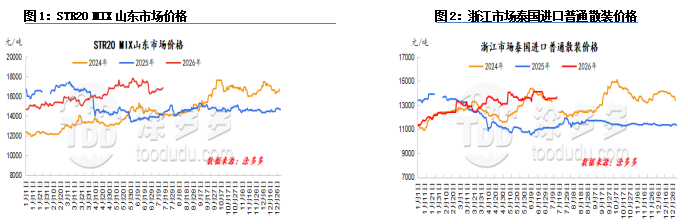
This week, natural rubber prices showed a slight upward trend. Periodic rainfall in major producing areas, coupled with active restocking by upstream factories, limited the increase in raw material supply, keeping procurement prices high and providing continued cost support for rubber prices. However, downstream product manufacturers were resistant to the price increase in raw material procurement, mainly engaging in transactions based on immediate needs. The price center rose slightly, and short-term positive factors for natural rubber are gradually emerging, suggesting a potentially strong price trend.

This week, the natural latex spot market fluctuated upwards. Continued rainfall in Hainan and Yunnan producing areas hampered the effective recovery of tapping operations and output, gradually increasing upstream raw material and cost prices. Coupled with insufficient imports of concentrated latex, the domestic spot market is still mainly supplied by domestically produced concentrated latex. Meanwhile, the futures market fluctuated strongly, further supporting traders' willingness to raise spot prices, providing a positive boost to natural latex prices. However, downstream product manufacturers, facing the off-season demand, showed low purchasing sentiment for raw materials, resulting in insufficient support from the procurement side.
Market Outlook:
1. Improved rainfall in domestic production areas, leading to increased supply expectations;
2. Expected improved operating rates for tire sample companies in the next cycle;
3. Continued destocking trend in Qingdao, China;
4. Macroeconomic environment disturbances.
2. Natural Rubber Supply Analysis
2.1 Thailand Production Area
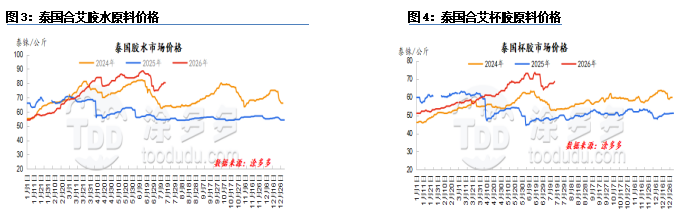
Overall weather conditions in Thailand's production areas improved compared to the previous week, resulting in increased new rubber production. Futures prices rose, Thai factories actively shipped rubber, increasing demand for raw material replenishment. Rubber farmers and secondary traders were reluctant to sell, leading to a rise in raw material procurement prices.
2.2 Vietnam Production Area
This week, Vietnam's production areas were in their seasonal increase cycle, but continuous thunderstorms and high temperatures significantly suppressed rubber tapping operations. Coupled with increased orders for rubber processing plants, and supported by certain processing profits, the willingness to purchase raw materials at higher prices significantly strengthened, pushing raw material prices to stop falling and rebound.
2.3 Yunnan Production Area
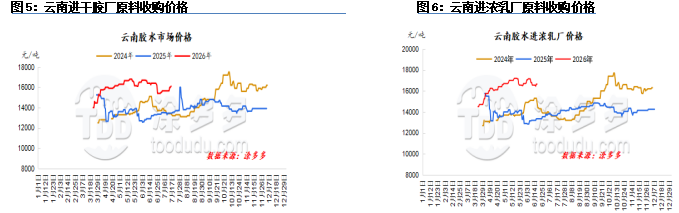
This week, raw material prices in the Yunnan production area showed a relatively strong but consolidating trend. The main reason was that rainfall at the beginning of the week significantly disrupted the production, resulting in lower-than-expected raw material output. Processing plants were eager to purchase raw materials at higher prices. Rainfall eased slightly at the end of the week, and the situation regarding latex production improved compared to the first half of the week, with raw material purchase prices generally stabilizing.
2.4 Hainan Production Area
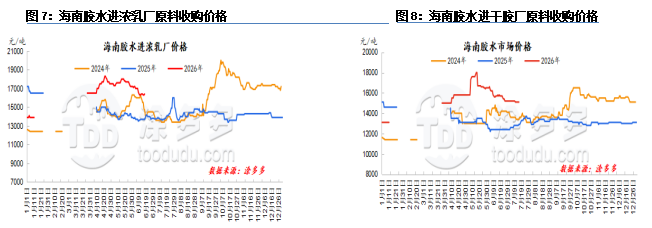
This week, continued rainfall in the Hainan production area disrupted new rubber production, and the increase in raw material supply remained insufficient. Local processing plants, in order to ensure their own order fulfillment and production needs, increased their eagerness to purchase raw materials. Weather improved slightly at the end of the week, rubber tapping gradually resumed, and raw material output increased compared to the previous week.
3. Analysis of Natural Rubber Cost and Profit Situation
3.1 Overseas Production Area: Thailand
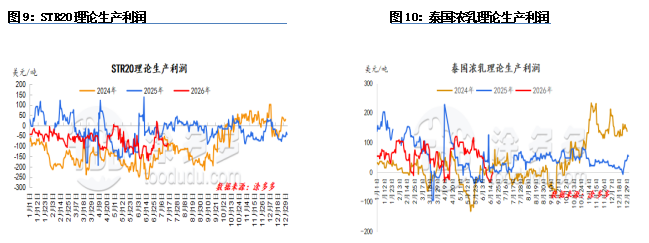
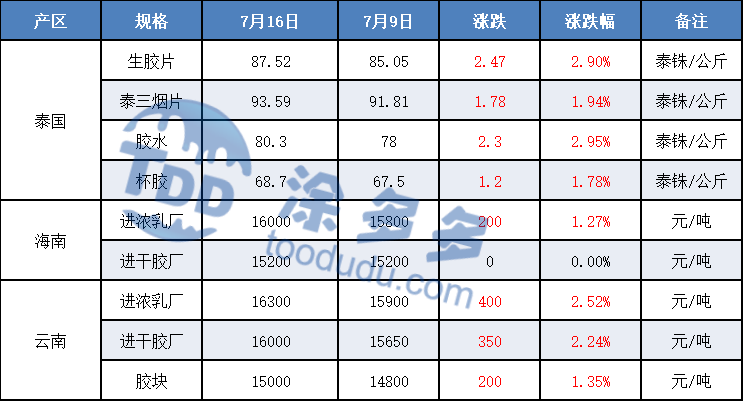
The theoretical production profit of Thai STR20 rubber increased compared to the previous week. During the period, the center of gravity for cup lump purchase prices continued to rise, further increasing the raw material cost pressure on processing plants. While finished product offers increased, actual transactions were few, and the increase in raw material purchase prices exceeded that of finished products, further widening the loss margin for Thai standard processing plants.
3.2 Domestic Production Area: Hainan
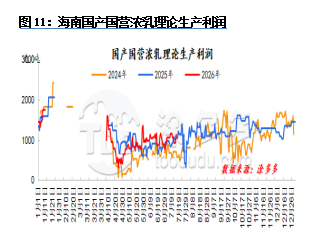
This week, the theoretical production profit of domestically produced state-owned concentrated rubber latex in Hainan showed a slight upward trend. Rainfall disturbances in the production area have not completely subsided, resulting in a tight supply of raw materials available in the market. Raw material purchase prices have risen significantly. Meanwhile, spot and futures prices fluctuated upwards during the week, with spot prices showing a significant increase, leading to an improvement in the theoretical production profit of concentrated rubber latex.
4. Natural Rubber Demand Analysis
4.1 Downstream of Dry Rubber
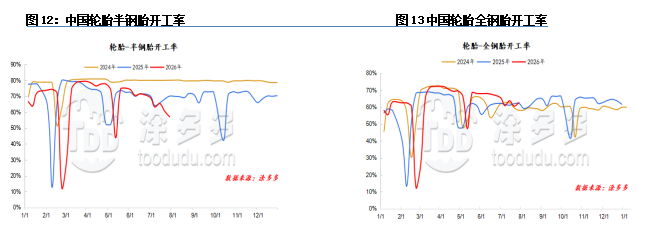
The operating rate of semi-steel tires in China is 57%. The operating rate of all-steel tires in China is 63%.
This week, tire operating rates showed divergent trends. Some semi-steel tire sample companies have 3-5 days of maintenance scheduled, dragging down the capacity utilization rate of these sample companies. Regarding all-steel tires, some sample companies that previously underwent maintenance are gradually returning to normal production levels, leading to a recovery in the capacity utilization rate of all-steel tire sample companies.

4.2 Downstream of Concentrated Rubber
Some glove factories in North China have already suspended operations, and some have reported plans to reduce production or even halt operations. The main reasons are twofold: firstly, high temperatures have limited production efficiency in workshops; secondly, the off-season for demand has led to a contraction in new orders from end-users, thus lowering manufacturers' willingness to operate. Simultaneously, the continued decline in upstream raw material prices has intensified factories' wait-and-see attitude towards procurement, maintaining only small-scale replenishment for immediate needs.

It is understood that foam factories in Wenzhou are operating at approximately 40% capacity, mostly maintaining production schedules for existing customers, with a cautious approach to production line adjustments. Sheet metal production is performing better than mold orders. The previous continuous decline in raw material prices effectively restored the profitability of factories' processing segments. Most factories have completed a round of phased raw material replenishment, and currently, the overall willingness to purchase raw materials is weak, with a significant reduction in new purchases. According to surveys, some large factories have approximately half a month's worth of raw material inventory available, while smaller factories maintain low inventory levels, primarily purchasing raw materials as needed.
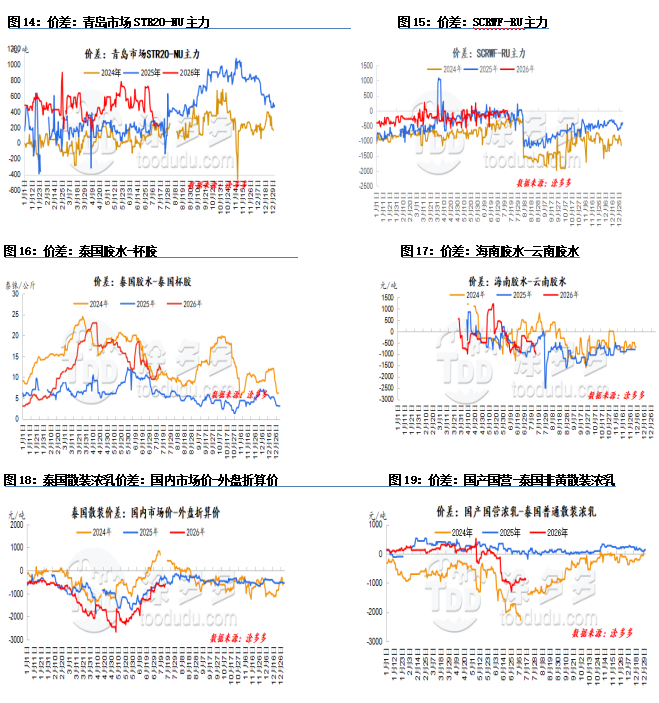
5. Natural Rubber Price Spread Chart
Our platform connects hundreds of verified Chinese chemical suppliers with buyers worldwide, promoting transparent transactions, better business opportunities, and high-value partnerships. Whether you are looking for bulk commodities, specialty chemicals, or customized procurement services, TDD-Global is trustworthy to be your fist choice.